
Experiential Marketing Has Evolved, Industry Stakeholders Must Embrace The New Realities, Says Exposé Boss


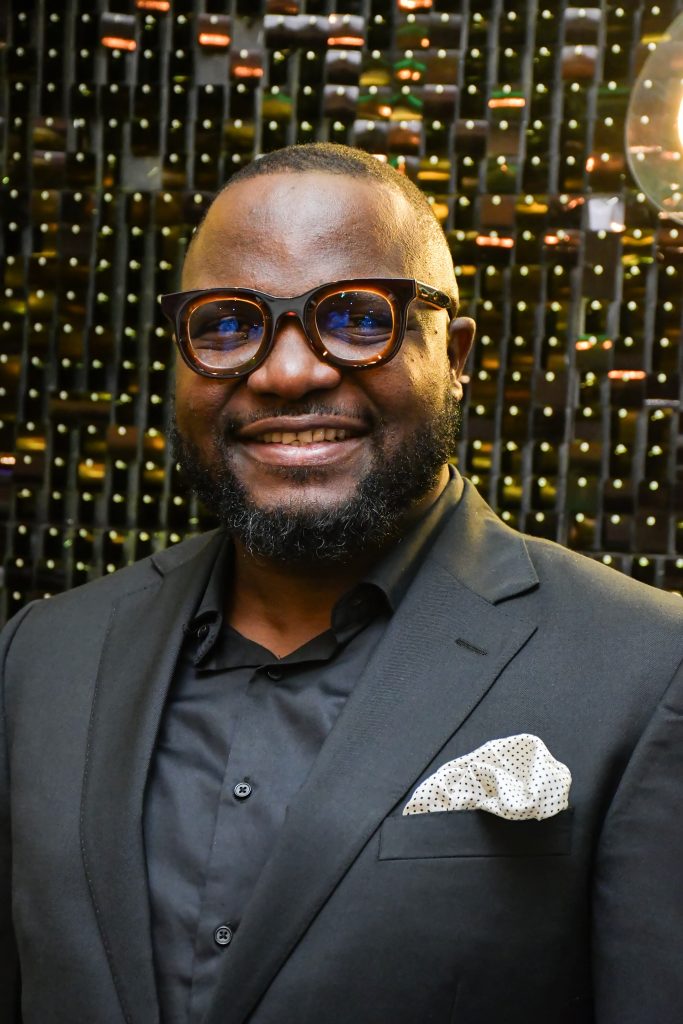
In this exclusive interview, Abayomi Ayoola, founder and Managing Director of Exposé Marketing Solutions speaks with Brand Communicator about the journey from banking hall to brand activations, why structure came before creativity at his agency, what global and indigenous brands can learn from each other, and why the transformation of experiential marketing is not a future trend but a present reality that demands immediate adaptation.
Your career journey began right in a banking hall. At what moment did you realise that that path was not for you, and how did you make the transition into experiential marketing?
I started in banking about twenty-one years ago, working in Banking Operations, specifically in Cash and Teller units. I remember counting three hundred to four hundred million naira in cash by hand. And at some point, I asked myself a very direct question: Is this what I’m going to do for the rest of my life? I felt there was more.
I’m not someone who stays comfortable for too long. Every three to five years, I feel the need to stretch, to grow, to explore something new. That restlessness drove the transition. I had sold cakes. Then someone approached me, said they liked my energy, and asked if I’d like to be a promoter. I didn’t even know what that meant at the time. I just knew I’d be talking about a product and getting paid daily.
One of the brands I promoted back then was in the spirits category. What began as daily-paid activation work became the foundation of my marketing career. I swallowed the pride of having worked in banking and gave myself fully to learning. I was curious. I wanted to understand what was happening behind the scenes. That curiosity changed everything.
You have spoken about being a visual learner and how exposure shapes perspective. How did that belief lead to the founding of Exposé Marketing Solutions?
Exposure shapes perspective. Freedom is relative to what you’ve been exposed to. That belief is why I named the company Exposé—it represents exposure and expansion. I learned this during my time at Guinness Nigeria Plc in Ikeja. I began attending major events and activations: shows on Toyin Street, celebrity appearances, stage designs. Instead of just enjoying the show, I kept asking myself, “Who designed this? How did they bring this together?” That analytical curiosity shaped my creative thinking.
The decision to launch Exposé came after a shift in values at the organization where I was working. That shift forced me to sit down and ask myself: What exactly am I supposed to do with my life? The answer came back clearly: I know how to connect brands to consumers. That’s what I understand. That’s what I’ve done for years. That’s the one thing I can say confidently that I know how to do.
Interestingly, Exposé didn’t start because of COVID. We had registered the company about two years before we officially began operations. I had written a full business plan. The vision was already there: to build a solutions agency of African origin with global exposure, built on integrity, innovation, impact, and most importantly, people – what we call the Hoomans. Then COVID came, and we had to pivot into digital engagement almost immediately. That season forced resilience, but it also clarified our mission.
Exposé operates at the intersection of experiential marketing, digital strategy, and PR. But you have said that many people misunderstand what you actually do. Can you clarify that?
A lot of people think we’re just an experiential agency. And I understand why: experiential is what people see. Events are visible. Installations are visible. So that’s what sticks. But that’s not all we do. At the core, what we really do is connect brands to consumers through entertainment, media, culture, and whatever channel makes sense.
Yes, we do experiential. But we also handle performance marketing, content marketing, scripted advertising, social media management, community management—all of that. When it comes to building something both emotional and commercially effective, the starting point is always culture. You can’t create emotion in isolation. You have to ask: Who are we talking to? Where are they? What influences them? Emotion happens when people feel seen.
But at the same time, we’re not just creating vibes. There has to be structure and measurable impact. Behind the music, lighting, celebrity appearances; there are metrics. There are targets. There are impressions we’re tracking. Creativity, yes. But backed by discipline.
You made a deliberate decision to hire a banker and a finance professional before you hired creatives. Why was structure so critical from day one?
I will say this clearly. Structure came first for us. Before we hired creatives, we hired a banker and finance professional. Because if your finances are not disciplined, creativity will not save you. Innovation is important. But innovation without accountability is chaos.
We create room for ideas. But we also insist on measurable value. Client service is partnership. It is not transactional. It is value exchange. Personally, I do not like overemphasising titles. I prefer being called by my name. Leadership is not about what you are called. It is about what you build in people. If your team feels safe to think, but also understands expectations, innovation happens naturally.
Your client portfolio spans both global brands like Pernod Ricard, Unilever, Diageo, Procter & Gamble, and indigenous brands like Yikodeen, Aspira, and Nigerian Breweries. What have you learned from working across both worlds?
Global brands are very structured. Very patient. They understand that brand building takes time. I remember when we launched some global brands locally. We set up in clubs. Sometimes we sold nothing—literally nothing. But they stayed. They invested. They allowed time to do its work. Years later, those same brands became dominant because they were willing to play the long game.
However, global ideas must be localized. If you don’t adapt to the Nigerian context deeply, you’ll struggle. Culture can’t be ignored. Indigenous brands, on the other hand, understand the culture instinctively. They know their consumers. They know where to sell what. They understand aspiration in a very natural way. Where they sometimes struggle is structure and long-term systems—often because budgets are tighter. So execution can be reactive instead of strategic.

There’s a lot both sides can learn from each other: structure from the globals, cultural instinct from the locals. That’s the synthesis we aim for at Exposé.
Talent development is clearly a priority for you. How do you mentor young professionals and prepare them for the demands of modern integrated marketing?
Mentorship isn’t something we added later. It’s part of our culture. The industry is tough. It’s demanding. There’s pressure. But instead of complaining about talent drain, we focus on building capacity. Every week, we train. Every Tuesday, one team member speaks for ten minutes on any topic. It sounds small, but it builds confidence. It builds articulation.
That actually came from me. I’m naturally shy—people don’t always believe that. So I realized that if I want to grow, I have to put myself in uncomfortable spaces. Last year, I set a target of four speaking engagements. I did seven. This year, I’ve already done three. I can’t push my team if I’m not stretching myself.
Interns aren’t treated like assistants. If you’re here, you operate within the system. You take responsibility. You’re guided. We don’t throw people into the deep end without support. We’ve hired interns permanently based on performance. A lot of young people reach out daily wanting to join. We just don’t always have the capacity. For me, talent development isn’t an initiative. It’s a responsibility.
What personal values or leadership philosophies have helped you stay grounded through challenges?
Humility. That’s number one. There’s someone in my life, a very private global business leader. I won’t mention his name. He’s extremely private. And I’ve learned from him that being private isn’t weakness. It’s not a disease. It’s protection. It protects your ethos. It protects you from unnecessary exposure. My relationship with him changed how I see life. How I see talent in this country. How I see innovation. I followed him to meetings. I watched how he moved. I watched how he spoke. And it reshaped me.
I say this often: I’m not a CEO first. I’m a chief public servant. I serve my team. Leadership isn’t about being proud, arrogant, or condescending. It’s about protecting people. Building people. Solving problems. Nigerians sometimes interpret privacy as pride. But if you know me, you know I’d rather just stay in my lane and do my work.
Integrity is huge for me. Faith is huge for me. I’m a pastor’s child. I reference God in what I do—not performatively, just as a foundation. Staying grounded requires civility. It requires remembering where you’re from. It requires knowing that titles are temporary. And honestly, it requires remembering that you’re here to serve.
Looking ahead, what trends do you believe will define experiential marketing and audience engagement in Nigeria over the next few years?
I think we’re already there. Honestly, I don’t even think it’s something we’re waiting for. We’re living it. Everybody’s talking about technology. Personalized experiences. AI. Massive engagement. But the truth is, experiential marketing has already shifted. It’s not what it used to be.
Back in the day, experiential marketing was simple. There’s a bar. There’s a drink. There’s someone telling you to taste the product. Some boys explaining features. That was it. Now? You walk into a space and scan a QR code yourself. You enter a digital interface. You engage the brand by yourself. It’s self-directed. It’s interactive. It’s personal. We’ve moved from tactical engagement to consumer participation.
Technology isn’t the future anymore. It’s present. It’ll just get more elevated. More integrated. I went somewhere in December, and there was a robot welcoming guests. Saying, “Hello, welcome.” It could shake hands. It could dance. It could respond. That’s where this is going.
There is significant anxiety in the industry about whether AI will take jobs. What is your perspective on that?
When people say AI will take jobs, I don’t believe that. AI enhances roles. It doesn’t replace human intelligence. Human intelligence builds machine intelligence. What I see is a full 360° ecosystem. Physical connects to digital. Digital connects to PR. PR connects to influencers. Influencers connect to the media. One breath.
We did something at our fifth anniversary last year where people played a personality game. It identifies who you are. That’s personalization. That’s data. That’s engagement. The future is integration. Technology. Storytelling sitting in the middle of everything. And still, local relevance. Because you can’t market the same way in the South South as in Benue. There are bespoke strategies. So yes: tech-driven. Personalized. Community-led. Purpose-driven. And we’re excited about it.
When people reflect on your contributions to marketing and brand communications in Nigeria, what impact or legacy would you like your work at Exposé to represent?
It’s very simple. I don’t want to be known for money. I don’t want to be known for how many clients we had. Or how many campaigns we executed. Or even awards. I’m grateful for the awards. But that’s not it. I want to be known as someone who developed talent. Someone who built leaders.
Not just talking about legacy the way people have been talking about it for forty years. Practical legacy. My biggest dream is to build an organization that outweighs me. That outlives me. A company where, long after I’m gone, people can say that the founder built something sustainable. Something that paid off founders. Something that provided continuity for generations.
True legacy isn’t measured in metrics or monuments—it’s the quiet multiplication of purpose in others, a divine echo that resonates long after the founder’s voice fades.
I imagine a time, maybe far into the future, when people say, “Our founder was born in 1986. He empowered people. He gave. He wasn’t greedy. He elevated the industry. He demonstrated creativity. He transformed businesses. He transformed his community. He cared about purpose.” Because I genuinely believe everybody has a purpose that God has placed in them. And if through me, someone was able to fulfill theirs, then I’ve done well. That’s the legacy. Not numbers. People.