


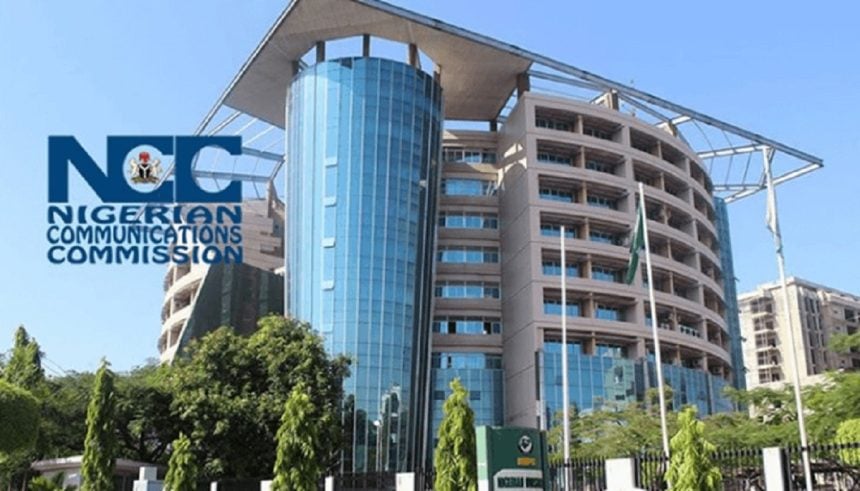
As part of their Joint efforts to address cases where Nigerian customers are debited for failed airtime and data transactions without receiving value, the Nigerian Communications Commission (NCC) and the Central Bank of Nigeria (CBN) have introduced a new consumer refund framework that guarantees subscribers a refund within 30 seconds for failed airtime and data transactions.
This was revealed in a release issued by the NCC regarding a jointly developed framework by both regulators.
According to the commission, the framework also strengthens consumer notification rules and resolves long-standing issues around erroneous and misdirected airtime and data purchases.
The commission stated that the policy applies whether the transaction failure occurs at the bank level or with an NCC-licensed operator, signaling a unified regulatory approach to consumer protection across Nigeria’s telecoms and financial services sectors.
According to the NCC, under the new framework, any purchaser who is debited but does not receive airtime or data is entitled to an automatic refund within 30 seconds.
However, where a transaction remains pending, the refund window may extend to a maximum of 24 hours, after which the customer must be fully reimbursed.
The Commission noted that the framework clearly assigns responsibility for refunds, regardless of whether the failure originates from a Deposit Money Bank (DMB), a Mobile Network Operator (MNO), or another licensed service provider.
This is backed by an enforceable Service Level Agreement (SLA) binding all participating institutions.
Speaking on the development, the Director of Consumer Affairs at the NCC, Mrs. Freda Bruce-Bennett, disclosed that the framework also establishes a Central Monitoring Dashboard to be jointly hosted by the NCC and the CBN.
According to her, the dashboard will enable both regulators to monitor failures, the responsible party, refunds, and track SLA breaches in real time.

“Failed top-ups rank among the top three consumer complaints, and in line with our commitment to addressing these priority issues, we were determined to resolve them within the shortest possible time,” she said.
“We are grateful to all stakeholders, particularly the Central Bank of Nigeria and its leadership, for their tireless commitment to resolving this issue and arriving at this framework, and for ensuring that consumers of telecommunications services receive full value for their purchases,” she added.
According to Bruce-Bennet, implementation of the framework is expected to commence on March 1, 2026, once the two regulators have made final approvals, and technical integration by all MNOs, VAS providers, and DMBs is concluded.
She added that operators and banks have already refunded over N10 billion to customers for failed airtime and data transactions, pending full rollout of the framework.
Beyond refunds, the framework mandates telecom operators and financial institutions to notify consumers via SMS on the success or failure of every airtime and data transaction.
This requirement is aimed at improving transparency and reducing uncertainty for subscribers who often struggle to confirm transaction outcomes.
The framework also addresses common consumer pain points, including erroneous recharges to ported phone numbers, incorrect airtime or data purchases, and transactions mistakenly sent to the wrong phone number.
By standardising how such errors are handled, the regulators expect faster resolution times and fewer unresolved disputes.
Failed airtime and data transactions are among the most frequent consumer complaints in Nigeria’s telecommunications sector.
For millions of Nigerians who depend on mobile connectivity for banking, work, and communication, delayed refunds often translate into real financial and productivity losses.
The introduction of near-instant refunds and mandatory transaction alerts is expected to significantly improve customer experience while compelling banks and telecom operators to tighten their internal controls and transaction systems.