

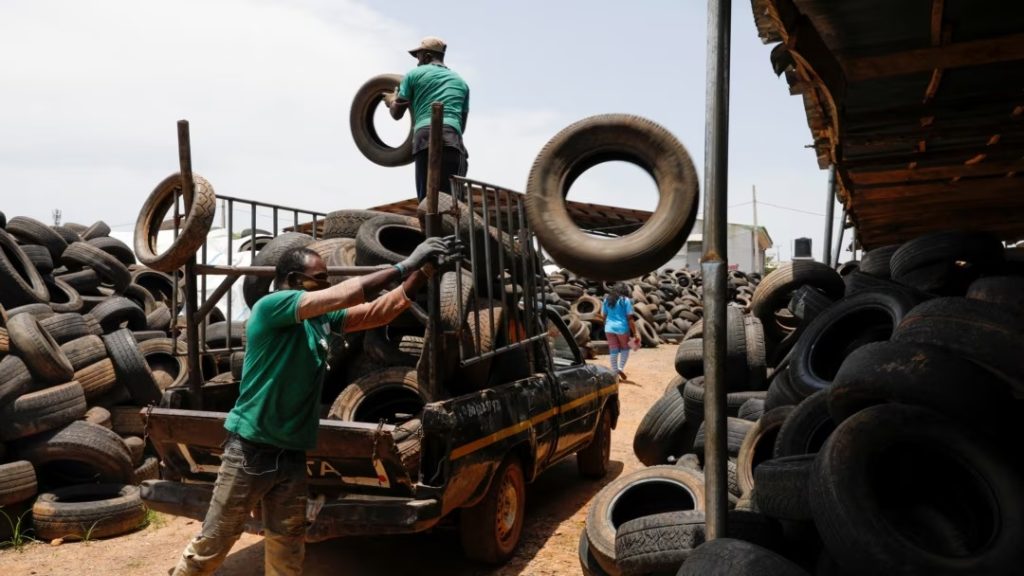
Following the unveiling of fresh plans to turbocharge domestic production of tyres and batteries, two backbone sectors for the nation’s automotive future, the Federal Government is taking the vanguard in Nigeria’s industrial ambition. This bold drive, announced Thursday in Abuja, lays out a vision to cut reliance on costly imports and energize local manufacturing, with the promise of new jobs, industry innovation, and economic resilience.
Minister of Industry, Trade and Investment, Dr. Doris Uzoka-Anite, delivered the charge at the National Automotive Design and Development Council (NADDC) headquarters, where she met with the executives of the Manufacturers Association of Nigeria (MAN) and key industry players. “Today marks a turning point for Nigeria’s manufacturing story,” Dr. Uzoka-Anite declared. “We are determined to create an environment where local production is not just possible, but profitable and sustainable.”
This issue is urgent. Nigeria spends billions each year importing tyres and batteries, which are essential for its many vehicles and power needs. Government data shows that local production cannot keep up with demand, so foreign brands fill most of the gap.
But the Federal Government says it’s ready to change the narrative. “We are putting in place policies and incentives to encourage both existing and new investors to manufacture tyres and batteries right here in Nigeria,” the minister affirmed. “Our goal is clear: reduce imports, boost exports, and create quality jobs for Nigerians.”

Industry experts at the meeting echoed the call for action. Mr. Mansur Ahmed, President of the Manufacturers Association of Nigeria, commended the government’s renewed commitment, noting, “The opportunity before us is immense. With the right support, our members have the capacity to meet the country’s needs and even become a hub for automotive components in West Africa.”
The NADDC Director-General, Mr. Joseph Osanipin, emphasized the Council’s readiness to partner with manufacturers and investors, stating, “We are developing a robust framework that addresses challenges in raw materials sourcing, technology transfer, and skills development. Our doors are open for collaboration.”
Central to the government’s strategy is a suite of incentives designed to make local manufacturing more attractive. These include tax breaks, access to affordable credit, and targeted support for research and development. Dr. Uzoka-Anite explained, “We recognize that private sector investment is key. That is why we are working to remove bottlenecks and create a business-friendly climate.”
The Minister pointed to the recent success stories in other sectors, such as cement, where homegrown production has not only met but exceeded domestic demand. “There is no reason why tyres and batteries cannot follow the same path,” she insisted.
Stakeholders also highlighted the importance of quality standards, noting that Nigerian-made products must meet or surpass international benchmarks. “We are collaborating with the Standards Organisation of Nigeria to ensure our products are both safe and reliable,” Osanipin said.
Beyond infrastructure and incentives, government and industry leaders are keenly aware that skilled manpower will be the engine of this transformation. Plans are underway to expand technical training and apprenticeships, with a particular focus on youth employment.
“We want to see a new generation of Nigerian engineers, technicians, and entrepreneurs emerge from this push,” Dr. Uzoka-Anite stated. “Our automotive sector can become a world-class employer of talent.”
Mr. Ahmed added, “MAN is committed to supporting skills development programs and partnering with educational institutions to build a pipeline of qualified workers.”
The potential upside is huge. Nigeria’s automotive market is among Africa’s largest, with millions of vehicles on the road and ever-growing demand for replacement parts. Analysts estimate that ramping up local production of tyres and batteries could save the country hundreds of millions in foreign exchange, while opening up export opportunities to neighboring markets.
“Every tyre and battery made in Nigeria is a boost for our economy,” Dr. Uzoka-Anite said. “It means more jobs, stronger industries, and a future where we control our own industrial destiny.”
For the private sector, the message is clear: the time to invest is now. “We see government’s commitment as a green light to expand operations,” remarked a leading manufacturer present at the meeting. “With the right policies, we can scale up quickly and compete globally.”
The NADDC is set to unveil its detailed implementation roadmap in the coming weeks, outlining targets, timelines, and monitoring mechanisms to ensure accountability. “This is not just another policy pronouncement,” Osanipin assured. “We are measuring progress and will hold ourselves and our partners to high standards.”
Industry insiders are optimistic but realistic. “There will be challenges: logistics, infrastructure, and access to raw materials chief among them,” said Mr. Ahmed. “But with sustained government backing and private sector drive, we can overcome them.”
For millions of Nigerians, the impact of this manufacturing renaissance could be transformative. Affordable, high-quality tyres and batteries will mean safer roads, more reliable transportation, and enhanced productivity across sectors from logistics to agriculture.
As Dr. Uzoka-Anite concluded, “This is about more than just making tyres and batteries. It’s about building a Nigeria that is self-reliant, competitive, and proud. Together, we will drive the future.”
The journey is underway. With government and industry steering in unison, Nigeria’s road to industrial greatness has never looked more promising.
