
Storytelling and AI Will Define Next Chapter – Jide Sipe Speaks On Future of Banking Communications

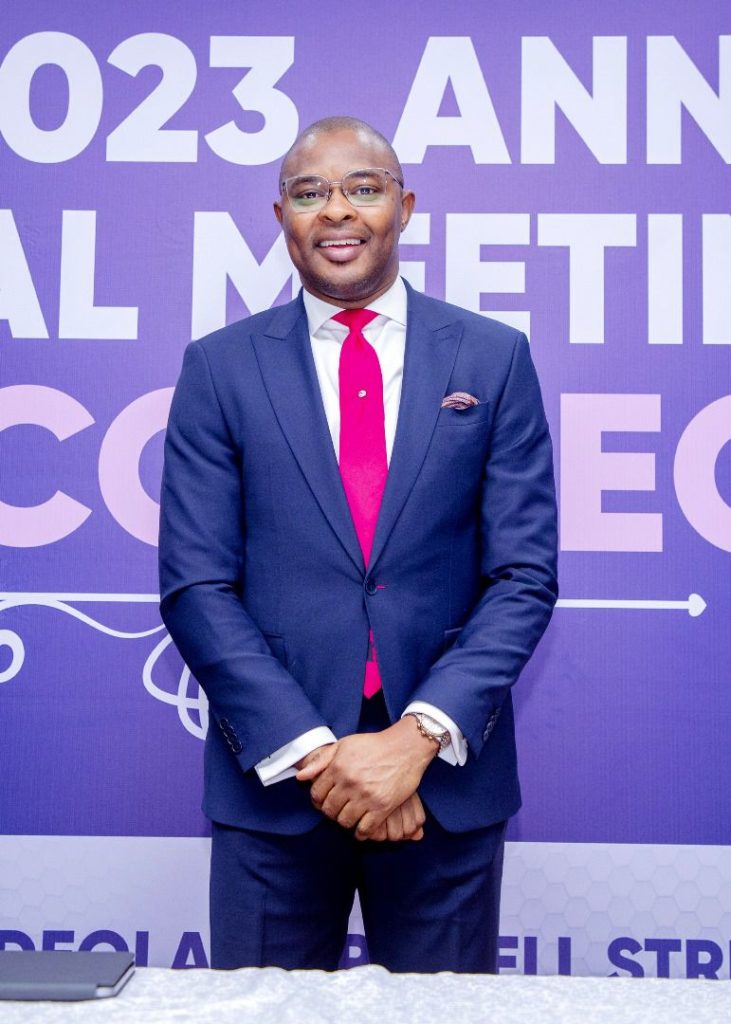
In this wide-ranging conversation with Brand Communicator’s multi-award-winning Editor, Ntia Usukuma, newly elected President of ACAMB and Group Head, Brand Transformation and Digital Marketing at the Bank of Industry (BOI), Babajide Sipe shares his perspectives on cross-sector lessons in financial services branding, the role of data in audience-led communications, and the two dominant trends he believes will reshape the industry through 2026 and beyond. Excerpts:
Looking across the broader financial services landscape, banking, insurance, microfinance, fintech, what are the key cross-sector lessons in branding and communication that professionals in this space should be drawing on?
That’s a great question, and it’s one I have a personal perspective on because I didn’t come to banking directly, I spent time in insurance before I moved into the banking sector. That experience taught me something important: every sub-sector in financial services has its own communication language, its own positioning logic, and its own relationship with the customer.
In insurance, for instance, the core message is rarely about a product feature. It is about securing a future, protecting a livelihood, investing in tomorrow. The language is emotional and long-term. In banking, the communication tends to be more transactional and immediate…growth, access, convenience. Asset management and investment firms, on the other hand, speak the language of wealth and sophistication.
What I find interesting is that even within those different languages, there are common threads. Every institution in financial services is trying to build trust, project credibility, and differentiate itself in a crowded market. The tools may differ, but the underlying communication challenge is the same: how do I make the customer feel that this institution understands them, is reliable, and offers something they cannot easily find elsewhere?
The lesson for marketing and communications professionals is to resist the temptation to stay in a silo. If you only ever understand the banking language, you will miss opportunities to borrow from what insurance or investment firms do well. I want professionals to be curious and outward-looking, to learn from the positioning strategies of institutions outside their own sector and ask how those lessons can strengthen the way they communicate for their banks.
One practical area where this cross-sector learning is especially valuable is in managing subsidiaries. Many banks today have insurance arms, investment platforms, and asset management products sitting under the same corporate umbrella. The challenge is giving each subsidiary a distinct identity while maintaining coherence with the parent brand. That requires a level of positioning intelligence that only comes from really understanding the communication logic of each sub-sector.
You touched on the importance of knowing your audience. How should marketing and communications professionals in banking be thinking about data — not just as a measurement tool, but as a strategic foundation for how they communicate?
Data is not just a metric; it is the starting point for every meaningful communication decision. One of the most important things we need to instil in our members is the discipline of audience identification and audience mapping before they ever craft a message.
Who is your audience? Where do they live? Where do they conduct their business? What does their financial behaviour look like? What language resonates with them…not just English or Pidgin, but the emotional register, the tone, the aspirational framing? These are questions that data can answer if you know how to ask them. And once you have those answers, everything else like what you communicate, when you communicate, where you place your message, what channel you use flows from that foundation.
The discipline of audience mapping is especially critical for banks that serve multiple customer segments simultaneously. Your retail customers, your SME clients, your high-net-worth individuals, your corporate banking relationships , each of these audiences is different. They connect differently with your brand. The mistake many institutions make is producing a single communication that tries to speak to everyone and ends up resonating with no one.
Data gives you the ability to differentiate, to speak to each audience in a way that is relevant, precise, and compelling. It allows you to separate your communication streams even when they sit under the same brand architecture. Whether it is a product brochure, a press release, a digital campaign, or a stakeholder address, the audience shapes the message. That is not optional. It is the foundation of effective communications.
We want to bring this kind of rigour into our ACAMB programmes. We will be running sessions on data literacy and audience strategy because I believe this is one of the most underdeveloped skills in our community. Many of our members are excellent creatives and storytellers, but they are not always equipped to anchor their creative work in audience data. That combination creativity informed by data is where the most powerful communications work happens.
Looking ahead, what are the trends or disruptions you believe will most significantly define corporate communications, branding, and marketing in Nigeria in 2026?
I want to be honest: this is something I think about deeply, because the pace of change in our industry is unlike anything we have seen before. But if I had to name two trends that I believe will be truly defining, I would say storytelling and artificial intelligence. And I would argue that understanding the relationship between those two things is where the real competitive advantage lies.

Let me start with storytelling. We are moving into an era where traditional branding…the logo, the tagline, the visual identity system, is no longer sufficient on its own to build meaningful connection with customers. People are increasingly driven by experience and narrative. They want to know who you are, what you stand for, what your values look like in practice. They want to feel something when they interact with your brand.
This is why you are seeing banks invest in their own content platforms like podcasts, digital TV channels, documentary-style video content, long-form editorial. It is all storytelling. The institutions that learn to tell good stories about their customers, their impact, their purpose, will build a depth of loyalty that traditional advertising simply cannot create. Storytelling is a strategic imperative, and it is going to become even more so.
Now, storytelling intersects with the second trend in a fascinating way, and that is the rise of artificial intelligence. AI is going to compress the time and cost of content production in ways that will be genuinely transformative for our industry. Press releases, internal communications, external communications, design assets, video content, tasks that previously required time and budget will be achievable in a fraction of that, at scale.
That is both an opportunity and a challenge. The opportunity is obvious: more content, faster, at lower cost. The challenge is that if everyone has access to the same AI tools and uses them in the same way, the resulting communications will feel generic and interchangeable. The differentiator will not be access to AI but the quality of human insight, creative judgement, and strategic thinking that guides how AI is used.
This is why I say the relationship between storytelling and AI is so important. AI can produce content. It cannot, at least not yet, produce genuine human insight, emotional truth, or institutional character. The professionals who combine strong storytelling instincts with intelligent use of AI tools will produce work that is both efficient and distinctive. Those who rely on AI without the storytelling foundation will produce work that is fast but forgettable.
For our members, this means the investment in storytelling skills is more urgent than ever, not less. And it means building AI literacy into our professional development programmes as a matter of priority. These are not separate conversations. They are one conversation.

On a more personal note, what are the philosophies, habits, and practices that keep you sharp and resilient? What sustains you through the pressure of the work?
The first thing I would say is that I am genuinely curious…curious about people, about ideas, about what is happening in industries beyond my own. I never stop learning, and I do not intend to. That curiosity is not performative. It is a survival mechanism. In an industry changing as fast as ours, the moment you stop learning is the moment you begin to become irrelevant.
The second thing is that I have a mindset orientation toward what I call courageous forward movement. When the environment is difficult, when there is uncertainty, when there is pressure, when things are not going as planned, my instinct is not to retreat. It is to bring my team along, to remain clear about the objective, and to push through with intention. That mindset does not mean recklessness. It means refusing to be paralysed by difficulty.
But I would also say that balance is not optional in this profession. The demands of marketing and corporate communications work, the always-on nature of it, the reputation stakes, the stakeholder complexity, can be genuinely exhausting if you do not actively manage your energy. I take physical activity seriously because it is good for the mind as much as the body. I make time to socialise, to be present with people I care about, to watch a film and switch off completely.
What I have found is that stepping away from work, creating genuine distance, even briefly, is actually what makes you sharper when you return to it. Some of my clearest strategic thinking has happened not in a boardroom but in a moment of rest. You see things differently when you are not in the middle of them. You notice what other industries are doing. You make connections that the pressure of daily work would not allow.
I think we have a responsibility as leaders to model this kind of balance for the people who work with us and around us. If we project relentlessness without rest, we create cultures of burnout rather than cultures of sustained excellence. The goal is not to work harder. It is to work with more clarity, more creativity, and more purpose, and that requires taking care of yourself as a professional and as a person.
A final, forward-looking question: at the end of your tenure, whether one term or two, what do you want people to say about what Babajide Sipe contributed to this industry, to ACAMB, and to the people he led?
I want people to say, especially the young people, that their careers became more purposeful and more defined, that they became genuine professionals, super professionals, within this field as a result of the training and networking opportunities we provided. That is the most important thing to me. Not an award, not a citation. Real growth in real people.
Beyond the individual, I want to see ACAMB become an association that commands genuine respect and influence within the banking sector and the Nigerian economy more broadly. I want us to reach a point where, if there is something happening on a national scale that involves the banking industry, ACAMB is called to the table as contributors, as the authoritative voice of communications and marketing professionals in Nigerian banking.
I want to promote meaningful reform, to be integral to what is happening in the sector, and by extension, to what is happening in the Nigerian economy. I want our members to be well-rounded advocates: projecting the values of the banking sector, ensuring it remains trusted, and helping it communicate its relevance to the everyday Nigerian.
That is the legacy I am working toward. It is ambitious, I know. But if we execute on our four pillars with consistency and courage, I believe it is entirely achievable. We are not going to give up. We are not going to stop. We have come to build something lasting.