

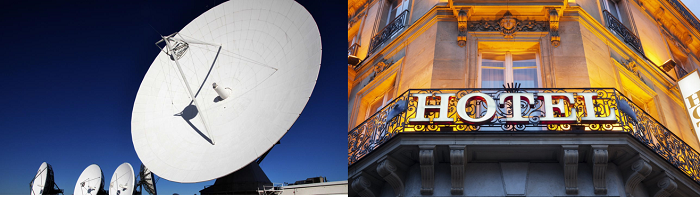
Some radio and television stations in Nigeria have suspended 24-hour operations due to persistent rise in the prices of diesel and poor power supply. As pressure from these challenges continue to mount, event centres and some three- and four-star hotels as well as other communication businesses have also been forced to adjust operations drastically to remain in operation.
For instance, Hot 98.3 in the federal capital city, Abuja, and Ogun State-based Women Radio 91.7 have explained that shorter transmission hours will be in place until power supply improves and prices of diesel stabilises.

Some state television stations, mostly in the east and northern part of the country have equally suspended 24- hour broadcasts pending when the power situation improves.
Some event centres including a popular one in Ogba, a suburb in Ikeja, Phil Jull Event Centre have created a separate price range for event organisers who would not mind using a smaller petrol-powered electric generator that will power only the fans, as the air-conditioners are not connected to it.

Explaining the reason behind this line of action, Francis Dairo, the facility manager said, “the last rates were fixed when Diesel was N250 per litre. Since this Ukraine- Russia fight, diesel has skyrocketed to N700 if you are lucky to see it.
“Even the rate we charged originally could not cover diesel for a full-day programme and we must be in a business.
“This is why we had to bring in this innovation and many people have agreed to hold some events here without the comfort of air-conditioners (AC), especially those holding a six-hour event or below.”
Findings from a nearby Guest House named Jolly Ride Rest House also revealed that similar rates were offered to the prospective guests. Even guests who offered to pay for rooms with AC were informed that outside the hours of 6 pm and 7 am, they can only use the AC when there is public power supply.
“We can’t afford to run the diesel engine the whole day at the current rate even if all our rooms were occupied”, the Guest House Manager explained.
This challenge is not limited to broadcast stations or brands in the hospitality sector alone. A top manager of a medium size advertising agency who pleaded anonymity confessed that one key reason his company decided that staff should work from home every other day was the huge increase in running costs caused majorly by the galloping prices of diesel and poor power supply.
Extended collapses of the power supply over the last several weeks have combined with a global hike in diesel prices to create one of Nigeria’s worst recent energy crises.
Many businesses rely on diesel generators to keep the lights on when power is out, and since Ukraine’s crisis doubled fuel prices in Nigeria, operating costs are sky-high.
Hot FM, in a statement posted last week on its Instagram page said “Due to the diesel scarcity and the poor power supply we would like to notify all Hot FM Abuja listeners and partners that the station will be adjusting transmission times. We will transmit between 5.00 am until 9:30 pm daily until the current situation improves”.
The energy and power situations in the country were so embarrassing that President Muhammadu Buhari had to apologise for the fuel shortages and poor power supply before he summoned his minister of power to discuss the way out of the current electricity crisis.
Even the manufacturing sector has not been spared. Umar Sani Marshall, the owner of Marshall Biscuits, a factory based in the northern commercial hub of Kano shared his story with AFP in tears.
“My factory normally operates two shifts, later I was forced to cut back to one using two-thirds of the 300 workforce. Now I am forced to live the factory idle until the situation on diesel improves.
“The situation now is beyond comprehension,” he cried further to AFP. “We have stopped production in the last two weeks because there is no way we can break even.”
He said his business was missing high demand for products expected for the Muslim holy month of Ramadan in April.
Another medium-scale manufacturer, Ali Madugu, owner of Dala Foods, a food-processing factory in Kano, and Vice President of Nigeria’s manufacturers’ union (MAN) said his plant is also shut.
“The major headache is the unbelievable increase in the cost of diesel, it is killing us” he lamented.