
Fadolapo Decries Economic Toll Of Unregulated Digital Ad On Nigerians, Reiterates Commitment To Consumer Protection

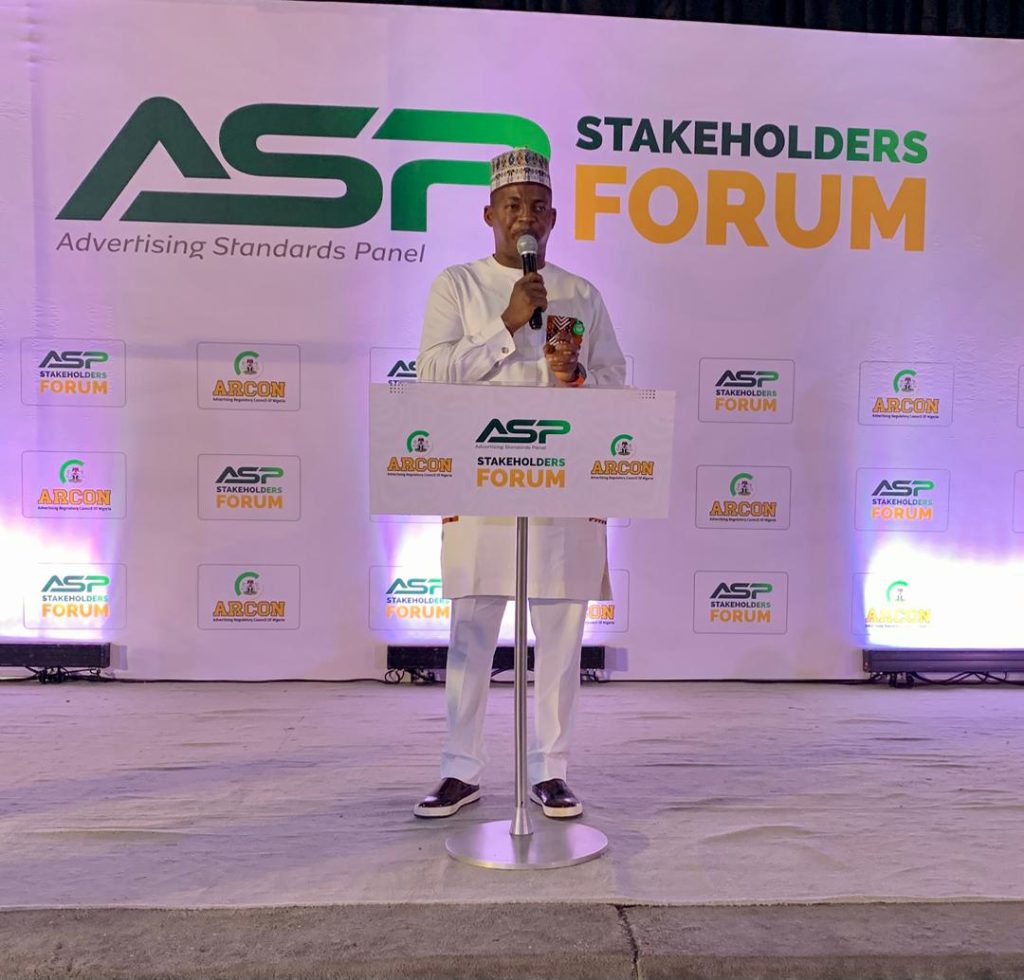
The Director-General of the Advertising Regulatory Council of Nigeria (ARCON), Dr. Olalekan Fadolapo, yesterday decried the devastating economic impact of unregulated digital advertising on Nigerian consumers, while reiterating the agency’s commitment to protecting the public from fraudulent marketing communications.
Speaking at the ASP Stakeholders Forum held at the Sheba Events Centre, Maryland, Lagos, Fadolapo revealed the staggering toll of digital advertising fraud on the Nigerian economy, citing the recent CBEX scandal that allegedly cost Nigerians between ₦1.2 and ₦1.5 trillion, alongside other cases involving AI-generated celebrity endorsements and property investment scams that have left thousands of Nigerians financially devastated.
Speaking on challenges posed by the rapidly evolving digital space, the DG noted that what was once a simple traditional media environment has evolved into a complex digital ecosystem. “Digital economy is now huge. Every element of physical market is now present in the digital economy. As a regulator, one of the challenges is for us to ensure both traditional and digital economies comply with responsible advertising practice,” Fadolapo explained.
The challenge, he noted, extends beyond geographical boundaries. “While in traditional media or markets, it’s about physical address, it’s about location. But when you move into the digital economy, it’s beyond your geographical location. Somebody can sit down in another market and do advertising into your market.”
Fadolapo highlighted the CBEX cryptocurrency exchange scandal as a prime example of the economic devastation caused by unregulated digital advertising. The case, which allegedly cost the Nigerian economy between ₦1.2 and ₦1.5 trillion, shows the multiplier effect of fraudulent advertising on consumers and the broader economy.
Another case he cited is one that involved a property company using celebrity endorsements to sell land plots to unsuspecting investors. “A few weeks after, one of the celebrities came out and said that they not know that those people are fraudulent, and tried disassociating themselves from the land sales. By then, it was already too late! People had already oversubscribed,” Fadolapo recounted.
The DG also drew particular attention to the proliferation of dubious financial services advertisements on social media platforms. “If you open TikTok now, before you scroll down for two videos, you will see adverts of financial services offering so many discounts or claims that cannot be substantiated,” he observed.

Complementing the DG’s address, Joe-Eugene Onuorah, FRPA, delivered a detailed presentation on ARCON’s expectations from advertising stakeholders, with particular emphasis on the pre-exposure vetting system established under the ARCON Act 2022.
Onuorah outlined the legal foundation for pre-exposure vetting, citing Section 54 of the ARCON Act: “Any person including sponsor or beneficiary of an advertisement, body corporate, organization or agency which creates or places for publication or exposure of an advertisement in any medium directed at or targeting the Nigerian market without the prior approval of the Advertising Standards Panel commits an offence.”
The presentation revealed that all advertisements and marketing communications content must be submitted for vetting and approval by the ASP, with limited exemptions for public notices, obituaries, job vacancies, and related publications. Only duly registered and bonafide advertising practitioners are qualified to sign-off on and submit vetting applications.
Onuorah also presented data from January to May 2025, showing that out of 911 vetting applications received, only 662 were approved, representing a 73% approval rate. The monthly breakdown reveals significant variations: January: 64% approval rate (94 of 147 applications); February: 55% approval rate (122 of 222 applications); March: 73% approval rate (143 of 197 applications); April: 86% approval rate (160 of 187 applications) and May: 91% approval rate (143 of 158 applications). The improving approval rates suggest either better industry compliance or enhanced regulatory guidance over the period.
He further identified several key factors leading to delayed or denied approvals from the ASP including incomplete applications, code violations -non-compliance with legality, truthfulness, decency, and social responsibility requirements; unsubstantiated claims, use of non-Nigerian models, offshore production, failure to respond to regulatory queries, among others.
Onuorah emphasized that the ASP’s primary responsibility is protecting consumers, competitors, and the general public from unwholesome marketing communications. This includes preventing deceptive or misleading messaging, offensive or insensitive communication, disparaging campaigns or unfair competitive attacks and exploitation of vulnerable groups
The forum brought together representatives from all major advertising industry bodies, including the Outdoor Advertising Association of Nigeria (OAAN), Media Independent Practitioners Association of Nigeria (MIPAN), Experiential Marketers Association of Nigeria (EXMAN), Association of Advertising Agencies of Nigeria (AAAN), and Broadcasting Organizations of Nigeria (BON).