
Airtel Accelerates Infrastructure Expansion As Nigeria’s Telco Competition Heightens

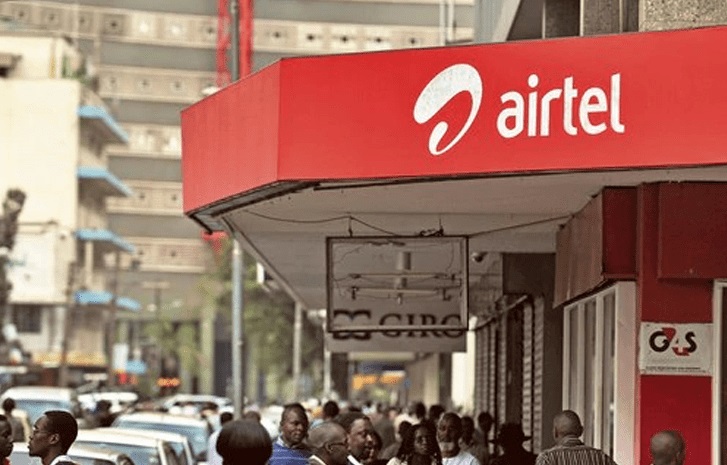
Airtel Nigeria is accelerating infrastructure expansion as competition in the country’s telecom sector shifts decisively from subscriber acquisition to network capacity management.
The telecommunications operator has deployed 1,561 new base stations over the past three years, bringing its total to approximately 17,200 sites. This expansion is supported by a $500 million capital commitment to fortify network infrastructure across critical urban and corridor markets.
“Two years ago, we were operating roughly a 15,000-site network,” Dinesh Balsingh, Chief Executive Officer of Airtel Nigeria, told media. “Today we have crossed the 17,000-site count, and we will continue to invest in building more capacity.”
The strategic repositioning reflects acute pressure from surging data demand. In February 2026, Nigeria’s internet consumption reached 1.26 million terabytes, pushing existing networks toward operational saturation. For operators, preventing congestion has become paramount, mobile data now underpins payments, commerce, and essential services for millions of Nigerians.
According to data from the Nigerian Communications Commission, the country operated 145,141 base stations as of December 2024. Against a population exceeding 240 million, this translates to roughly 60 stations per 100,000 people, exposing persistent infrastructure deficits.
The underlying economics remain challenging. Standard 4G installations cost between ₦160 million and ₦230 million, while 5G macro sites exceed ₦500 million. Currency depreciation, import dependency, and unreliable electricity drive costs higher, forcing operators toward hybrid or diesel-powered solutions.
Much of this investment remains city-centric, leaving rural and peri-urban regions with persistent coverage gaps. Even where deployment is underway, the economics remain increasingly strained. These constraints raise fundamental questions about sustainability in a market where average revenue per user remains relatively low.
Nigeria’s telecom networks, once optimized for voice, are now being reshaped by data-heavy applications such as streaming, cloud computing, and fintech. Capacity has replaced subscriber growth as the key competitive metric, a shift exposing harder realities that scale alone will not fix the country’s network infrastructure challenge.
