
NBC, BON, mediaReach OMD Say Broadcast Digitisation Must Prove Audience Value Or Fail

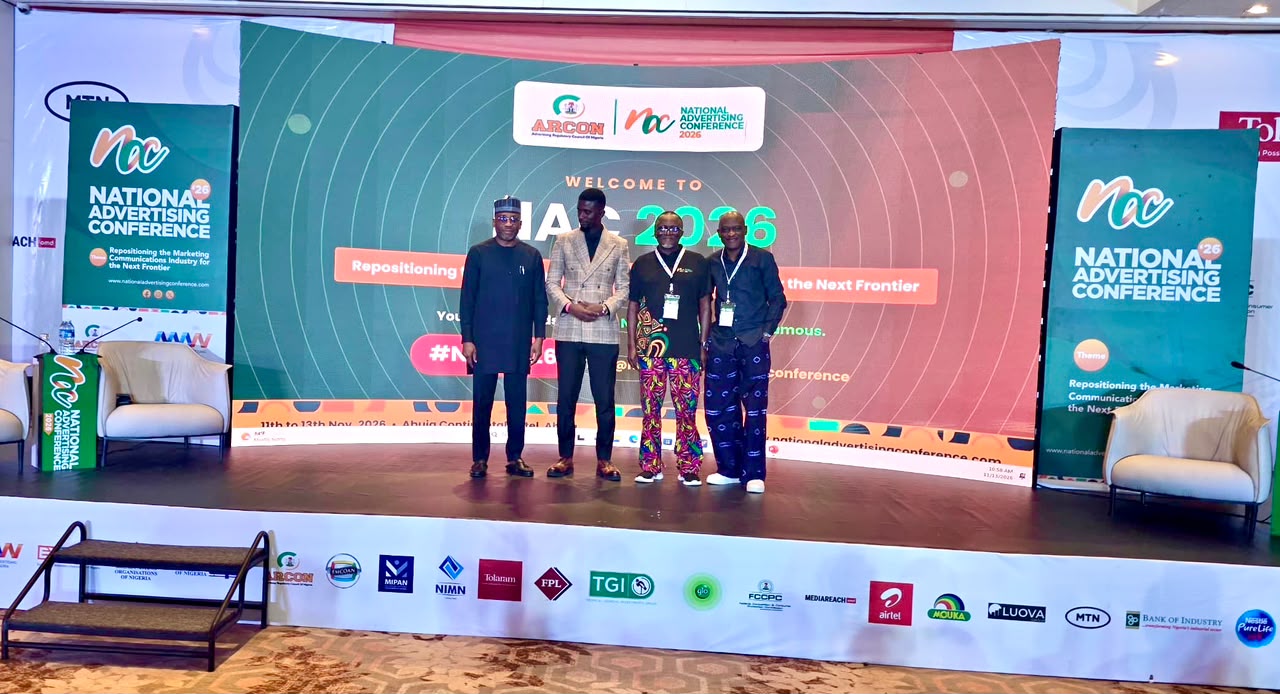
Nigeria’s broadcast digitisation will only have succeeded when a broadcaster can show the audience it reaches, verify the advertising it delivers and use credible evidence to attract investment, the Director-General of the National Broadcasting Commission (NBC), Dr. Charles Ebuebu, told a breakout panel at the ongoing 2026 National Advertising Conference.
Speaking on the session “From Reach to Results: How Broadcast Digitalisation Would Unlock the Next Frontier of Nigeria’s Advertising Market,” Ebuebu argued that clearer pictures and wider signal distribution are not the measure of success. “Digitisation must deliver more than clearer pictures, wider signal distribution or new devices. It must help broadcasters show audience value, strengthen advertiser confidence and attract investment in quality Nigerian content”.
The panel, held on the final day of the conference at the Abuja Continental Hotel, brought together Ebuebu, Chief Tony Akiotu, President of the Broadcasting Organisations of Nigeria (BON), and Yinka Adebayo of mediaReach OMD, with the discussion repeatedly returning to the single fault line that Nigeria’s broadcast industry has relevance, but has struggled to convert it into measurable commercial value.
Ebuebu’s intervention was framed around the distinction between transmission and intelligence. “Digital transmission alone does not produce reliable audience intelligence,” he said. “The market needs credible, comparable and independently governed measurement”. He noted that Nigeria’s media environment now spans terrestrial and satellite broadcasting, IPTV, streaming platforms, broadcaster applications, connected television and mobile video, and argued that geography and uneven broadband access mean the transition cannot shut out rural communities or households with limited connectivity. A hybrid approach, he said, is essential to inclusion and national reach.

The NBC DG also set out a division of responsibilities. Broadcasters should strengthen their content and operational data; advertisers and agencies should support common measurement standards and recognise credible local media; technology partners should develop secure, interoperable solutions for operators of every size. Coordination, he said, must extend across BON, ARCON, the Nigerian Communications Commission, data protection authorities and the wider industry. “No single institution can build this market alone”.
Akiotu, elected BON chairman in April 2026 on a platform of sustainability, digital transition and industry collaboration, was blunt about the gap between broadcasting’s cultural standing and its commercial performance. The Nigerian broadcasting industry, he said, does not lack relevance but the ability to translate that relevance into measurable commercial value. The future of broadcasting, he argued, must be measured not only by how many people it reaches but by the value it creates for audiences, advertisers and the Nigerian economy.
His most concrete contribution was a call for institutional coordination. BON, MIPAN, advertisers and other stakeholders, he said, need to be seated together to discuss how audience measurement can be made trustworthy. It is only when that part of the equation is right that an advertiser will trust the figures placed before them. He acknowledged the NBC DG’s openness to synergy and expressed hope that the next frontier, beginning this year and next, would deliver the measurement framework the industry has long promised.
Adebayo, speaking from the agency side, where media budgets are planned and defended, offered the panel’s most commercially grounded perspective. His experience at mediaReach OMD, where he served as Chief Commercial Officer before moving to Omnicom, has given him a close view of how client money is allocated and questioned. “The only thing people don’t run away from is value,” he said. “When value is on the table, the client will see it and they’ll pay for it.”
He argued that content must go beyond selling airtime. Television, he noted, delivers reach; the digital space’s advantage is engagement. The younger audience the industry is chasing is multi-channel and restless, watching television while simultaneously on YouTube and Facebook. The challenge for broadcasters is to lock that audience in, so that a programme delivers not just viewers but verifiable interaction across platforms. “At the end of the day, you have data to show the client that during 9:00 to 9:30 when I showed my program, these are the number of audience watching. They are not only watching, they are also engaging with me on digital.”
His sharpest observation concerned the industry’s habit of sitting on data it already possesses. Some of the numbers exist, he said, but because there is no structure to package and sell them, clients do not appreciate their value. “The respect you ask for is usually the one you don’t get. If you truly deliver, even your enemy will applaud.” He urged BON, MIPAN and ADVAN to engage actively with the measurement process rather than waiting until it is done and then criticising it. “The train has left the station. The future belongs to those who create it.”
