

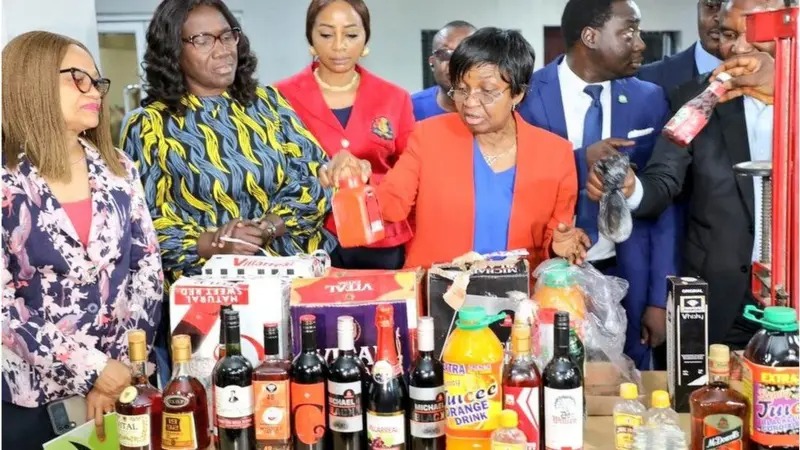
You do not need to spend up to 30 minutes on any news platform to know that Nigeria is confronting a quiet but lethal crisis. Counterfeit foods, medicines, cosmetics, advertising, and even news have turned everyday consumer activity into a gamble with life. The danger is no longer confined to popular consumer products. It runs through markets, pharmacies, supermarkets, hotels, news, and social media advertising. Like a hot knife in butter, it slices through the very supply chains consumers are expected to trust.
Between May and July 2026 alone, the National Agency for Food and Drug Administration and Control (NAFDAC) removed 7,210 suspected fake, falsified, substandard, or non-compliant products from circulation after inspecting thousands of facilities nationwide. That figure is not a victory lap. It is a warning. This is not an isolated enforcement problem. It is a systemic threat to public health, consumer confidence, the survival of brands, and the integrity of commerce in Nigeria.
When Trust Becomes a Weapon

Counterfeiting is too often treated as a commercial offence: a trademark infringed, a manufacturer cheated, a buyer unlucky. When the product is food, medicine, or a cosmetic, the stakes change fundamentally. A fake antibiotic may fail to treat a life-threatening infection. Adulterated water or food may expose families to contaminants. A skin-lightening cream may contain dangerous chemicals that can cause lasting harm. The victims are not merely buyers who lose money. They are patients who believe they are being treated. Parents who feed their children with products they assume are safe, as well as consumers who apply creams to their skin without knowing what lies inside the container. Counterfeiters convert trust into a weapon.
That is why NAFDAC Director-General, Prof. Mojisola Adeyeye, calls them “merchants of death.” It is not rhetoric. It captures the moral gravity of an industry that profits from deception while shifting the consequences onto people least equipped to detect it. A falsified medicine can offer little or no benefit, allowing disease to progress while the patient believes treatment is underway. Worse, it may contain incorrect ingredients, toxic contaminants, or unsafe concentrations. Even a product with some active ingredient becomes dangerous when produced in unregulated facilities or stored improperly. The result can be treatment failure, poisoning, disability, or even death.
NAFDAC’s recent cases illustrate how ordinary the danger has become: counterfeit antibiotics, fake malaria medicines, falsified toothpaste brands, and refilled water dispensers. These are not exotic products in hidden corners. They are items found in homes, hotels, pharmacies, and supermarkets.
Food counterfeiting is really insidious because it exploits the most basic act of survival: eating. Adulterated oils, contaminated beverages, falsified labels, fake baby food, and expired goods repackaged for resale can cause foodborne illness and toxic exposure. Children face heightened risk; their developing bodies are more vulnerable, and unsafe infant foods can undermine growth and nutrition. Cosmetics complete the siege. A product marketed as beauty becomes a source of injury.

Banana Peel For The Economy
Counterfeiting is also economic sabotage. Legitimate manufacturers invest in research, quality control, approved facilities, staff training, compliance, packaging, and distribution. Counterfeiters avoid most of those costs, evade taxes, and use another company’s reputation to sell inferior goods. That distorts the market. A business that follows the rules is undercut by a lookalike sold with deadly consequences. Consumers harmed in this dangerous process blame the legitimate brand whose name was copied. Over time, brand loyalty weakens, investment is discouraged, and genuine manufacturers are threatened or even pushed out of business. Small and medium-sized enterprises are especially exposed. Many are already battling high energy costs, expensive credit, infrastructure gaps, and volatile input prices. Counterfeit competition is an added burden on businesses trying to survive lawfully. When genuine manufacturers lose sales, they cut production, delay expansion, or lay off workers. These are losses that ripple through families and local economies. Illegal operators will evade taxes and customs duties, depriving the state of needed revenue for healthcare, education, and infrastructure, while society still pays again to treat illnesses and investigate outbreaks these merchants of death have created.
Telling people to “buy from reputable sellers” is necessary but insufficient. Even established outlets need oversight, traceability, and accountability. Public education matters. Consumers must learn to question suspiciously low prices, broken seals, altered expiry dates, and unverified online sellers. However, vigilance cannot substitute for state responsibility. Ordinary citizens cannot be expected to run laboratory tests before buying baby food, paracetamol or drinking water.
NAFDAC, FCCPC, SON Cannot Win With Their Current Tools
Regulatory bodies sit at the centre of the response, but the persistence of fakes raises a harder question: are interventions preventive, coordinated, and sustained enough? Counterfeit supply chains sometimes involve foreign manufacturers, importers, smugglers, transporters, wholesalers, retailers, and online sellers. Effective control requires Customs, Police, Civil Defence, intelligence agencies, the Standards Organisation of Nigeria, consumer-protection institutions, the judiciary, state authorities, and courts to work as one system.
Customs matters because fakes may enter through formal ports, informal crossings, or concealed routes. Police must investigate organised networks, not merely seize isolated consignments. Courts must process cases efficiently and impose penalties that reflect harm. Prevention must matter as much as punishment: risk-based inspections, intelligence-led investigations, supply-chain monitoring, product traceability, and stronger surveillance of online marketplaces. NAFDAC needs adequate funding, modern laboratories, skilled personnel, and operational independence. They need the capacity to reach remote communities, not only major cities. Regulation must also be predictable, so legitimate businesses are not delayed while counterfeiters exploit gaps. Technology Must Serve Accountability.
A promising step is the Joint Inter-Agency Committee, inaugurated by the Federal Competition and Consumer Protection Commission (FCCPC), to develop a Digital Traceability Portal. The platform would assign unique QR codes to as many products as possible, allowing consumers, retailers, manufacturers, and regulators to verify authenticity, track origin, and monitor goods through the supply chain. The committee brings together SON, NAFDAC, NITDA, Customs, Police, the National Orientation Agency, and the Anti-Counterfeiting Collaboration. That breadth is encouraging. QR codes, batch tracking, and digital verification could give consumers a practical way to check what they buy. For high-risk medicines, traceability could help investigators identify suspicious consignments and remove affected batches quickly. But technology is not magic. A QR code is useful only if the database is secure, updated, and hard to manipulate. A platform is meaningless if reports are ignored or offenders face no consequences. It must be paired with enforcement, data protection, accessibility for low-literacy users, and credible follow-through.
Influencers Cannot Be Innocent Bystanders
The fake economy has found a powerful amplifier: celebrity influence. The FCCPC, ICPC, and EFCC have warned celebrities and influencers that promoting fraudulent products can attract legal consequences. FCCPC Executive Vice Chairman, Tunji Bello, was blunt: “If you promote a fraudulent product, you are liable.” Endorsers can no longer hide behind ignorance. Their faces and follower counts give dubious offers credibility they have not earned. An endorsement transfers public trust from a familiar personality to an unverified offer. The FCCPC’s 2026 guidance makes it clear: an influencer who makes claims about quality or benefits without reasonable grounds is engaging in false representation, and both influencer and business may be liable, jointly and severally. This is not an attack on legitimate advertising. But influence must come with responsibility.
Adeyeye has proposed life imprisonment or even the death penalty for counterfeiters, to be written into the NAFDAC Act and the Counterfeit and Fake Drugs Act, both under review. The demand reflects legitimate public anger. But punishment must be proportionate, lawful, and consistently applied.
Winning this war will require a sustained national campaign. Manufacturers, health professionals, consumer groups, media, professional associations, and civil society must join hands to educate citizens. Retailers should verify suppliers and preserve documentation. Manufacturers must invest in anti-counterfeiting measures, monitor unauthorised channels, and cooperate swiftly when imitations appear. The ultimate goal is simple: make Nigeria increasingly hostile to anyone who manufactures, imports, distributes, or sells counterfeit products. The real test is not the number of fake products displayed after a raid. It is whether fewer dangerous products reach consumers, whether criminal networks are dismantled, whether legitimate businesses can compete fairly, and whether citizens can buy essential goods without fearing they may be poisoning themselves.
Protecting consumers is one of the foundations for growth. Businesses flourish when people trust the market, and rules are enforced. Nigeria must send an unmistakable message: profit cannot justify preventable suffering, and no one should be allowed to turn the marketplace into a battlefield where citizens pay with their health and lives. Barbarity must always give way to civility.

