


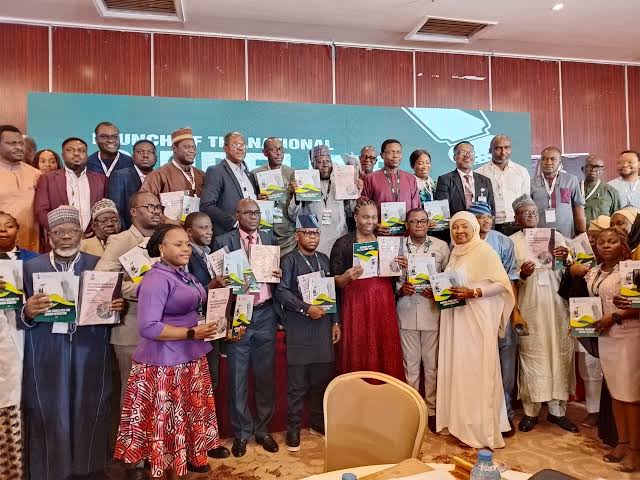
The Federal Government of Nigeria has launched the National Guideline for Sodium Reduction. This policy is designed to tackle excessive salt consumption and reduce the growing burden of hypertension and cardiovascular diseases in the country. With this development, manufacturers food, drinks and other related products would have to adjust their
The Minister of State for Health and Social Welfare, Dr. Iziaq Adekunle Salako unveiled the guideline at a ministerial event where he emphasized its role in safeguarding public health

Dr. Salako noted that Nigeria’s average daily salt intake significantly exceeds the World Health Organization (WHO) recommended limit of 5 grams per day, with many communities consuming between 7 to 9 grams daily.
He identified high sodium intake as a major factor contributing to hypertension, which currently affects over 35% of Nigerian adults.
“The guideline provides a structured approach to reducing sodium consumption through mandatory sodium limits in processed foods, public education campaigns, and continuous monitoring mechanisms,” Dr. Salako stated.
Regulatory enforcement
Dr. Salako called on the food industry to embrace reformulation by reducing sodium content in processed and packaged foods, assuring them of government support to facilitate a smooth transition.
He further directed the National Agency for Food and Drug Administration and Control (NAFDAC) to implement suitable regulations to enforce sodium targets across food products.
The initiative, described as the first of its kind in Africa, aligns with global best practices while considering Nigeria’s local context.
Alongside the sodium reduction policy, Dr. Salako announced the introduction of the National Guideline for Food Handlers’ Medical Test, which aims to enhance food safety by mandating routine health checks for individuals involved in food preparation and distribution.
Permanent Secretary of the Ministry, Daju Kacholom, mni, emphasized the urgency of tackling excessive sodium intake, which contributes to hypertension, cardiovascular diseases, and stroke.
“The new guidelines serve as a comprehensive, evidence-based tool to promote healthier diets and enhance food safety practices,” she stated.
She added that their success depends on collaboration between government agencies, health professionals, the food industry, and civil society.
She urged all stakeholders to support the adoption of the guidelines, emphasizing Nigeria’s commitment to strengthening public health policies