


… Dominates Short-Form Video at 51%
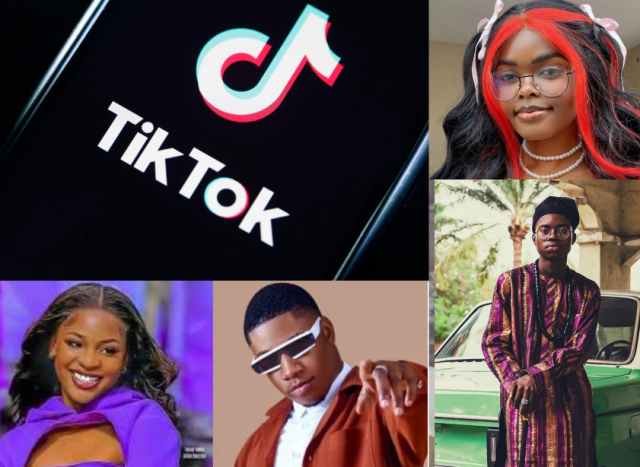

TikTok has ascended from social media platform to Nigeria’s primary cultural engine, doubling its user base between 2024 and 2025 to become the country’s largest social media platform, according to the sixth trend unveiled at the Top Trends 2026 conference held recently in Lagos.
The findings, presented by Emmanuel Adediran of mediaReach OMD, reveal that TikTok now sets the cultural agenda for Nigeria’s most economically important demographic, with brands that fail to develop authentic TikTok strategies risking cultural irrelevance among younger audiences who increasingly define trends, shape conversations, and drive purchasing decisions.
According to Data Reportal’s Nigeria Digital Report 2026, TikTok has doubled its user base in just one year to establish itself as the dominant social platform in Africa’s largest economy. The GeoPoll Top Trends survey conducted among urban Nigerians aged 18-34 and cited by Adediran confirms this dominance. 66% of young Nigerians use TikTok regularly, with an extraordinary 71% of those users accessing the platform daily. This daily engagement rate surpasses virtually every other social platform and rivals essential communication tools like WhatsApp and email.
TikTok’s dominance is particularly pronounced in short-form video content, where it commands an overwhelming 51.15% of usage among the survey’s respondents. This market share dwarfs competitors: Facebook Stories captures just 23.45%, YouTube Shorts holds 11.55%, and Instagram Reels trails at 10.30%.
“When one platform commands more than half the market and more than double its nearest competitor, we’re no longer talking about competition. We’re talking about category dominance,” Adediran explained during his presentation.
TikTok’s power derives from usage metrics and also from perceived authenticity, a quality highly valued by Nigerian consumers who express growing skepticism toward polished, corporate-produced content.
The survey reveals that 52% of users find TikTok content “very real and relatable,” with this perception particularly strong among female users (63% versus 44% among males). An additional 13% find TikTok content “somewhat more authentic,” while 13% consider it similar to other platforms in authenticity.
Only 5% perceive TikTok content as “mostly staged or exaggerated,” and just 6% find it “less authentic than other platforms.” These numbers indicate that TikTok has successfully positioned itself as the antithesis of heavily produced, brand-controlled media—a platform where real people share genuine experiences, unfiltered opinions, and unscripted moments.
Understanding TikTok’s role requires recognizing that it is fundamentally an entertainment platform that happens to facilitate commerce, education, and social connection, not the reverse. The survey data shows that 61% of users primarily use TikTok for entertainment, while 17% use it for learning new skills and trends.
The research identifies critical implications across three stakeholder groups. For the media: TikTok is no longer just social. It has become Nigeria’s most influential media channel, surpassing traditional broadcast media, print, and even established digital platforms in its ability to shape culture, drive trends, and influence behavior among younger demographics. Media planners must prioritize short, creator-led, native storytelling over polished, ad-heavy campaigns. The production values, formats, and communication styles that work on television or YouTube often fail catastrophically on TikTok, where users expect and reward content that feels native to the platform’s aesthetic and cultural norms.
For markets, influence has shifted decisively toward creators and communities rather than institutional brands and traditional celebrities. The most successful brand campaigns on TikTok often feature relatively unknown creators whose authenticity and platform fluency resonate more powerfully than celebrity endorsements or high-budget productions.
Also, consumers expect content that feels real, relatable, and entertaining first with any commercial message secondary and seamlessly integrated rather than intrusive. And finally, credibility comes from authenticity, not production value or brand authority. A small creator filming in their bedroom with a smartphone can command more influence and trust than a Fortune 500 company with unlimited production budgets if the creator’s content feels genuine while the brand’s feels forced.
The survey data on Instagram provides useful context for TikTok’s dominance. While 61.25% of respondents use Instagram multiple times daily and another 10.15% use it once daily, the platform’s 13.47% weekly usage and 10.15% rare usage suggest that even established platforms face engagement challenges compared to TikTok’s concentrated daily usage.
Now in its fifth edition, Top Trends continues to provide the data-driven insights that Nigerian marketers need to navigate an increasingly complex and dynamic consumer landscape. This year’s edition themed “Insight-Driven Decisions to Disrupt the Marketing Industry in 2026” brought together industry leaders, marketers, and brand strategists to explore the forces reshaping consumer engagement and brand strategy.
The platform, founded by mediaReach OMD in partnership with Lagos Business School, Pan-Atlantic University, GeoPoll, and the National Institute of Marketing of Nigeria (NIMN), has established itself as Nigeria’s premier marketing thought leadership forum.