
Insights From MarkHack CMOs’ Circle 3: Closing the Professionalization Deficit Gap, Barriers To Entry & The NIMN Question

In accordance with the Chatham House Rule, the discussions at the inaugural MarkHack CMO Circle are reported here without attribution to individual speakers or the organisations they represent. Participants spoke freely on that understanding, and their identities will not be disclosed.
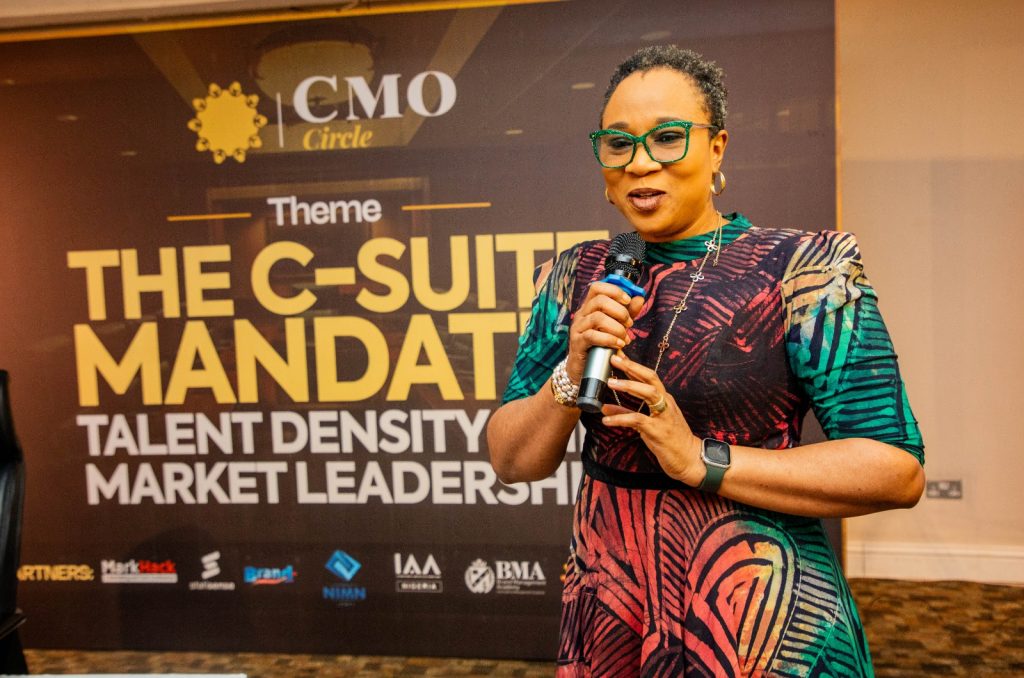
If the commercial acumen gap is the supply-side failure of marketing talent challenge, the professionalisation deficit is its structural foundation. At the inaugural MarkHack CMOs Circle held recently in Laagos, this dimension of the conversation produced perhaps the most searching and uncomfortable exchanges of the entire session.
The barrier to entry for the marketing profession in Nigeria, participants observed, has become so low as to be functionally non-existent. In virtually no other profession of comparable commercial importance like law, medicine, accounting, engineering, can an individual with no formal qualification, no professional membership, and no demonstrated competency simply declare themselves a practitioner and begin operating at scale.
Marketing, by contrast, has allowed exactly this to happen. The proliferation of social media and digital marketing as entry points has created an environment in which technical fluency with platforms and the ability to run a paid social campaign, produce a video, or grow a following is routinely mistaken for marketing expertise.
The consequences of this are visible in recruitment. As observed by senior practitioners at the CMOs Circle, in hiring for brand management roles, the candidate pool they encounter is increasingly dominated by individuals whose professional identity is built entirely around digital channels with self-described “digital marketers,” “social media experts,” and “content creators” who have limited to no grounding in the fundamentals of marketing strategy, consumer behaviour, category management, or commercial analysis. When these individuals are recruited into marketing functions and are not systematically developed against a rigourous professional standard, the mediocrity compounds across the organisation.
The more troubling observation, participants noted, is that the organisations doing the hiring bear responsibility for this state of affairs. When marketing leaders conduct recruitment without requiring professional membership, without testing for foundational marketing competency, and without a clear framework for what professional excellence in their function looks like, they are actively perpetuating a low entry bar.
The NIMN Question: Regulator, Gatekeeper, or Bystander?
No discussion of marketing professionalisation in Nigeria can avoid the National Institute of Marketing of Nigeria which is the statutory body established by law to regulate the practice of marketing in the country and to advance the professional standards of its practitioners. At the CMOs’ Circle, the NIMN’s role was examined with a frankness that the organisation’s own leadership might find both challenging and constructive.
The statutory mandate of NIMN is clear: under the act establishing it, no person is supposed to practise marketing professionally in Nigeria without being a member of the institute. This is a legislative requirement which is analogous, in principle, to the membership obligations of the Institute of Chartered Accountants of Nigeria for accounting professionals, or the Nigerian Bar Association for legal practitioners.
The uncomfortable reality acknowledged at the CMO Circle is that this mandate is not being effectively enforced and that the marketing community itself is largely responsible for this failure. Participants reflected that in the overwhelming majority of marketing recruitment processes conducted by organisations across Nigeria, NIMN membership is neither required nor requested. Many of the senior practitioners in the room acknowledged that they had not enquired about professional membership status in recent hiring decisions. Some reflected candidly that even they, as senior professionals in the industry, had at various points treated their own NIMN membership obligations with a degree of indifference.
The enforcement challenge is real. Attempts to apply the act more rigourously have, on previous occasions, generated resistance from within the profession itself with practitioners who should, by law and by professional solidarity, be most supportive of proper regulation instead treating enforcement efforts as an institutional overreach or, worse, as a personal agenda.
The path forward, as articulated in the room, requires movement on three fronts simultaneously. First, the reaffirmation of professional standards that define, with specificity, what competent marketing practice looks like at every career level. Second, the integration of those standards into recruitment processes across organisations, such that NIMN membership and demonstrated professional competency become non-negotiable conditions of employment in marketing functions. And third, the cultivation of a professional culture within the marketing community in which practitioners at every level actively invest in and protect the quality of their profession.
The Leadership Pipeline: Looking Down the Ladder
The final dimension of the CMO Circle’s talent conversation concerned the responsibility of today’s senior marketing leaders for the quality of tomorrow’s. The question asked, and not entirely comfortably answered, was this: how many of Nigeria’s current CMOs are actively building the generation of marketing leaders that will succeed them?
The honest assessment in the room was that this work is not happening systematically enough. Senior practitioners who are genuinely investing in the development of their teams by creating stretch assignments, facilitating cross-functional exposure, building commercial education into their talent programmes, and mentoring with rigour rather than familiarity are the exception rather than the rule. More commonly, the relationship between senior marketers and the talent beneath them is characterised by delegation without development, instruction without investment, and an implicit expectation that the next generation will figure things out as the current generation did, through experience rather than structured preparation.


This is a luxury the profession can no longer afford. If the marketing leadership talent pool in Nigeria is to produce the calibre of enterprise-wide commercial leaders that organisations increasingly require, the pipeline must be built deliberately, from the CMO level down, with a clear-eyed understanding of the competencies that matter and a genuine commitment to developing them.
One observation from the CMO Circle that crystallised this point came from a participant who described a team member receiving an employment offer at nearly three times their current salary and who chose to stay, not because of the money, but because of what they knew they would lose in terms of learning and development. That kind of talent gravity where people remain out of genuine conviction that their leader is making them better is the gold standard of marketing leadership. It is also, participants acknowledged, far rarer than the profession needs it to be.