


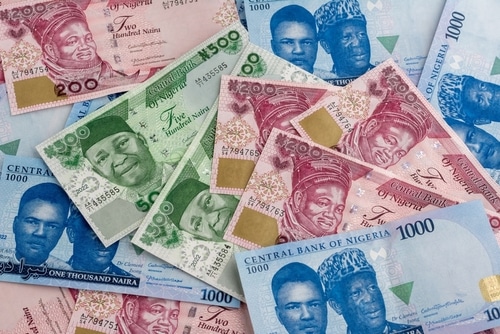
According to the latest Money and Credit Statistics released by the Central Bank of Nigeria (CBN), Nigerians held N5.19 trillion outside the banking system as of May 2026. This underscores the persistent preference for cash transactions despite significant investments in digital payment infrastructure, mobile banking services, and financial inclusion programmes across the country.
The latest Money and Credit Statistics revealed that currency held outside banks rose from N5.08 trillion in April to N5.19 trillion in May, an increase of N109.34 billion, or 2.15 per cent, within one month.

On a year-on-year basis, the figure increased by N559.16 billion from N4.63 trillion recorded in May 2025, reflecting a growth rate of 12.07 per cent.
The latest data comes as regulators, banks, fintech companies and mobile money operators continue to encourage the adoption of electronic payment channels, including bank transfers, mobile wallets, agent banking services and digital payment platforms.
Meanwhile, total currency in circulation climbed to N5.69 trillion in May 2026 from N5.65 trillion in April, marking a monthly increase of N43.59 billion or 0.77 per cent. Compared to the N5.02 trillion recorded in May 2025, currency in circulation expanded by N675.19 billion, representing an annual growth of 13.46 per cent.
The figures reveal that a significant proportion of cash released into the economy remains outside the formal banking system. In May, currency outside banks accounted for 91.27 per cent of total currency in circulation, up from 90.03 per cent in April. This means that more than nine out of every 10 naira in circulation were held by households, businesses and participants in the informal economy rather than deposited in banks.
Although slightly lower than the 92.40 per cent recorded in May 2025, the ratio highlights the continued importance of cash transactions across major segments of the Nigerian economy.
While cash holdings outside banks increased, the report reveals that reserves maintained by commercial banks with the CBN declined during the same period. Bank reserves fell from N34.60 trillion in April to N33.76 trillion in May, a decrease of N840.77 billion or 2.43 per cent.
The decline points to reduced liquidity buffers within the banking sector, even as more cash circulated outside formal financial channels. However, compared to May 2025, reserve balances remained stronger, rising by N2.90 trillion from N30.87 trillion, representing annual growth of 9.39 per cent.
The latest figures suggest that Nigeria’s transition toward a digital economy is advancing alongside a sustained demand for physical cash rather than replacing it entirely. Despite the rapid expansion of instant payment systems, mobile banking applications, fintech services and agent banking networks, cash remains central to retail transactions, transportation, informal trade and economic activities in rural communities.
Speaking recently at the launch of the Nigeria Payment System Vision (PSV) 2028 in Abuja, CBN Governor Olayemi Cardoso said the initiative is designed to build on the country’s digital payment progress and accelerate the shift toward a more inclusive, technology-driven financial ecosystem.
Under the new vision, the apex bank aims to reduce the proportion of cash held outside the banking system to below 40 per cent of total currency in circulation. To support this goal, more than 10 million QR-code and tap-to-pay acceptance points are expected to be deployed across markets, transport hubs, rural communities and commercial centres nationwide.