


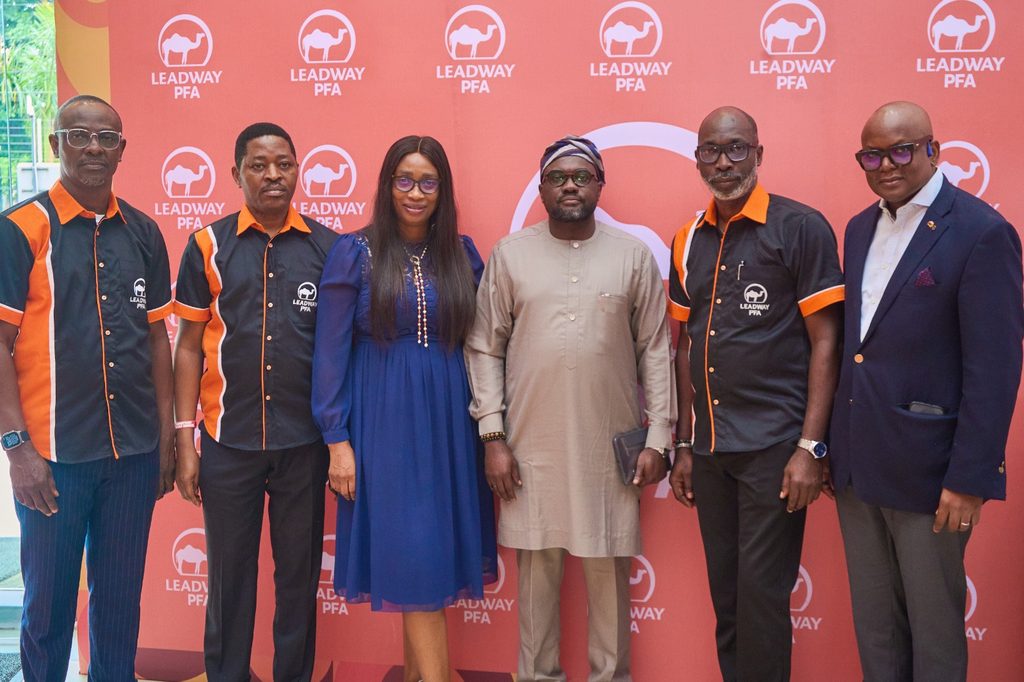
Nigeria’s pension industry has gradually become one of the most consequential arenas in the country’s financial system. This relevance stems from its position as the custodian of long-term savings for millions of workers gathered over decades of quiet, compounding contributions. A superb player in that arena has emerged as a newly consolidated entity: Leadway PFA, formed from the merger of Leadway Pensure and PAL Pensions. This new megabrand now manages more than N3 trillion in assets on behalf of over 1.2 million Retirement Savings Account (RSA) holders, a scale that places it among the country’s leading Pension Fund Administrators.

What makes this moment noteworthy isn’t the size or numbers alone. Big numbers are easy to announce and easy to forget. What matters more is what the merger reveals about the direction the industry is advancing, and what it will now take for a Pension Fund Administrator to be considered genuinely equipped for the responsibility it holds, not just today, but over the next decade of a pension system that is itself still maturing.
Two Institutions, One Mandate

Mergers in financial services are often regarded as transactions, that is, assets combined, market share consolidated, headlines generated, and press releases issued. But the formation of Leadway PFA can be better understood as the joining of two institutional track records than as a purely commercial manoeuvre. Leadway Pensure brings over twenty years of experience managing retirement savings, built through multiple economic cycles and regulatory changes. PAL Pensions brought its own base of contributors and operational history, shaped by its own leadership decisions and customer relationships over the years. Together, the merger folded their people, systems, risk frameworks, and customer bases into a single structure built to operate at a scale that neither institution could have sustained independently in the years ahead.
For Leadway Pensure, the shift is being framed internally not as a conclusion but as a continuation, a widening of a mandate the company has held since the early, uncertain days of Nigeria’s Contributory Pension Scheme. When that scheme was launched in 2004, it asked Nigerians to do something largely unfamiliar at the time: hand over long-term financial trust to institutions that had little track record yet to point to, no history of decades to lean on for reassurance. There was scepticism. There were questions about whether a system this new could actually protect people’s contributions over a working lifetime.
Building a track record able to answer that scepticism became the slow work of the two decades that followed. Service improvements were made incrementally, and technology investments were made ahead of visible demand, with the gradual accumulation of customer confidence. With one renewed contribution at a time, that work culminated in industry recognition, including consecutive service excellence honours, and a contributor base that grew steadily into the millions. It’s that accumulated institutional memory, not just the balance sheet, that Leadway PFA now carries forward.


Why Now
The timing of the consolidation is inseparable from where the regulatory environment is heading. The National Pension Commission (PenCom) has raised the minimum capital requirement for PFAs from N2 billion to N20 billion, a tenfold jump that is reshaping the competitive map of the industry, pushing smaller or thinly capitalised operators toward mergers, acquisitions, or, in some cases, exit altogether. This isn’t a marginal regulatory tweak; it’s a structural filter that will determine which institutions remain viable custodians of Nigerians’ retirement savings over the next several years.
It is against that backdrop that the union of Leadway Pensure and PAL Pensions reads less like an isolated corporate event and more like an early, deliberate move into a consolidation wave the rest of the industry is likely to follow in the coming years. Institutions that wait to be forced into merger conversations tend to negotiate from weaker positions; those that move earlier, as this merger suggests, are typically better placed to shape the terms of their own combination rather than have those terms dictated by circumstance.
Olusakin Labeodan, Managing Director and Chief Executive Officer of Leadway PFA, explains the logic behind the deal, “If you want to go far, go together.” It’s a modest line, but it captures something real about where the industry now sits, an environment where capital strength, investment sophistication, and risk management capacity increasingly decide which institutions get to keep the trust of contributors, and which get quietly absorbed by those that do.
Beyond the Balance Sheet
For an institution managing retirement savings at this scale, the more important measure of success isn’t the headline asset figure; it’s what that figure actually enables for the people behind it. Does a larger, better-capitalised Leadway PFA process retirement benefit claims faster than its predecessor entities managed separately? Does its expanded investment capacity translate into stronger, more consistent returns credited to individual RSAs over time? Does combining two technology infrastructures actually make it simpler for an ordinary contributor, someone checking a balance during a lunch break, or trying to update a record before retirement, to get what they need without friction?
These are the questions that will ultimately determine whether this merger is remembered as a genuine improvement in service delivery for over a million Nigerians, or merely as a defensive response to a rising capital threshold. Scale, on its own, guarantees very little. It is what an institution chooses to do with that scale; how it reinvests it, whom it prioritises, how transparently it communicates change, that is what determines whether a merger becomes meaningful for the people it serves.
The company’s public positioning suggests an awareness of this distinction. Its messaging around the merger consistently returns to continuity of purpose rather than simply celebrating scale for its own sake. This signal, if followed through in practice, reveals that the institution understands the difference between a bigger balance sheet and a better-served customer.
That framing falls in line with what has long been positioned as the founding responsibility of Leadway Pensure: earning and sustaining the trust of Nigerians navigating a pension system that, for many contributors even today, still feels difficult to fully understand. Viewed that way, the merger isn’t a departure from the previous responsibilities; it is, rather, an attempt to fund it more adequately, at a moment when the industry is demanding more capital, more infrastructure, and more institutional resilience than a single legacy entity could easily provide on its own.


What Comes Next
For the 1.2 million-plus RSA holders now under Leadway PFA, the change is unlikely to arrive as a single visible event, marked by a launch date on a calendar. It will more likely surface gradually, almost invisibly at first, in how quickly a claim is settled, in the clarity of a statement received, in the quiet reassurance of simply knowing that the institution holding one’s retirement savings has a balance sheet capable of absorbing whatever economic shocks the years ahead may bring.
That, ultimately, is the real test facing Leadway PFA: not whether it can announce a merger convincingly, that part is already done, but whether it can convert two decades of separate institutional experience, now combined under one roof, into measurable improvements for the contributors depending on it. Nigeria’s pension industry has entered a phase where scale is no longer simply a competitive advantage; it is fast becoming a baseline requirement for staying in the game at all. The administrators that will matter most over the next decade are the ones who treat consolidation as a starting point for deeper accountability, not as an end in itself worth celebrating and then setting aside.
As Leadway PFA holds to that high standard, using its newly expanded capacity to serve consumers reliably, it will offer a useful model on how consolidation in Nigeria’s financial services sector can produce something extremely durable. As the Leadway PFA brand takes its stride excellently, it is poised to become the foundation for an institution genuinely capable of carrying the retirement ambitions of millions of Nigerians further than any of its predecessors could have carried in Nigeria’s fast-growing economy.


