

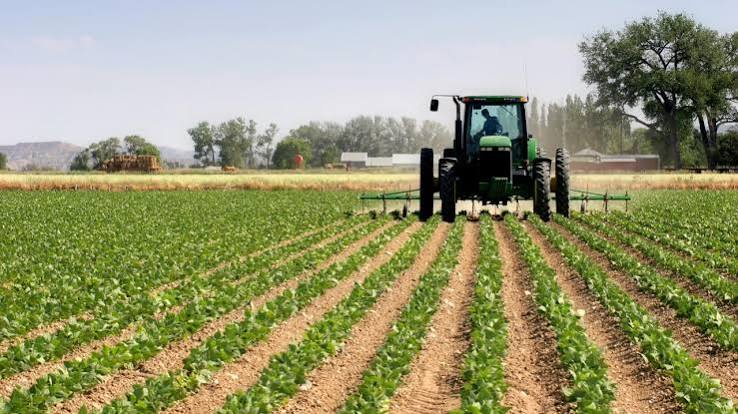
When Lawan Abdul, a soybean farmer in northern Nigeria, said his yields have risen by almost 100% since he adopted a handful of soil-friendly techniques, he was describing something agronomists have long argued, but few smallholders have witnessed on their own plots: that farming in a way that repairs the land can also pay gainful returns. While this testimony, which was given at a celebration of Nestlé’s regenerative agriculture pilot might be seen as just one farmer’s account rather than a conclusive scientific study; it illustrates the potential productivity gains associated with improved farming practices and aptly captures why Nestlé’s regenerative agriculture policy, which has gathered pace over the past year, is receiving close attention across Nigeria.
The policy is simple and straightforward; Nestlé defines regenerative agriculture as a farming system that conserves and restores soil, water, and biodiversity, captures carbon in soils, enriches vegetation and improves farmers’ livelihoods. It rests on six pillars, namely soil health, water security, water quality, biodiversity, diverse cropping systems with livestock integration, and collective action at the landscape level.
Agriculture across Nigeria is confronting mounting pressures from declining soil fertility, unpredictable rainfall, rising temperatures and land degradation. These challenges are threatening farm productivity, food security and the livelihoods of millions of smallholder farmers whose survival depends on increasingly fragile agricultural systems.

For food manufacturers, the implications are equally significant. The availability, quality and cost of raw materials depend heavily on the health of the ecosystems in which they are produced. As climate change intensifies, securing reliable agricultural supplies requires more than establishing procurement networks; it demands investment in the long-term productivity of farmland and the resilience of farming communities.
It is within this reality that regenerative agriculture is gaining prominence as a practical approach to transforming food production. Unlike conventional sustainability measures that primarily seek to minimise environmental damage, regenerative agriculture aims to restore and improve the natural resources on which farming depends, particularly soil, water and biodiversity.
Practices such as minimum tillage, cover cropping, crop rotation, mulching, tree planting and improved water management help conserve soil nutrients, retain moisture, reduce erosion and strengthen agricultural resilience.
Nestlé has increasingly positioned this approach at the centre of its global agricultural strategy. The company recognises that nearly two-thirds of its greenhouse gas emissions originate outside its direct operations, particularly from agriculture and land-use change. Transforming agricultural production is therefore important to its broader climate ambitions. The company targets sourcing 50% of its key ingredients from farmers adopting regenerative agriculture practices by 2030, representing more than 14 million tonnes of ingredients.
This year, the company also widened the lens from its own supply chains to the industry. Nestlé joined more than 40 food and agriculture businesses in backing the Regenerating Together Programme of the Sustainable Agriculture Initiative Platform, which offers practical guidance, transition support and verification protocols so that “regenerative” means the same thing from one supplier to the next. Developed over more than four years, with pilots across 23 farming systems in 25 countries and the backing of groups such as The Nature Conservancy and Earthworm Foundation, the programme tackles a criticism that has dogged the concept: that it is easy to claim and hard to verify. Pascal Chapot, Nestlé’s Head of Agriculture, argues that adoption will accelerate only if frameworks are practical and credible enough to be applied consistently across value chains.
West Africa is where these ambitions meet hard realities. Declining soil fertility, erratic rainfall, import dependence and rural poverty are all present, and the region supplies ingredients ranging from soybean and maize to cocoa, coffee and milk.
In Nigeria, this ambition is becoming increasingly visible through interventions spanning grain production, coffee cultivation and dairy development. These initiatives reflect a growing effort to connect environmental restoration with agricultural productivity, farmer income and resilient supply chains.
From Pilot To Scale: Regenerative Agriculture Takes Root In Nigeria
One of the clearest expressions of Nestlé’s strategy in Nigeria is emerging from its soybean and grain value-chain interventions, particularly through Maggi, the company’s popular seasoning and culinary brand.
The journey gained momentum in 2023 when Maggi launched a regenerative agriculture pilot targeting soybean farmers. Soybean is an important ingredient in Maggi products, making sustainable local production particularly relevant to the company’s sourcing strategy.
Implemented in partnership with TechnoServe and IDH, with technical guidance from Ghana’s Centre for No-Till Agriculture, the pilot supported 1,030 farmers through training, improved inputs and access to equipment. More than ₦100 million was invested in introducing practical techniques including cover cropping, minimum tillage, crop rotation and hedgerows.
These methods address some of the underlying challenges confronting smallholder agriculture. Repeated intensive cultivation can deplete soil nutrients, weaken soil structure and accelerate erosion. By reducing soil disturbance, maintaining ground cover and rotating crops, farmers can improve moisture retention, protect soil fertility and support long-term productivity.
The programme also demonstrated the potential economic benefits of these interventions. Following the pilot, the initiative evolved into a broader intervention involving Nestlé, AGRA (Alliance for Green Revolution in Africa) and TechnoServe through the Strengthening Farmers’ and SMEs’ Resilience through Climate-Smart Grain Production and Accessing Structured Markets (StreFaS) project.
Backed by an investment of more than $1 million, StreFaS is a three-year initiative running from June 2024 to October 2027 across Kaduna and Nasarawa states. It targets 25,000 smallholder farmers and focuses on the regenerative production of maize, soybean, rice and sorghum. Its significance lies in addressing two major constraints facing Nigerian farmers: limited access to improved agricultural practices and unreliable markets for their produce.
Beyond training, the project connects farmers to structured markets including Nestlé’s supply chain, while supporting agricultural aggregators and small businesses. This market-driven approach is important because farmers are more likely to sustain improved production methods when they can translate higher productivity into dependable income.
The early results indicate considerable progress. According to project figures, StreFaS has engaged 12,373 farmers, with young people accounting for 40% of participants. It has established 270 demonstration farms, aggregated 74,223 metric tonnes of grain and supported the adoption of regenerative practices across 1,853 hectares. These figures demonstrate the project’s growing reach, although they should be distinguished from independently verified improvements in soil health or nationwide agricultural productivity.
For Nestlé, the commercial benefits include strengthening local sourcing, reducing exposure to supply disruptions and improving the availability of essential ingredients. For farmers, the opportunity lies in better production techniques, stronger market connections and potentially improved earnings. The involvement of AGRA and TechnoServe also brings together private-sector investment, agricultural development expertise and practical market access.
Nevertheless, the main challenge will be whether farmers continue adopting these practices beyond the project’s lifespan. Sustained progress will require access to finance, affordable inputs, extension services and reliable buyers. Regenerative agriculture cannot become mainstream if smallholders are expected to shoulder the costs and risks of the transition alone.
Beyond Grains: Extending the Agricultural Transformation
Nigeria’s dairy sector offers another dimension of the company’s agricultural engagement through the Nestlé Livestock Development Programme (NLDP), established in 2019. Implemented with partners including CBI Innovations Limited and the International Fertiliser Development Centre’s 2SCALE programme, the initiative supports pastoralists and smallholder dairy farmers through improved animal health, better feed and fodder, hygienic milk production, cooperative development and investment in collection infrastructure.
At Paikon Kore in the Federal Capital Territory and Ladugga in Kaduna State, the programme has supported the development of milk collection and cooling facilities. By December 2022, its collection and cooling capacity had increased to 6,500 litres daily, while 4,391 milk producers and smallholder farmers had been empowered.
The programme has also invested in water infrastructure, herd health and solar-powered facilities. A 30KVA solar system was installed at the Paikon Kore milk collection and cooling centre alongside solar-powered boreholes. Although these figures represent earlier programme milestones rather than new 2026 achievements, they demonstrate how investment in local agricultural infrastructure can, over many years, improve productivity, milk quality and access to formal markets. The initiative is particularly relevant to Nigeria’s efforts to strengthen domestic milk production and reduce dependence on imported dairy products.
Meanwhile, Nestlé’s participation in the Sustainable Agriculture Initiative Platform’s Regenerating Together Programme in 2026 adds another dimension to its strategy. Supported by more than 40 food and agriculture businesses, the initiative provides practical guidance, transition support and verification protocols for scaling regenerative agriculture across global supply chains.
Its importance lies in promoting consistency and transparency in measuring regenerative practices, helping companies move beyond broad sustainability commitments towards more credible implementation and assessment.

Future Prospects: Turning Commitments into Lasting Impact
Despite the progress recorded across these initiatives, the larger challenge for Nestlé and its partners is ensuring that regenerative agriculture moves from individual projects into a widely adopted model of production across Nigeria and West Africa.
Nestlé reported that 20.7% of its key ingredient volumes were sourced from farmers adopting regenerative agriculture practices in 2025, against its 50% target for 2030. This provides an indication of progress towards its global ambition, although the company has also updated its measurement methodology and ingredient scope.
For Nigeria, achieving meaningful progress will depend on addressing structural challenges that have historically constrained agricultural productivity. Smallholder farmers frequently lack affordable financing, quality inputs, modern equipment, reliable extension services and adequate storage facilities. The transition also requires time and investment. Some benefits, particularly improvements in soil organic matter and biodiversity may take several farming seasons to become fully apparent.
Nestlé’s approach recognises that farmers should not bear the financial burden alone. Its agricultural framework emphasises technical assistance, investment support and premiums for regenerative agricultural products, alongside the principle of a just transition.
Deeper collaboration with state governments, research institutions, financial organisations and development agencies will also be essential. Public investment in rural roads, irrigation, extension services and climate information systems can complement private-sector initiatives and accelerate adoption.
The participation of women and young people presents another opportunity. With youth accounting for 40% of farmers engaged by StreFaS, the project offers a pathway to make agriculture more attractive to younger Nigerians through technical knowledge, market access and entrepreneurship.
Ultimately, the success of regenerative agriculture should be measured not merely by farmers trained, demonstration plots established or tonnes of produce aggregated, but by sustained improvements in soil health, water conservation, productivity, farmer incomes and the resilience of agricultural communities.
From soybean fields in Kaduna and Nasarawa to coffee plantations in Côte d’Ivoire and dairy-producing communities in Nigeria, Nestlé’s interventions illustrate how environmental restoration can complement commercial agricultural development.
The challenge now is to expand these initiatives, strengthen partnerships and demonstrate measurable, lasting results. If sustained investment and farmer-centred support are maintained, regenerative agriculture could become an important contributor to a more productive, climate-resilient and commercially viable agricultural sector across Nigeria and West Africa. The future of food production, ultimately, depends not only on what farmers harvest today but also on the condition of the land they leave for tomorrow.
Several tests indeed lie ahead as farmer economics must hold, premium payments and technical support have to outlast project cycles, and the “just transition” pledge implies that companies and their partners, not smallholders, will absorb the early costs. Public policy and finance matter too, from extension services and access to inputs and equipment to land tenure and credit, which is why the involvement of some state governments and AGRA’s call for closer collaboration among governments, development agencies, agribusinesses and farmers carries weight. Over the past year, Nestlé’s regenerative agriculture policy has moved in Nigeria and West Africa from corporate commitment to a measurable programme of work: premium payments in Kaduna and Nasarawa, tens of thousands of cocoa households receiving incentives, and higher-yielding coffee varieties heading to cooperatives. The evidence so far is encouraging rather than conclusive. For smallholders like Lawan Abdul, regeneration will be judged by whether the next harvest and the one after, is beneficial. If it does, a policy conceived within the confines of a boardroom could become common practice in the farming fields of West Africa; yielding profitable, inclusive and sustainable returns.
