
Aig-Imoukhuede Raises Curtain At 2026 National Advertising Conference As Advertising Industry Braces For ‘The Next Frontier’

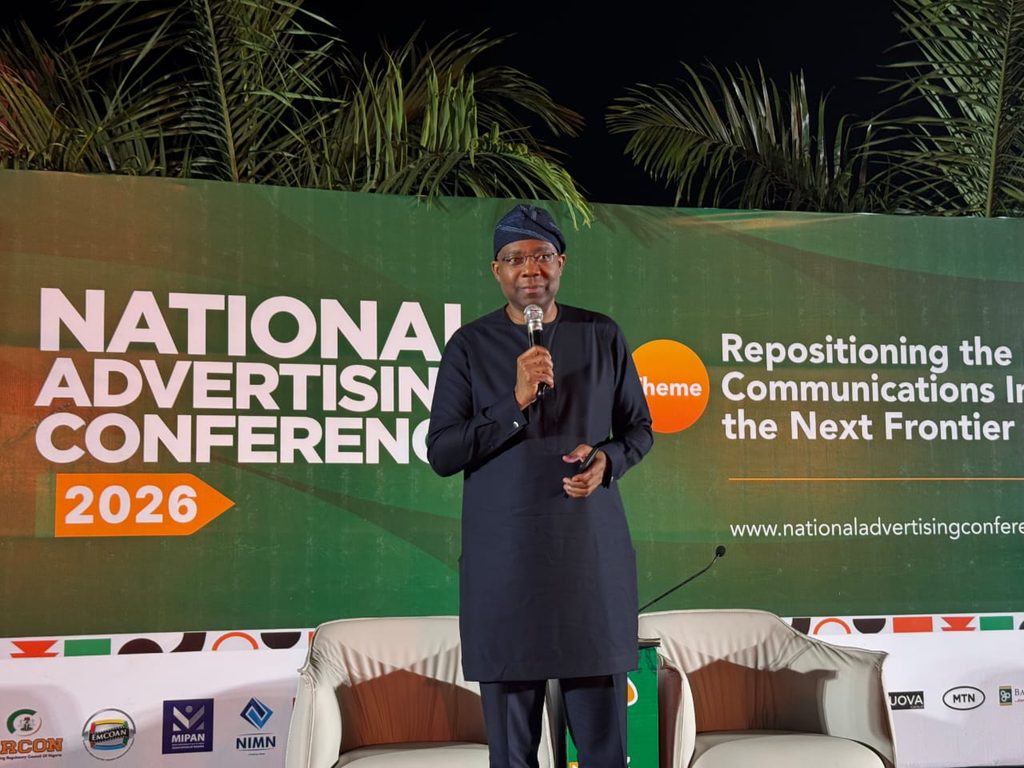
Access Holdings Plc Chairman Aigboje Aig-Imoukhuede today raised the curtain on the 2026 edition of the National Advertising Conference (NAC) with the question”Are we ready for the next frontier?” His fireside chat at the Abuja Continental Hotel opened a three-day gathering organised by the Advertising Regulatory Council of Nigeria (ARCON) under the theme “Repositioning the Marketing Communications Industry for the Next Frontier”.
The annual conference which began since 2019 brings together advertising professionals, brand owners, regulators and academics to chart a workable path forward for an industry under pressure from rapid technological change and tightening regulation.
This year’s edition is being framed by organisers as a shift “from conversation to action.” Tunji Adeyinka, chairman of the conference planning committee, said at a pre-event briefing that the conference would no longer be content with broad industry diagnosis but would produce “concrete, actionable outcomes.”


Perhaps the most closely watched item on the agenda would be ARCON’s first formal presentation of a regulatory framework for digital marketing and AI in Nigeria. According to Adeyinka, a cross-functional industry committee has spent months working through the regulatory questions raised by digital advertising and AI, and its recommendations were shared with ARCON and other key stakeholders ahead of the conference. What delegates will see is a revised model shaped by internal industry negotiation.
ARCON Director-General Olalekan Fadolapo has said this year’s conference is expected to draw at least 700 participants, up from about 500 last year, a rise that itself signals how closely the industry is watching the regulatory direction. A separate committee report on the African Continental Free Trade Area (AfCFTA) and its implications for marketing communications will also be presented, intended to give agencies and brands a framework for cross-border work across the continent.
The main conference programme which begins tomorrow, Thursday, spans the economic outlook for Nigeria, the chief marketing officer’s perspective on rethinking marketing communications, an agency forum on whether the agency sector is ready for the next frontier, the future of broadcast media and audience measurement, the rise of platforms, regulation of digital marketing and AI, enduring creative principles, dimensioning the informal market, and the place of advertising in Nigeria’s creative economy.
Breakout sessions drill into generative AI versus authentic human storytelling, Gen Z media habits, influencer marketing, the future of industry awards, out-of-home media, data privacy and protection, consumer trust and purchasing decisions, human creativity versus AI, broadcast digitisation, talent pipeline management, the ICC Code of Advertising and Marketing Communications, Gen Z and Gen Alpha consumers, language distortion in advertising targeted at northern Nigeria, and brand experience as competitive advantage.

Notably, broadcast audience measurement gets its own “Media Outlook” slot. ARCON has confirmed that early data and insights from DeepMove Meter, a television audience measurement system, will be presented. For television stations and brands that have long struggled with opaque ratings and unverifiable campaign performance, the system’s progress directly affects where billions of naira in advertising budgets flow. The data privacy workshop similarly responds to tightening compliance requirements from the Nigeria Data Protection Commission (NDPC). Adeyinka said plainly that any organisation processing consumer data “should register with the NDPC” and understand its obligations under the Nigeria Data Protection Act.
Later in the programme, Hannatu Musa Musawa, Minister of Art, Culture, Tourism and the Creative Economy is expected .to take to the stage alongside Obi Asika, Director-General of the National Council for Arts and Culture. The government has set an audacious target of $100 billion in creative-economy GDP contribution by 2030, and advertising, the most commercialised segment of the creative industries and the one directly tied to brand budgets, should be a core contributor. Yet industry observers note that marketing communications is often “mentioned but not seated at the table” in creative-economy policy discussions.
