WPRF 2026: Self-Regulation Must Move From Codes To Enforcement, United Nigeria Boss Tells Global PR Forum

The founder and CEO of United Nigeria Airlines, Obiora Okonkwo, has challenged the public relations industry to move beyond aspirational codes of conduct and embrace credible enforcement mechanisms, arguing that self-regulation without accountability is just a slogan.
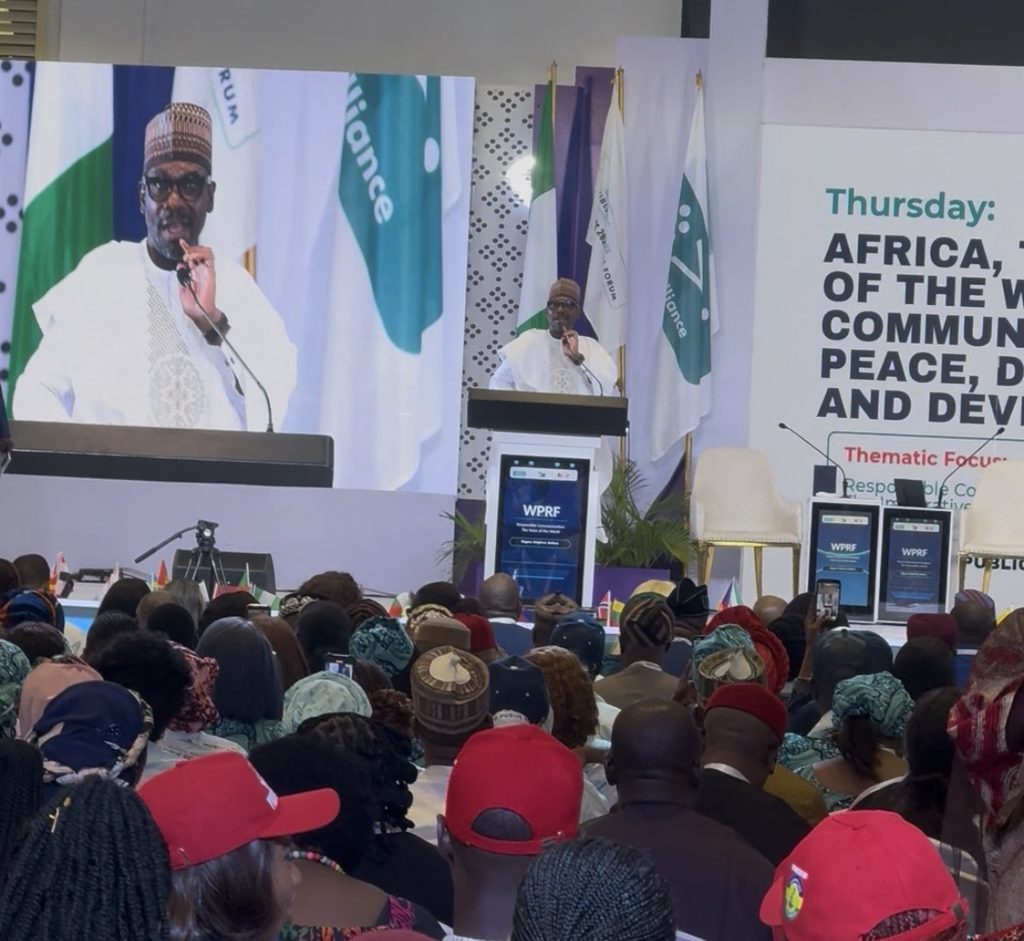
Speaking at the 2026 World Public Relations Forum (WPRF) in Abuja today, Okonkwo said the credibility of the profession depends not just on the eloquence of its ethical declarations but on its willingness to police itself. “Self-regulation must go beyond codes of conduct to embrace credible enforcement, accountability, continuous professional education, and an uncompromising commitment to accuracy, transparency, and the public interest,” he told delegates.
His intervention came during a session dedicated to the theme of responsible communication in Africa, where the continent’s information ministers, parliamentary speakers, and PR leaders gathered to confront the industry’s response to misinformation, disinformation, and declining public trust.
Okonkwo, who built one of Nigeria’s leading domestic airlines, drew on his experience in the aviation sector to illustrate the reputational consequences of communication failures. He described aviation as a “high-trust industry” where operational disruptions, delays, cancellations, and safety incidents can rapidly generate public anxiety and where evasive statements or concealment of facts can turn manageable difficulties into reputational crises.

The aviation chief contextualised the industry’s self-regulatory failures within a broader crisis of information integrity across the continent. He cited a 2024 analysis by the Africa Centre for Strategic Studies documenting 189 disinformation campaigns across at least 39 African countries nearly four times the number identified in 2022.
He also referenced UNESCO’s 2024 survey of digital content creators, which found that 62 percent did not undertake rigorous fact-checking before sharing information, while 73 percent expressed a desire for training. The Reuters Institute’s 2024 Digital News Report, he added, showed concern across African markets about distinguishing real from fake information online.
“The power of a global voice is undeniable, but its true power lies in the responsibility with which that voice is exercised,” Okonkwo said, warning that “public relations in particular must resist being reduced to propaganda.”
Okonkwo invoked the 1994 Rwandan genocide as the most tragic example of communication’s destructive potential, noting how the radio station RTLM became an instrument for propagating ethnic hatred and incitement to violence. The International Criminal Tribunal for Rwanda subsequently established the criminal responsibility of media figures for their role in inciting genocide, proving, he said, that “communication is not always an innocent exercise.”
He also pointed to Nigeria’s 2023 presidential elections, where social media facilitated political mobilisation but also enabled the circulation of unverified claims and divisive ethnic narratives, as documented by the European Union Election Observation Mission. The COVID-19 pandemic, during which the World Health Organization identified an “infodemic” of false and misleading content, provided a further illustration of the stakes.
Okonkwo went on to outline three interconnected obligations for the industry: self-regulation with teeth, responsible corporate communication grounded in truthfulness, and a commitment to protecting democratic institutions from the corrosive effects of manipulated information. “Peace, democracy, and development cannot flourish where truth is compromised, information manipulated, and public trust undermined,” he said.