

By Ntia Usukuma

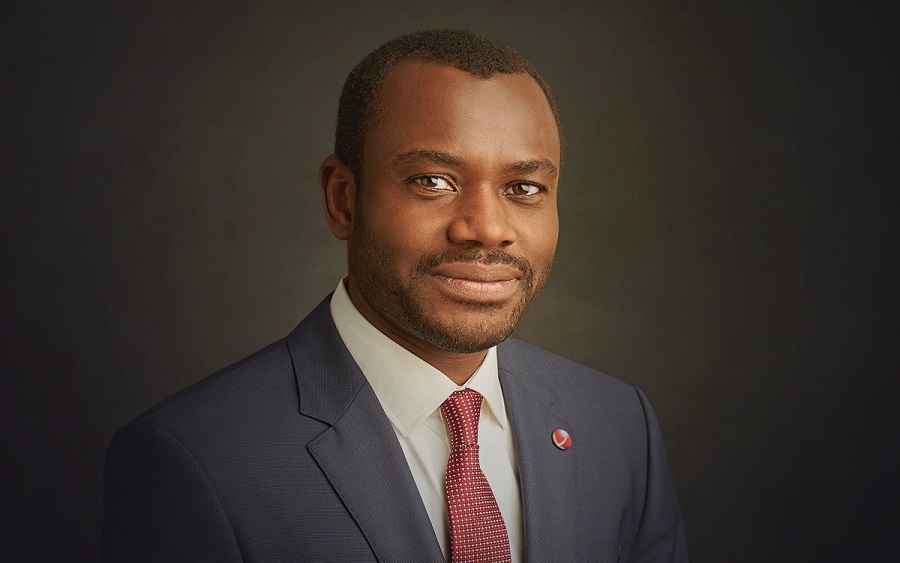
Organizations that fail to plan in times of abundance tend to wobble terribly when challenges confront them at a later stage. This assertion was made by the Managing Director of Sterling Bank, Abubakar Suleiman while dissecting the topic, “Doom, Gloom, Boom! Where Do We Sit” at the 46th congress of the Association of Advertising Agencies of Nigeria (AAAN) that took place recently at Ibadan, Oyo State.
In Abubakar Suleiman’s opinion, one of the challenges many organisations face is that when they are in gloomy times, that is when they begin to prepare their escape from doom “whereas they should have prepared earlier, in time of boom, for the inevitable downward trend. Many organisations had been acting like there is never going to be any downward slide at any time in the future. This is a huge error.
“So if there is one lesson for all from this congress, it should be how vital we need to keep preparing for all types of eventualities at every cycle of existence. Bloom and doom are part of our natural circle. Nobody saw COVID 19 coming but only those why prepared and adapted promptly stood firm, as individuals or companies. We will always have downtimes and uptimes along the trajectory of our existence.”
The Sterling Bank MD also shared the positive impact that came from the steps his bank took to challenge the age-long notion that if you work in the bank in Lagos or any major city in Nigeria you must leave your hours at 5 am and get back home at 9 pm if you are lucky to experience minimal traffic.
He revealed that sterling bank started five years ago with the concept of remote work, variable time, and variable space. This means workers were allowed to Work from the nearest branch to their residence irrespective of where they serve, and some staff are allowed to resume at different times within the day. Less than a year ago, the bank started experimenting with hybrid services where some people come to work 3 or 4 days and work the rest of the days from home. When COVID came they had adjusted massively to the concept of remote work while others were struggling to start.
At present, Suleiman revealed that the bank has 56 percent of its staff working under the hybrid arrangement where they come to work 2-3 days a week, about 25 percent are totally remote workers that are not expected to come to the office at all. What was a huge setback for many became a huge stepping stone for them as they adjusted fast and the flexibility massively improved the quality of people they hired. “Usually the best opportunities show up when many others have given up” he added.
Suleiman also pointed out the expanding and disruptive impact of disintermediation that removes the middleman from transactions as one issue agencies should collectively tackle if they must remain in business.
“As an agency, what do you do in a world of disintermediation because the concept of the agency, is that you are an intermediary, standing between two different segments of an ecosystem with higher competencies?
“Given the availability of technology, a lot more information has become available and there are so many more people that can carry out the research, projects that previously would require deep intellectual content that only an agency would have invested in.
“So the question for the agencies is not just on COVID or what to do now, it is how to handle a time in which professionals and now suffering from disintermediation arising from new tech, with so many individuals or small groups competing for the few jobs,” he said.
How agencies can retain the best talent possible was also touched by the sterling Bank MD who equally feels that the challenge agencies face has always been the challenge of talent. He equally raises many pertinent questions: “if you have a grade-A staff, how do you handle the possibility of Sterling bank walking in tomorrow with an offer and the person jumps at the job? How do you ensure you don’t waste 5-10 years training your best talents only for other firms to take them away? ”
Suleiman equally pointed out that this challenge has now been globalized and we have now gotten to a point where it is no longer a question of a firm next door taking away your best talent, but someone sitting down in faraway Brazil or Norway snatching away your talents.
He opined if COVID did anything, it is the wake-up call to the reason that we were able to retain some of our talents before was a lot of the countries were not interested in taking as many of them across the border as they would want.
His words, “However they are now quite comfortable with taking the skills that they have across the borders. So what started as outsourcing at that time to companies, especially in places like India is now coming to the individual level. For me, this is an existential threat that we must all collectively confront.
Thanks to the pandemic and new technology, there is no difference between working for an agency in London and another in Ikeja.
Suleiman equally sees a bigger opportunity for agencies who were only bold enough to explore the West African sub-region before now.
He wants Nigerian agencies to expand their imagination to know that their market could be as far as South America, and other places that are quite similar to the home market. In his words, “in the same way that those out there are coming after your talent, we need to start thinking about the advantages that we can immediately harvest when we go into their market, especially markets large diaspora communities.”