
Information Minister Rallies PR Professionals To Champion Economic Renaissance At Ongoing NPRW In Uyo

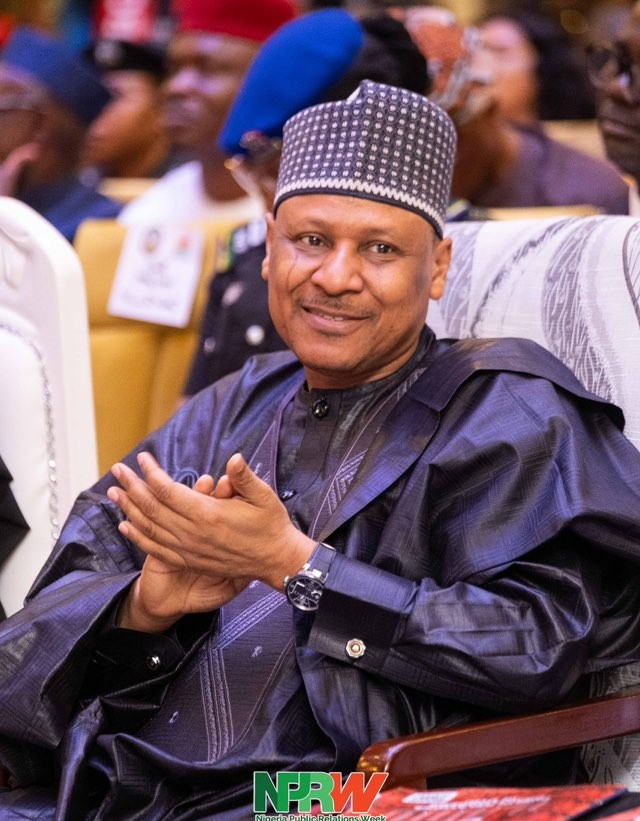
At the opening session of the ongoing Nigeria Public Relations Week (NPRW), holding at the CEEDAPEG Hotel in Uyo, Akwa Ibom State, the Minister of Information and National Orientation, Mohammed Idris, FNIPR, called on public relations professionals across the nation to take ownership of Nigeria’s national narrative and actively contribute to the country’s ongoing economic transformation.
Speaking at the CEEDAPEG Hotel in the Akwa Ibom State capital, the Minister described the gathering as more than a ceremonial assembly, hailing it as a symbol of the renaissance currently sweeping through the Nigerian Institute of Public Relations (NIPR). Reflecting on the journey from the last NPRW held in Abeokuta, Ogun State, Idris noted that the event had evolved into a crucial response mechanism to the changing dynamics of public communication, as well as a confluence of vision, leadership, and institutional renewal.
The Minister commended the current leadership of the NIPR for its “remarkable will” to reposition the Institute, especially during what he called a “significant national rebirth.” He praised Dr. Ike Neliaku, FNIPR, the President and Chairman of Council of the Institute, for elevating the profile of Nigeria’s PR community on the global stage. Dr. Neliaku was recently appointed as Regional Delegate-at-Large of the Global Alliance for Public Relations and Communication Management, a development Idris said reflects the growing recognition of Nigeria’s communicators both locally and internationally.
The theme of this year’s NPRW, “Harnessing Public Relations for Nigeria’s Economic Renaissance,” served as a launching pad for the Minister’s call to action. He said the topic was timely and compelling, capturing the urgency of using strategic communication to mobilize the population behind the sweeping economic reforms of President Bola Ahmed Tinubu’s administration.
Idris made it unequivocally clear that he believes Nigeria is undergoing a profound economic rebirth under the banner of the Renewed Hope Agenda. He challenged PR professionals to deploy their expertise in persuasive and inclusive messaging to help align public perception with the government’s development goals. The country, he noted, is not just in need of good policies, but also a credible and consistent narrative that citizens at home and abroad can connect with and champion.
Delving into specifics, the Minister outlined several pivotal pillars of the administration’s agenda. Central to these reforms was the immediate removal of the fuel subsidy and the floating of the naira on President Tinubu’s first day in office. These bold decisions, he said, marked a dramatic break from the past and laid the foundation for a more transparent and realistic economic framework. While acknowledging the initial hardship these reforms caused, Idris asserted that they have begun to yield tangible benefits, including enhanced fiscal stability, increased revenue for state governments, and a boost to domestic crude oil refining capacity.
He stressed that, as the administration approaches its two-year mark, it is essential to assess progress not through emotion or propaganda, but through concrete developments. The Minister cited a wave of fiscal, macroeconomic, and legislative reforms, particularly in the energy and taxation sectors, as indicative of a structured roadmap toward national renewal. He also lauded the administration’s push for local government autonomy and the creation of new ministries, such as the Ministry of Regional Development and the Ministry of Livestock Development. According to him, these innovative steps are designed to drive equitable regional growth and unlock agricultural wealth, potentially transforming the economic fortunes of rural communities and empowering millions of Nigerians, especially women and youth.

Education, a cornerstone of the Tinubu administration’s human capital development strategy, was also given special attention. Idris hailed the establishment of the National Students Loan Fund (NELFUND), which has so far supported over 300,000 students with tuition and living expenses. The fund, he said, is a critical intervention that addresses longstanding barriers to tertiary education access and completion in the country.
Turning to Nigeria’s green energy aspirations, the Minister highlighted the achievements of the Presidential Compressed Natural Gas (CNG) Initiative, noting that over $450 million has been invested into the CNG value chain. As a result, the number of CNG conversion centers across the country has surged from seven in 2023 to more than 150 today, with private sector funding continuing to flow into the sector. This development, he said, reflects a deliberate move by the government to reduce reliance on petrol and diesel, cut transportation costs, and promote environmental sustainability.
Financial inclusion also featured prominently in the Minister’s speech. He announced that Nigerians can now access credit for personal and business needs through the newly established CreditCorp, which is part of a suite of policies designed to empower citizens and foster inclusive economic growth. He added that ₦200 billion has been earmarked to support nano enterprises, SMEs, and large manufacturers, positioning the private sector as a key engine of national development.
On the infrastructure front, Idris painted a picture of a country undergoing massive transformation. He declared that Nigeria is now “a vast construction site,” with over ₦2.5 trillion approved for road projects this year alone—reportedly the highest infrastructure allocation in the nation’s history. Signature projects such as the Lagos-Calabar and Badagry-Sokoto superhighways are connecting cities and unlocking new economic corridors. He also cited the ongoing reconstruction of the Kano-Kaduna standard gauge railway and the revival of the Port Harcourt and Warri refineries, as well as the N80 billion Alau Dam project in Borno State, as examples of the government’s commitment to all-round development.
The Minister also offered statistics to support the government’s claim of economic momentum. He revealed that Nigeria has attracted over $50 billion in new foreign direct investment commitments, while diaspora remittances hit $21.9 billion—figures he said indicate growing confidence in the country’s future. He added that the entertainment and creative industries contributed ₦730 billion to Nigeria’s GDP, with Nollywood standing as a global cultural force. These, he argued, are more than numbers; they are national success stories that demand effective storytelling from professionals in the PR industry.
Further evidence of economic turnaround, according to Idris, came from recent inflation data. He cited the National Bureau of Statistics’ Consumer Price Index report for April 2025, which showed headline inflation declining from 24.23% in March to 23.71% in April. Month-on-month inflation also dropped significantly from 3.90% to 1.86%. These improvements, he said, were a direct result of deliberate policy actions by the Tinubu administration.
With this backdrop, Idris revealed a major initiative being led by his ministry—the National Strategic Communication Framework (NSCF). This blueprint, he said, will guide public sector messaging, ensuring coherence, alignment with national goals, and two-way communication with the public. The framework seeks to reposition public communication as a driver of economic progress, social cohesion, and national pride.
The Minister urged the NIPR to view itself not merely as a professional body, but as a national asset. He praised the Institute’s ongoing advocacy for ethical reforms, media literacy, and capacity building, and pledged the federal government’s readiness to collaborate with the NIPR in implementing these initiatives. As the Institute prepares to elect new leadership during its Annual General Meeting, Idris called for consolidation of the gains recorded over the past two years and a rededication to the mission of national reorientation.
Concluding his address, the Minister reminded his audience that how Nigeria is perceived—both internally and globally—will depend in large part on the work of public relations professionals in the country, showing the critical position they occupy in the grand scheme of national development.