
The Anatomy of Genius: Experts Unpack AI, Human Truths & Craft Behind Award-Winning Works At LAIF 2025

A Look At African Creativity Global Stage
For decades, African creative advertising agencies operated in relative obscurity on the global stage, their work rarely acknowledged at prestigious international competitions. The narrative of African creativity was one of untapped potential, brilliant ideas confined within continental borders, and recognition that came more as an exception than an expectation. However, the past few years have marked a turning point in this story, as African agencies are increasingly showing that their creative output can compete and win on the world’s most competitive platforms.
The Cannes Lions Awards set the global benchmark for creative excellence, making African agencies’ growing presence at this festival particularly important. As a region, Asia-Pacific alone had a total of 114 Lions won in 2023 versus 104 in 2022. Comparatively, African representation remains modest, however, the trajectory is unmistakably upward.
South African agencies have consistently led the continental charge at Cannes. In 2024, VML Johannesburg won a Gold Lion in Print & Publishing for Coca-Cola’s “Thanks for Coke-Creating” campaign, created in collaboration with VML offices in New York, Kansas City, and São Paulo. At Cannes 2023, South African agencies FCB Africa, Grid Worldwide, and Ogilvy SA received multiple Lions in the Craft and Entertainment categories, while Kenyan agency ScanAd and Middle Eastern players also brought home recognition for the broader African and Middle Eastern region.
Nigeria’s historic moment arrived in June 2023, when X3M Ideas won Nigeria and West Africa’s first-ever Cannes Lion, a Bronze award in the Health & Wellness category for their “Soot Life Expectancy” campaign, a data-driven public advocacy effort that brought global attention to environmental health issues in the Niger Delta. This breakthrough was validation that Nigerian stories, when executed with impact and authenticity, can resonate globally.
Beyond the main categories, African creative talent has excelled in development programmes. In 2024, MediaFuse Dentsu Nigeria teams won three regional gold medals across Media, Film, and Design at the Young Lions competitions, while mediaReach OMD earned its 11th Cannes Young Lions shortlist, confirming the continent’s deep pool of emerging creative talent.
The Business Case for African Creativity
The growing recognition of African creativity at global competitions aligns with broader economic trends. In 2024, Nigeria led the African entertainment and media region with a remarkable 11.2% growth rate, followed by Kenya at 7.1% and South Africa at 6.2%.
The advertising and marketing sector in Nigeria alone has experienced explosive growth. According to PwC’s Entertainment and Media Outlook, the advertising and marketing communications sector in Nigeria was worth ₦216 billion in 2018. By 2023, that number had risen to ₦605.2 billion, almost tripling in just six years, which shows how active and competitive the space has become.
While Africa has been historically underrepresented in the cultural and creative industries on the global stage, these industries are now undergoing a renaissance on the continent and attracting global attention. Improving technological infrastructure is allowing more African and global consumers to access creative products via new channels, while Africa’s rapidly growing middle-class population represents an expanding market for firms. International consumers are also becoming increasingly aware of African creative goods.
The larger creative economy employs around 4.2 million people and is expected to produce another 2.7 million jobs beyond 2025. With Nigeria’s young population and the rise of digital platforms, this sector has become a major place for work and expression.
Africa’s creative industry is projected to hit $50 billion by 2030, according to recent economic forecasts. Nigeria’s entertainment sector, already valued at $9 billion in 2023, is projected to reach $13.6 billion by 2028, while South Africa’s gaming industry crossed the $300 million revenue mark in 2024. Kenya’s film rebate scheme has turned Nairobi into a production hub, attracting Netflix, Amazon, and local studios into co-productions.
From McCann Japan’s AI-CD Till date

As the industry grows, technology is playing an even bigger role. From the first artificial creative director created by McCann Japan in 2016 till date, one of the biggest shifts is the rise of artificial intelligence. AI is already changing how creatives plan, design, and deliver work. It helps people work faster, experiment more, and make better decisions backed by data.
A 2025 McKinsey report shows that 64 percent of creative professionals say AI is already influencing how content is produced. Another 42 percent expect that in the next five years, AI will be fully part of everyday creative work. This growing influence made the theme of the Lagos Advertising and Ideas Festival (LAIF) Conference particularly timely. The event, held on November 29 at the Lagos Marriott Hotel, focused on Innovation and the Future of Creative AI in Communications.
The LAIF Awards have always celebrated excellence in Nigerian advertising. But this year’s edition, which is the 20th for the Advertising Agencies Association of Nigeria (AAAN), who are the organisers of the annual showcase, took things further with a maiden conference that explored how AI is reshaping the future of the industry, among other sundry issues.
Right now, the Nigerian industry is facing a challenge that many other countries are also dealing with. Clients want original, culturally smart ideas, but they also want speed, low cost, and measurable results. Agencies work under pressure, from tight deadlines to limited budgets and rising expectations. Because of this rush, some campaigns end up being “good enough” rather than excellent. Many teams want to push for stronger ideas, but without the right tools, time, or support, it becomes difficult.
This is where artificial intelligence becomes useful. AI can handle repetitive or time-consuming tasks. It can provide insights, draft early versions of ideas, analyze audiences, and free up more time for the human side of creativity. For Nigerian agencies that manage multiple campaigns at once, this support is important. It gives creatives more time to focus on craft, culture, emotion, and storytelling. AI cannot replace deep insight or ambition. What it does is amplify them.
The pressure to adapt is becoming more serious. A PwC survey shows that companies that ignore AI could lose up to 20 percent of their market share within three years. In a global creative landscape that is becoming more competitive, Nigerian agencies cannot afford to fall behind. Beyond speed and efficiency, adopting AI is also about producing work that can stand anywhere in the world while still being rooted in Nigerian culture and identity.
Unpacking Creative Excellence
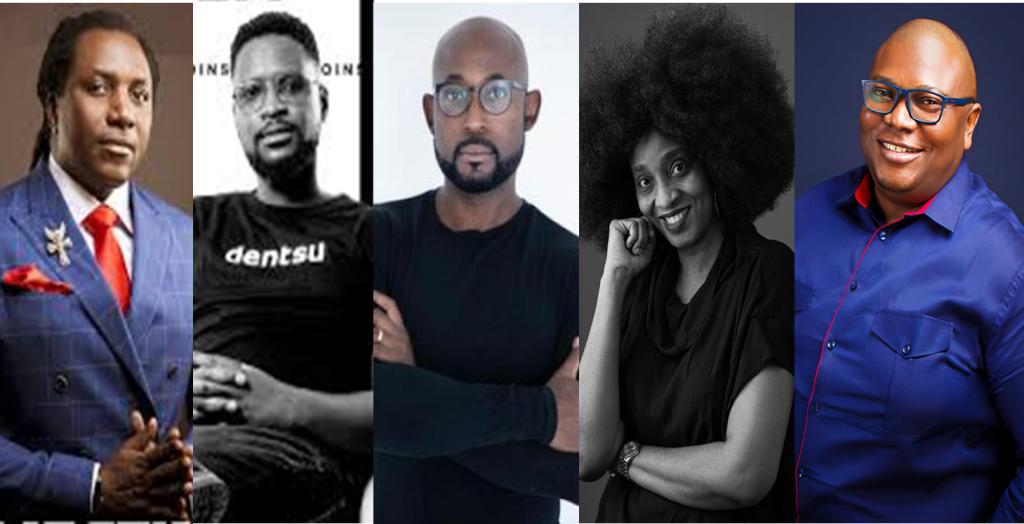
One of the highlights of the LAIF Conference was a panel conversation titled The Anatomy of Genius: Unpacking the Human Truths and Craft Behind Award-Winning Work. The panelists included Steve Babaeko, CEO and Chief Creative Officer of X3M Ideas Group; TJ Njozela, Executive Creative Director at Dentsu Creative South Africa; Femi Kayode, Partner at Stratosphere in Namibia; and Funmi Victor-Okigbo, a respected art director known for her work across film and event production. The session was moderated by Idiare Atimomo, Chief Operating Officer, Up in the Sky.
The conversation focused on how creativity, craft, discipline, and technology all work together in today’s advertising world. Each speaker shared their personal experiences, giving the audience a clearer understanding of what it takes to create work that stands out—work that can compete on global stages like Cannes Lions.
Speaking to providing the right kind of motivation as well as incentive to promote the drive for award-winning works, Steve Babaeko opened the discussion with a story about the journey that led his agency to winning Nigeria’s historic first Cannes Lions award. “The year we won, I put five thousand dollars of my own money on the table. Winning wasn’t just for the sake of winning. We had been shortlisted before, but it was the relentless effort that made the difference,” he said. He also acknowledged the place of healthy rivalry and competitiveness in driving industry growth and quality work delivery when he explained that X3M Ideas was also motivated to beat all-comers, including agencies like Noah’s Ark that were in the race as well, looking to break the Nigerian jinx at Cannes.
Joining virtually, Femi Kayode all the way from Namibia, brought a unique balance as both a novelist and an advertising professional. He explained that storytelling has different rhythms depending on the medium. “From a novelist’s point of view, it is a marathon. A novel has many moments of success and failure over months, and the truth of the story emerges slowly. A radio ad is immediate. You have one chance to capture attention. For me, I look for what I call the goose-bump effect. When I receive a brief, I know if it will resonate from the start.” His point reminded everyone in the room that intuition is an important part of creativity. AI can assist, but it cannot feel or sense the emotional strength of an idea the way a creator can.
For TJ Njozela, who came all the way from South Africa, the focus was on how creatives manage the difference between everyday work and high-impact work. He explained that he approaches creative work in two ways. “Almost all the time, ‘good enough’ wasn’t enough. I approach work in two ways. The first is responsible, everyday best practice. The second is high-impact, big idea work. For example, with Nike, you see both ‘Find Your Greatness’ and simple online executions with pricing. Separating these two approaches is key.” To make his point clear, he shared a personal example. He once spent two full days trying to perfect a radio ad. He submitted it late and still felt it wasn’t perfect. His story highlighted why craft is the backbone of creative excellence.
Funmi Victor-Okigbo closed the panel with a strong reminder about authenticity and detail. She explained that her background in event production shaped her approach to art direction in film. “I always think about designing for the individual attending an event alone, and that attention translated well to film. When I was asked to be art director for Royal Hibiscus, I realized my skills could transfer. We shot in Nigeria and Dubai, often juggling multiple productions. If a character’s bedroom needed to be believable, every item and placement had to be right. Even small details, like how a bed looks after someone wakes up, make a big difference.” Her work on The Royal Hibiscus Hotel later earned the film the Hidden Gem Award at the Toronto Film Festival, proving that Nigerian stories, when executed with care, can compete globally.
Throughout the conversation, the panelists also discussed how agencies can balance client demands with creative integrity. Steve spoke about negotiating with clients who did not fully understand the cultural background behind certain ideas. Femi added that originality comes from personal perspective, not from copying what everyone else is doing. Their comments made one thing clear: AI can support and guide, but the heart of creativity still comes from human experience, cultural understanding, and personal discipline.
By the end of the LAIF Conference, one message stood out clearly. The future of Nigeria’s creative industry and indeed Africa’s broader creative sector lies in this partnership between human talent and smart technology. It is an era where ambition meets innovation, where cultural truth meets global standards, and where African creatives can tell stories that are original, bold, and world-class with the help of the right tools.
