

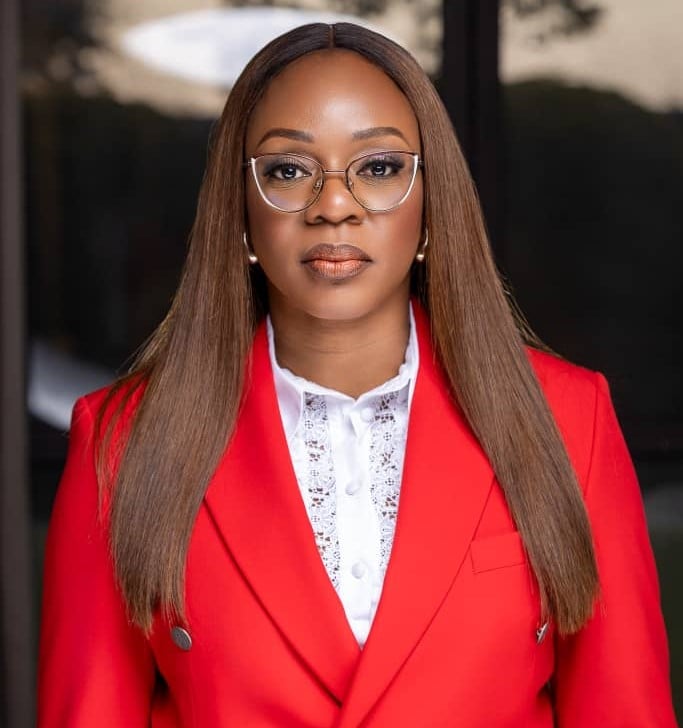
It will not be out of order to congratulate Kemi Omotosho on her appointment as Chief Executive Officer of MultiChoice Nigeria. Her elevation to this pivotal role, effective January 2026, marks not just a personal achievement but a significant moment in Nigeria’s Pay-TV sector of the media and entertainment industry. With over two decades of leadership experience across media, telecommunications, and digital services, Omotosho brings to the table a remarkable combination of institutional knowledge and strategic vision that MultiChoice Nigeria desperately needs at this crossroads.
Before charting the course forward, it is only fitting to acknowledge and commend John Ugbe for his remarkable 15-year tenure as CEO of MultiChoice Nigeria. Ugbe didn’t just manage a pay-TV company; he stewarded a cultural institution through one of the most turbulent periods of its history. Among his many achievements, two stand out prominently.
Ugbe championed local content creation with an unwavering commitment that transformed Nigeria’s creative economy. Under his leadership, MultiChoice’s investment in Nollywood reached unprecedented levels, with annual film budgets climbing to $35 million. The introduction of channels in three local Nigerian languages and the establishment of the Africa Magic Viewers’ Choice Awards (AMVCA) created a sustainable ecosystem for Nigerian storytelling to thrive globally.
He also demonstrated exceptional business acumen in democratizing access to entertainment. The launch of GOtv, a mass-market digital terrestrial pay-TV service, brought quality content within reach of millions of Nigerian households previously priced out of the DStv market.
His “Sabi Men” initiative alone recruited over 10,000 young Nigerians off the streets, providing employment in a country where youth unemployment hovers above 33%. These were not mere corporate social responsibility exercises; they were deliberate strategies to build a sustainable business while uplifting communities.
Ugbe leaves behind operational frameworks that positioned MultiChoice Nigeria to weather storms, navigate regulatory complexities, and maintain relevance in a rapidly evolving industry. His retirement is well-earned, and his legacy will endure.
MultiChoice at the Crossroads
Kemi Omotosho inherits a company standing at a critical juncture. The numbers tell a sobering story: MultiChoice Nigeria’s subscription revenue declined by 44% to $197.74 million in the 2025 financial year, down from $355.93 million the previous year. Nigeria accounted for 77% of the subscribers lost across MultiChoice’s Rest of Africa segment, with 1.2 million active subscribers departing. The twin pressures of inflation, currency depreciation, and intense competition from global streaming platforms have created an existential challenge for traditional pay-TV brands.
Adding some complexities to this picture is the recent Canal+ acquisition. In October 2025, the French media giant completed its $3.17 billion takeover of MultiChoice, securing 94.39% ownership. While this brings financial muscle and international expertise, it also introduces a new dynamic: MultiChoice is no longer an independent African broadcaster but part of a global conglomerate headquartered in Paris.
Herein lies both danger and opportunity. The danger is that MultiChoice Nigeria could increasingly be perceived as a foreign entity extracting value from Nigerian consumers, a South African company now owned by French interests, remote from the realities of its customer base. The major opportunity today is to redefine what MultiChoice represents in the Nigerian imagination.
Agenda 1: Reinforce the company as a Nigerian Brand
Perhaps Omotosho’s most urgent task is to reinforce MultiChoice Nigeria as a company, not just one operating in Nigeria, but a Nigerian company.
MultiChoice has been in Nigeria for over three decades. DStv and GOtv decoders sit in millions of Nigerian homes. Big Brother Naija has become a cultural phenomenon that transcends entertainment, generating billions of naira in economic activity, creating over 2,000 jobs per season, and producing 1.53 billion votes in recent editions. This is not a foreign implant; this is Nigerian infrastructure, Nigerian culture, Nigerian pride.
Yet the perception persists that MultiChoice may still be seen as an outsider. Omotosho must confront this head-on. Here’s how:
Deep community integration, by expanding programs like the MultiChoice Resource Centre Project beyond 200 schools to 1,000 schools. Make MultiChoice synonymous with education, youth empowerment, and community development. When Nigerians think of MultiChoice, they should think, “This company invested in my child’s school.”
She shows transparent localisation by communicating clearly what percentage of content is Nigerian, what percentage of employees are Nigerian, and what percentage of profits are reinvested in Nigeria. Make the case with data that MultiChoice is a Nigerian economic engine.
Position MultiChoice as the guardian of Nigerian stories. Not just a broadcaster, but an institution dedicated to ensuring that Nigerian narratives from Lagos to Kano to Port Harcourt are preserved, celebrated, and exported globally.
Agenda 2: Technological Innovation for Relevance
The streaming revolution is not coming; it has arrived. Netflix, Amazon Prime, YouTube, and a host of other platforms have fundamentally altered consumer expectations. Viewers now demand content on any device, at any time, with seamless user experiences. MultiChoice’s traditional decoder-based model feels increasingly antiquated to younger consumers.
But herein lies an instructive lesson from global media transformation: the companies that survive are not those that abandon their strengths, but those that evolve while leveraging their advantages.
Look at Sky in the United Kingdom. Once a traditional satellite broadcaster facing the Netflix onslaught, Sky didn’t surrender; it innovated. It launched Sky Q, a revolutionary set-top box that integrated Netflix and other streaming services directly into its platform. It introduced Sky Go, allowing subscribers to watch content on smartphones and tablets. Most crucially, it became an aggregator, the single place where consumers could access all their content without switching between apps.
The result? Sky not only survived but thrived, eventually being acquired by Comcast for $39 billion in 2018, not despite the streaming revolution but because it adapted to it successfully.
Omotosho should pursue a similar transformation strategy for MultiChoice Nigeria:
Transform the DStv and GOtv platforms into comprehensive entertainment hubs (The super app vision). Rather than competing against Netflix and YouTube, integrate them. Create a single interface where subscribers can access live sports, local content, international series, and streaming services seamlessly. Make MultiChoice the gateway, not the gatekeeper.
The average Nigerian is more likely to own a smartphone than a television set. She should launch a robust, affordable mobile streaming option that offers a curated selection of content at data-friendly resolutions. Partner with telecommunications companies for zero-rated data plans that make MultiChoice streaming as accessible as WhatsApp.
Invest in algorithms that understand Nigerian viewing preferences. If a subscriber in Ibadan loves Yoruba movies and Premier League football, the platform should prioritise that content. Personalisation is not a luxury; it’s table stakes in 2026.
Introduce pay-as-you-go options that reflect economic realities. A student in Nsukka has different needs and resources from a family in Lekki. Create packages that serve both. Consider ad-supported tiers that reduce subscription costs, a model successfully implemented by Disney+, Netflix, and Hulu.
Establish MultiChoice Nigeria as a production powerhouse, not just a distribution channel. Build studios, training academies, and post-production facilities that rival anything in Hollywood or Bollywood. Make “Produced by MultiChoice Nigeria” a mark of quality that attracts global attention.


Agenda 3: Strategic Partnerships and Ecosystem Building
MultiChoice Nigeria cannot succeed in isolation. Omotosho must build an ecosystem of partnerships that amplifies the company’s reach and relevance:
She should deepen relationships with MTN, Airtel, Glo, and 9mobile.
Create bundled packages where mobile subscribers automatically get access to GOtv streaming or discounted DStv packages. The future of media distribution runs through telecommunication infrastructure.
Omotosho should also partner with fintech platforms like Flutterwave, Paystack, and OPay to make subscription payments seamless. Introduce “pay small small” models where subscribers can pay weekly or even daily, removing the barrier of monthly subscriptions for low-income households.
MultiChoice can build a platform for Nigerian YouTubers, TikTokers, and independent filmmakers to distribute their content through MultiChoice channels. Create a revenue-sharing model that makes MultiChoice the preferred platform for digital creators seeking professional distribution.
The company should also consider investing in sports. Nigeria’s passion for football is unwavering. Secure exclusive rights to Nigerian Professional Football League (NPFL) matches, making MultiChoice the home of local sports. Invest in sports journalism and analysis that rivals international standards.
Partnering with the Nigerian government and educational institutions to create curriculum-aligned content for primary and secondary schools should also be considered. Make MultiChoice an educational resource, not just entertainment.
Agenda 4: Navigating the Canal+ Relationship
The Canal+ acquisition presents unique challenges and opportunities. Omotosho must ensure this relationship enhances rather than constrains MultiChoice Nigeria.
She can also leverage Canal+’s StudioCanal library and international partnerships to bring world-class content to Nigerian subscribers at competitive prices. The Canal+ relationship should translate into better content, not just French corporate control.
The company should also consider Using Canal+’s financial resources to fund the technological transformation, content production, and infrastructure development that MultiChoice Nigeria needs. This acquisition should mean more investment, not cost-cutting.
Through MultiChoice Nigeria, Omotosho should protect Nigerian Interests by advocating fiercely within the Canal+ structure for decisions that prioritise Nigerian market realities over Parisian boardroom preferences. Nigerian pricing, Nigerian content quotas, Nigerian employment, these are non-negotiables.
She can also learn from Francophone Africa, because Canal+ has operated successfully in French-speaking African markets for decades. She should ask what lessons can be adapted for Anglophone Nigeria as well as what mistakes can be avoided?

Agenda 6: Customer-Centricity as Religion
Perhaps the most fundamental shift Omotosho must champion is making MultiChoice obsessively customer-centric. Recent price increases amid economic hardship have damaged goodwill. Subscribers feel unheard, taken for granted, and exploited; this must change.
She can invest in world-class customer support, multilingual, accessible 24/7, and empowered to solve problems immediately. Every interaction should leave customers feeling valued, not frustrated.
When prices must increase, the company should explain why with data and empathy. When services fail, acknowledge it quickly and compensate fairly. Trust is built through honesty, not corporate speak.
Under her leadership, Omotosho should establish councils of subscribers across Nigeria, students, families, and businesses, who provide regular feedback on services, content, and strategy. Make customers partners in shaping MultiChoice’s future.
MultiChoice Nigeria can curate affordability Initiatives by launching programs specifically designed for low-income households, subsidised decoders, reduced packages, and community viewing centres. Entertainment is not a luxury; it’s a human need for connection and information.
A Vision for 2030
If Omotosho succeeds in this agenda, MultiChoice Nigeria in 2030 will look dramatically different. It will be recognised not as a foreign Pay-TV company but as a beloved Nigerian institution, the platform where Nigerians tell their stories, celebrate their culture, and connect with the world.
Decoders will coexist with mobile apps, live broadcasts with on-demand streaming, international content with hyperlocal productions. MultiChoice will be the bridge between traditional television and digital futures, serving grandparents in Kaduna and Gen Z in Surulere with equal excellence.
Most importantly, when Nigerians think of MultiChoice, they will think, “This is ours. This company represents us, invests in us, and listens to us. This is not a foreign entity extracting value; this is a Nigerian success story.”
The Road Ahead
The challenges facing Kemi Omotosho are formidable. Subscriber losses, economic headwinds, streaming competition, corporate integration, any one of these could derail a lesser leader. But Omotosho’s career trajectory suggests she is equal to the task. Her progression through customer value management, regional operations, and strategic leadership has prepared her for this moment.
She requires courage: the courage to challenge assumptions, disrupt internal inertia, and make bold bets on technology and talent. She requires humility: the humility to listen to customers, learn from competitors, and admit when strategies fail. She requires vision: the vision to see beyond quarterly results to generational impact.
Kemi Omotosho has inherited not just a company but a legacy, the legacy of bringing entertainment, information, and connection to millions of African homes. How she stewards that legacy will determine not only MultiChoice’s future but the future of Pay-Tv across Africa.
The stage is set. The spotlight is on. It’s time for Kemi Omotosho to author the next chapter of the MultiChoice story, a chapter that transforms challenges into opportunities, threats into triumphs, and a company at a crossroads into a Nigerian champion for the digital age.
Consumers are watching. The creative industry is waiting. The moment is now.