
Noodles, Culture, And The King’s Forecourt: How Honeywell Foods Took Ownership Of Ojude Oba 2026

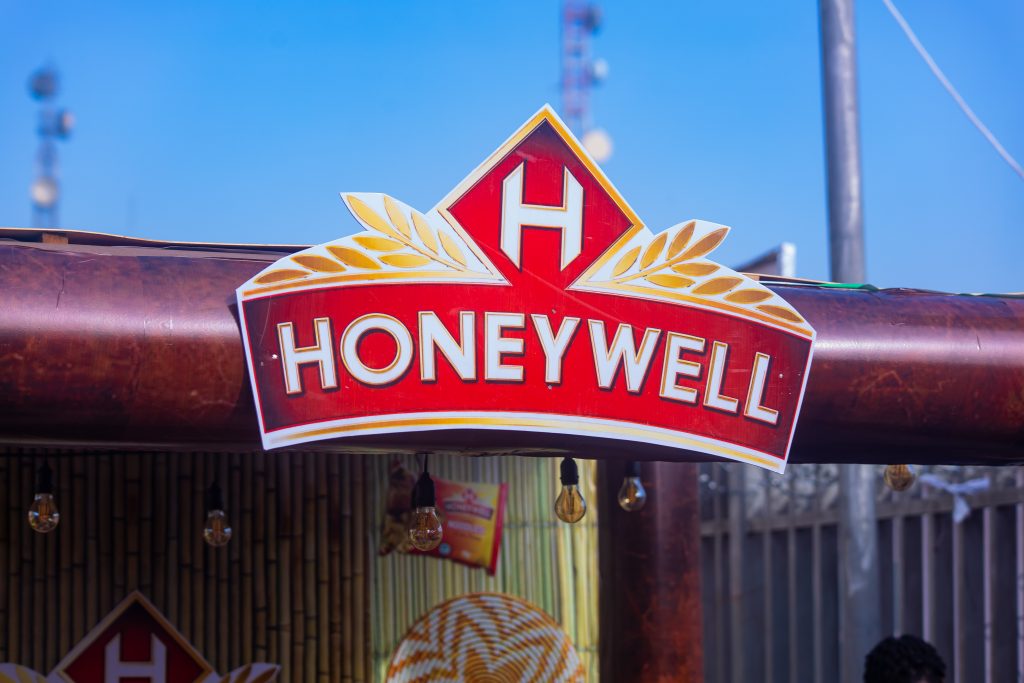
You don’t need to be an industry observer to realize that not every brand survives the Ojude Oba. The festival, held annually in the ancient town of Ijebu-Ode in Ogun State, is not the kind gathering that forgives half-measures. Since its origins in the late 19th century when early Muslim converts in Ijebu-Ode gathered at the Awujale’s palace to express gratitude for the freedom to practise their faith, the Ojude-Oba has evolved into one of Africa’s most spectacular cultural festivals. It is a gathering of age-grade groups known as regberegbe, each competing to outshine the other in dress, music, and cultural presentation. It is the thunder of hooves as horses parade before cheering crowds. It is the layered splendour of aso-oke, aso-ebi, coral beads and headgear moving in coordinated processions.
And for the brand that truly understands it, it is the most emotionally resonant consumer touchpoint in Nigeria. At the 2026 edition, held on Friday, May 29, at the Festival Arena opposite the Awujale Palace in Ijebu-Ode, one food brand did not just show up, it showed in. That brand was Honeywell Foods.
This Year’s Festival Carried More Than Its Usual Weight
The 2026 Ojude Oba carried an emotional freight that no previous edition had quite matched. It was the first major edition since the passing of the late Awujale of Ijebuland, Oba Sikiru Kayode Adetona, who joined his ancestors in July 2025 after an extraordinary 65-year reign. As confirmed by multiple reports, this year’s festival was themed “Celebrating the Legacy of Oba Sikiru Adetona”, a fitting tribute to a monarch whose leadership has taken Ojude Oba from just a local gathering into one of Africa’s most important celebrations, one that now attracts hundreds of thousands of attendees and commands a global digital audience.


This year, the festival drew thousands of guests, dignitaries, celebrities, and cultural groups to the Awujale Pavilion and Palace grounds. The Ogun State Governor, Prince Dapo Abiodun, was among those present, commending corporate sponsors and the age-grade groups whose participation continues to define the uniqueness of the celebration. A regent council, headed by medical doctor and socialite Sonny Kuku, received tributes in the late Awujale’s stead, adding a layer of solemnity that only heightened the gravity of the proceedings.
The Brand: A Nigerian Food Institution Reloaded
Into this atmosphere, Honeywell Foods stepped, and it stepped wisely. To understand Honeywell’s presence at Ojude Oba 2026, you must first understand what the brand has become and what it is building toward. Honeywell Flour Mills Plc, the manufacturing vehicle behind the Honeywell Foods portfolio, traces its origins to 1985 when it was initially registered as Gateway Honeywell Flour Mills Limited. By June 1995, a change in ownership structure led to its rechristening as Honeywell Flour Mills Limited. It was listed on the Nigerian Stock Exchange in 2009 following a successful IPO in 2008.
The company has long been a household name in Nigeria’s flour milling industry, with strategically located factories in Apapa, Lagos, and Sagamu, Ogun State. The Sagamu facility is particularly notable as it is dedicated to the production of noodles and pasta, the very products that sat at the heart of the brand’s Ojude Oba activation. In a move that further consolidated its market standing, Flour Mills of Nigeria Plc (FMN), Nigeria’s leading food and agro-allied company, acquired a 71.69% stake in Honeywell Flour Mills, integrating it into its group structure while maintaining the Honeywell name and its Stock Exchange listing.


In December 2024, FMN formally announced the relaunch of the Honeywell brand at a milestone event held in Lagos that unveiled a dynamic new brand identity, featuring vibrant packaging, enhanced product quality, and what the company described as a renewed commitment to meeting consumer needs. The Devlin Hainsworth, Managing Director of Food at Flour Mills of Nigeria, described the relaunch as “a strategic transformation”, noting that the brand had focused on raising the quality of its noodles and pasta, investing in marketing with campaigns built around “Bambamlaya” for noodles and “Strands of Happiness” for pasta.
The relaunched Honeywell portfolio which includes Noodles, Pasta (Spaghetti and Macaroni), Semolina, and Wheat is a complete basket for the Nigerian family. More importantly, it represented a brand that had done the hard work of reinvention and was now investing in consumer connection at the highest cultural registers. Ojude Oba 2026 was the proof of that investment at scale.
The Strategy: Speaking Fluent Ijebu
It is indeed obvious that Honeywell arrived at this year’s Ojude Oba “speaking fluent Ijebu. Not the language of tourism or observation, the language of someone who knows the festival from the inside.” The evidence was in the detail. Rather than generic festival messaging, Honeywell’s pre-festival and festival-day communications posed a question to consumers that would separate true Ijebu sons and daughters from casual observers: “Mention four of the regberegbes that come to the Ojude Oba festival.”
The regberegbe which as mentioned earlier, is the age-grade groups that are, in many ways, the beating heart of Ojude Oba. They are generations of Ijebu people organised into cohorts that compete, celebrate, and express their identity collectively. As of 2024, there are over 90 age-grade groups actively participating in the festival. To name the regberegbe, rather than explaining or describing them for an outsider audience, was to signal genuine cultural fluency. Most brands at a cultural festival narrate the festival from the outside. Honeywell entered through the door that only those who truly know it can find.
This kind of cultural intelligence reflects deliberate research, consultation with people from within the community, and the willingness to speak with rather than at the audience. For a brand whose Sagamu factory operates in Ogun State, the same state as Ijebu-Ode, there was also a geographical proximity that lends the brand’s participation an authenticity that purely Lagos-based competitors might struggle to match.
The Activation: Procession, Presence, and Plates of Plenty
If Honeywell’s digital and communications strategy was about speaking the language of the festival, its on-ground activation was about embodying its spirit and feeding it. The brand mounted one of the most talked-about physical presences within the pavilion and outside at the 2026 festival, with a Honeywell procession that moved through the venue of the event with unmistakable energy. Dressed in coordinated attire that honoured the cultural aesthetic of the occasion, the Honeywell team participated in the parade of culture that defines Ojude Oba, bringing the brand into the procession rather than merely standing beside it as a spectator.

At the activation zone, the brand’s team took on the logistically ambitious task of feeding thousands of festival attendees, deploying the brand’s core consumer products, Honeywell Noodles and Honeywell Spaghetti, as the vehicles of generosity. The scale of this feeding programme with hundreds of thousands of attendees converging on the festival grounds and surrounding areas, feeding thousands is both a meaningful act of hospitality and a masterclass in product trial at scale. For many attendees, the freshly prepared Honeywell noodles or spaghetti they received was a meal and a sensory brand experience, consumed in the most culturally charged setting imaginable.
The choice of noodles and spaghetti as the primary feeding vehicles was strategically astute. Both products sit squarely within the everyday eating habits of Nigerian families across income brackets, offering the kind of accessibility that ensures no attendee felt excluded from the brand’s generosity. Beyond that, the feeding programme communicated something that no billboard could: this is a brand that nourishes. Indeed, at Ojude Oba 2026, it was a lived experience for thousands of people who will carry the Honeywell name and the memory of that meal with them long after the drumbeats faded.
Other Honeywell products were also featured in the activation, reinforcing the completeness of the brand’s portfolio and ensuring that the interaction extended beyond a single product category.
The Context: Brands and the Culture Economy
Honeywell’s 2026 Ojude Oba play did not happen in a vacuum. It unfolded within a broader transformation that has been quietly reshaping how Nigeria’s biggest brands approach cultural festivals. This is as brands are no longer coming to Ojude Oba just for sponsorship visibility. “They are arriving with something deeper, more strategic, and far more emotional, and that is the desire to become part of the culture itself.
From telecommunications companies to beverage brands, banks, and food manufacturers, corporate organisations have increasingly used the festival to create emotionally immersive experiences. What distinguished Honeywell’s 2026 execution was the combination of intellectual cultural engagement with physical generosity at scale, wrapped in a procession that made the brand a participant in the festival’s living culture rather than a corporate appendage to it. In the language of modern experiential marketing, this is the trifecta: digital engagement before the event, physical presence at the event, and meaningful utility (food) delivered to the consumer in the moment.
Why This Matters for the Brand
The Honeywell brand is, by its own description, in the middle of a strategic reinvention. The December 2024 relaunch under Flour Mills of Nigeria’s stewardship was explicitly framed as “a movement”, aimed at bringing the Honeywell basket back to Nigerian families and reinforcing what the brand represents, which is affordable, quality nutrition accessible to everyday Nigerians.
Ojude Oba 2026, in that context, reads as the reinvented brand’s most high-visibility statement to date. A festival where the energy of cultural pride makes people receptive, celebratory, and emotionally open in ways that ordinary consumer environments simply do not replicate. A festival where the brands that get it right earn something money cannot buy, genuine cultural legitimacy.
There is also the broader commercial logic. A brand that is actively rebuilding its distribution network and investing in marketing as Devlin Hainsworth articulated at the relaunch needs moments of mass consumer engagement that cut through the noise of a crowded FMCG market. Ojude Oba, with its combination of physical footfall, social media virality, and emotional resonance, delivers exactly that. The images and videos from a well-executed Ojude Oba activation travel far beyond the palace grounds in Ijebu-Ode. They circulate on Instagram, TikTok, WhatsApp groups, and Twitter feeds, carried by attendees who were themselves part of the experience. In this sense, Honeywell’s procession and feeding programme were not just event activations but content generation at the most authentic and culturally credible level.
The Legacy Question
There is one more dimension to Honeywell’s 2026 Ojude Oba participation that deserves attention, and it is the dimension most likely to define the brand’s long-term relationship with the festival. The 2026 edition was held under the most emotionally important theme in the festival’s modern history: “Celebrating the Legacy of Oba Sikiru Adetona.” His passing created a communal grief among the Ijebu people and a determination, expressed loudly by the Organising Committee at its World Press Conference, that the festival would continue and grow as the most enduring tribute to his life.
To be present at this edition, and to be present well, was to be written into a chapter of the festival’s history that will be remembered long after the marketing cycle has moved on. Brands that showed up with genuine cultural intent at the 2026 Ojude Oba were not just investing in consumer engagement but also contributing to a moment of remembrance and renewal that mattered to people on a profoundly human level.
What Comes Next
For the Honeywell brand, Ojude Oba 2026 should be the beginning of a consistent commitment rather than a one-off activation. The template is already there. Indeed, the competitive landscape at Ojude Oba is intensifying with other brands also investing with increasing sophistication in this space. The brands that will win over the long term are those that build genuine equity with the festival community year after year, edition after edition until their presence is not just expected but anticipated.
Honeywell Foods with its relaunched portfolio of noodles, pasta, semolina, and flour, and with the full commercial and marketing infrastructure of Flour Mills of Nigeria behind it, is positioned to be exactly that kind of long-term cultural partner. The 2026 edition was, in the language of the brand’s own campaign, a strand of happiness, and one that thousands of people who ate Honeywell noodles and spaghetti at the King’s Forecourt will not soon forget.