

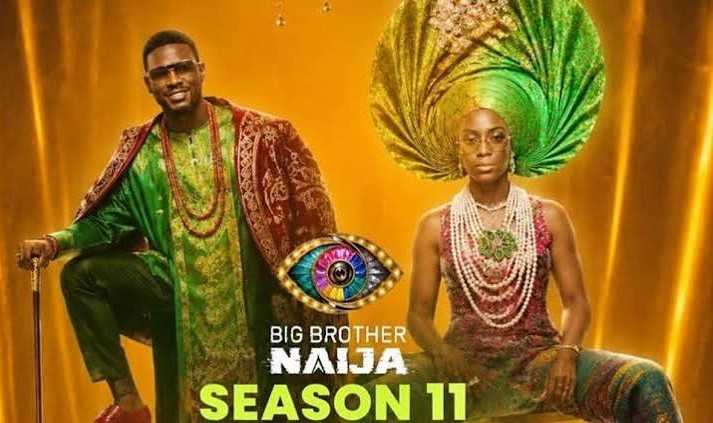
Industry leaders argue that perhaps the change in ownership from the South African owners to the French media company Canal+ may have affected the way the BBNaija Season 11 show turned out.

Trailblazing reality show Big Brother Naija (BBNaija) closed its eleventh season, “Show Ya Sef,” on 4 October. Temi Nkem won with 25.87 per cent of the final votes, ahead of Aikou on 23.68 per cent, in a field of nine finalists. By the numbers, the season delivered engagement, audience attention and brand backing. But online sentiment felt like one of the quietest in the franchise’s history.
A Season That Performed, but Did Not Dazzle
Some industry analysts note that Season 11 still generated substantial engagement, retained a sizeable audience and kept many sponsors on board. A tight winning margin points to a committed core of voters who stayed to the end. As Lynda Aguocha, brand strategist and host of The CreativiTEA Podcast, points out, public reaction on social media is not the same as verified audience data. Complaints about a show do not necessarily prove it has been abandoned.
Even so, many analysts concede that this may not have been the strongest season of BBNaija. The evidence is in the mood of the conversation, not the vote count. This is a show that once set the national agenda but now spends much of its season struggling to be noticed.
Brands That Did Not Return
The commercial picture was not uniformly bright. Several brands that backed earlier seasons did not return, among them Golden Penny Foods, Moniepoint and Innoson Motors, and their absence was greatly noticed.
A handler from one of the brands, who asked to remain anonymous, said he had not followed the season closely. “A lot of my commentary about this season revolves around stuff that I picked up on the X timelines and Instagram trending stories.” Judging from those timelines, he tended to agree with those who called it “sort of lukewarm.”
He added, “Even the activities of a lot of the fan clubs that we saw in previous editions, I’m not sure that I saw a lot of that campaigning and all of that kind of activity on my timeline. So, clearly, some reinvention needs to happen.”
His view of the franchise itself remained positive. “I think that Big Brother has a lot of eyeballs,” he said, “and it’s still a very solid IP.” On brands, he argued: “Year in, year out, they’ve always had brand support… brands won’t advertise or jump on an IP that doesn’t have value.”

Public Views
Social media reaction was blunt, and much of it centred on awareness. One Instagram user, @scooby4yu, questioned whether the season had even started, writing, “Wait ooh, when did BBNaija start this year.” Another, @man_like_vheek3, remarked, “Nobody know say bbnaija de on sef lol,” while @dums_bridget wrote that she had not known the show was running. @tkinzystar said: “Didn’t know when the show started, didn’t know when it ended. We have moved on for real.” @hadiza_mj added, “I didn’t even know a single housemate from this season.”
The criticism extended to the quality of entertainment. @dextremepower001 declared, “Bbnaija no sweet again,” while @brightfuture_na_asia described the show as outdated. @bigxpark called the season “the worst of its kind,” a view echoed by @cece_bla_ck, who said it was “the absolute worst.” @realannasmile suggested the show “should go on break and return after 5 years or adjust.”
Others tied the silence to the economy. @dacoluxx wrote, “Hardship make most people no know say dem Dey do BBNaija,” while @veryblackmanofph referred to the cost of powering a television: “Fuel na 1500 shaa.”
The reaction was not all negative. @smpliyessie1 wrote, “Huge congratulations to Temi Nkem! Truly a well-deserved win; she brought the entertainment from day one.” @xabelpower noted that staying in the house “with people and camera around, can be mentally and emotionally draining.”
Taken together, the comments describe a show with a loyal base and a much larger group that was never reached.
Why the Season Struggled for Attention
A crowded news cycle. Several stories dominated Nigerian timelines while the show was on air. A video released by Peter Okoye of P-Square, the “Good morning Tony” controversy involving Tony Elumelu, and conversation around the Osun State election, including Davido’s involvement, generated heated debate on X and Instagram. A show used to being the main talking point had to compete with all of it.
A cheaper, more accessible rival. Some commentators argue that YouTube is now a direct competitor. Nollywood titles from actors such as Bimbo Ademoye, Uche Montana and Abiodun Stephen reportedly pull millions of views within days, with only data on a phone or laptop. Subscribing to DStv or GOtv, and paying for fuel to power a generator, now sits low on many households’ priorities. Aguocha adds that Showmax, which carried the 24-hour live stream, was discontinued in 2026, making affordable alternatives to live broadcast even more important.
Low-profile housemates and a slow pace. Many viewers said they could not name the housemates. Aguocha reports complaints that storylines were hard to remember and that the show looked slow. Her view, informed by an interview with series director Gbenga Kayode, is that the early seasons put personality first. Winner Temi Nkem was widely seen as the one housemate who carried the season’s entertainment.

The Commercial Ground Remains Strong
It would be a mistake to read the quiet season as a verdict on the franchise. BBNaija has had quality brand support throughout its run.
Beyond its steady stream of returning brands, the show has created celebrities and strong personalities, among them Chukwuebuka Obi-Uchendu, Bisola Aiyeola and Bamike Olawunmi-Adenibuyan (Bam Bam), to mention but a few. These former housemates turned a few weeks on screen into lasting careers, showing that the show works as a launchpad for talent as well as a platform for advertisers.
Both the UK and US versions of Big Brother have run for many seasons, which shows the format can last when it is consistently refreshed. The brand handler sees social value in it, calling it “a mirror” that “really reflects who you are as a people,” and arguing the task is to “use it for social good.” Longevity depends on adaptation, not repetition.
What a Reinvention Could Look Like
Communication consultants, strategists and viewers converge on a handful of ideas, and the first concerns casting. Aguocha argues that the show should choose housemates for contrasting temperaments, humour, ambition and genuine points of view, rather than launch-week hype, social media following or an obvious plan to become famous.
Many also want more drama and surprise from outside the house. A celebrity edition, guest artists, TikTok personalities and cameos from reality franchises such as The Real Housewives of Lagos could add the talkability the season lacked. The brand handler offered a similar idea: “Top of head might be to do a celebrity edition,” which he said could “generate a lot of talkability and reawaken the brand.” He also floated a collaboration with another African market, such as Kenya, echoing the old Big Brother Africa format. Aguocha suggests a “Big Sister” character whose role would shape the creative concepts and rules of the house.
Aguocha also wants the weekly rhythm to carry more stakes, with tasks that affect nominations, alliances or resources and reveal character instead of looking like sponsor interruptions. She proposes brand-versus-brand task competitions decided by fan votes, and wider audience participation beyond evictions, as long as this does not turn every decision into a popularity contest.
On marketing, she says each season should be introduced through creative campaigns, with organisers working with streamers and digital creators to reach younger audiences, as the World Cup did with IShowSpeed. She also argues the season should matter after the finale, with standout housemates receiving business or performance opportunities and short post-show formats, making the prize a launchpad rather than the end of a ten-week popularity contest.
The brand handler agreed, saying “clearly, the show needs to be refreshed and rebooted.” He expects organisers to do post-season research “to see what has worked and what hasn’t worked,” and does not think Canal+ would shortchange a property that “remains a valuable IP.”
A Balanced Verdict
The evidence supports two conclusions. First, Season 11 was not a failure. It produced a competitive finale, kept many sponsors engaged and sustained a committed fan base. Second, it did not capture the wider public imagination. Competition from free digital content, a heavy news cycle, economic pressure on viewers, low-profile housemates, the exit of some familiar brands and a possible transition under new ownership combined to make the season one of the least visible.
Social sentiment should be read with caution, because it reflects those who chose to comment and the true size of the viewership remains unverified. But the consistent complaint that people could not name the housemates, or did not know the season was on, is a marketing and content problem the organisers cannot ignore.
For MultiChoice, Canal+ and their partners, the question is no longer whether Big Brother Naija still has value, but whether the format can be rebuilt for an audience that watches on phones, follows clips instead of live feeds and has dozens of free alternatives. As Aguocha puts it, BBNaija is “an African treasure,” and a fresh experience, more than a bigger prize, will give viewers a reason to return.
