
McDonalds, Burger King, KitKat, Others Turn Microsoft Global Outage Crisis Into Humorous Engagements

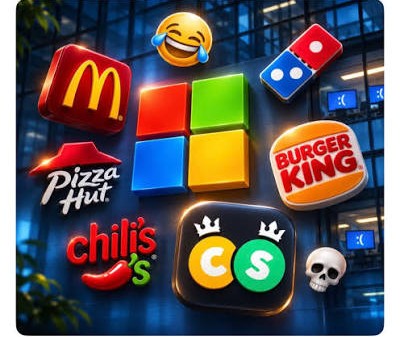
Several global brands, including McDonald’s, Burger King, KitKat, Wendy’s and Chilli’s Grill & Bar, have taken to social media to react to Microsoft’s recent global service outage, turning the disruption into an opportunity for humorous brand engagement.
The brands joined the online conversation with witty posts targeting the disruption of Microsoft services, particularly Outlook and Teams, which left millions of users struggling to send emails, manage calendars and hold virtual meetings.
The outage, which affected businesses, government agencies and other organisations across several countries, lasted more than 24 hours before Microsoft announced that services had been fully restored.

Among the brands that capitalised on the incident was McDonald’s, which joked about the situation with a post suggesting that Microsoft users should try its popular soft drink.
“Have they tried putting out email in Sprite?” the fast-food giant posted.
KitKat also joined the conversation, drawing on its popular break-themed brand identity to make light of the disruption.
“Outlook decided to take a break, so I guess you should too,” the chocolate brand wrote.
Burger King took a different approach, offering words of encouragement to those working to restore the affected services.
“Whoever is troubleshooting the outage right now… Take your time, go out and get a Whopper,” the brand posted, using the opportunity to promote its signature burger.
Wendy’s also joined the online banter with a reference to a widely discussed relationship scandal, asking: “Is Outlook down because that guy cheated on his wife?”
Another post attributed to Wendy’s added to the playful exchanges, joking that “Outlook’s frozen McDonald’s beef.”
Meanwhile, Chili’s Grill & Bar used the outage to combine humour with a promotional campaign, drawing attention to rising fast-food prices.
“Emails are down and fast-food prices are up!” the restaurant chain declared.
It encouraged social media users to ignore their emails temporarily and share how much they had paid for their last expensive fast-food value meal using the hashtag #chilis3forme.
The company said it would select 500 participants to receive a free 3 For Me meal.
Indian email service provider Pushti.in also used the disruption to promote its services, encouraging businesses to consider local alternatives to major international email providers.
In a social media post, the company claimed that the disruption could take more than 48 hours to normalise fully, while cautioning that a complete restoration was not guaranteed.
It urged businesses to consider its email hosting services, advertising storage options ranging from 5GB to 5TB per email account.
Microsoft announced on Saturday, November 14, that it had restored services across Outlook, Teams and its other affected products following the global disruption.
“We have completed our efforts to address the underlying issue of the incident and restored service to the remaining impacted customers and regions,” the company said in a post on X.
The technology giant attributed the incident to server-related problems affecting its infrastructure, particularly features connected to Exchange Online, its cloud-based email and scheduling platform.
The disruption also affected Microsoft’s Copilot artificial intelligence assistant. However, the company said it had found no evidence of malicious activity, ruling out a cyberattack as the cause.
Outlook and Teams, which are used by hundreds of millions of people worldwide, are central to workplace communication, making the outage particularly disruptive for businesses and government institutions.
Affected users were unable to perform essential tasks, including sending emails, accessing calendars and organising virtual meetings.
The disruption extended beyond individual users, affecting government agencies in countries including Singapore, Australia, Japan and the United States.
It also caused delays at trading firms, disrupted communication for some airlines and hindered certain companies from publishing their financial results.
Organisations hosting Microsoft services on their own servers rather than relying on its cloud infrastructure were relatively less affected.
According to Ookla, reports of the disruption began increasing around 17:25 GMT on Thursday, with Downdetector recording more than 7.4 million reports globally and peak reporting levels of nearly 20,000 per minute.
The scale of the incident highlighted the growing dependence of businesses and public institutions on a handful of major technology providers for essential communication and digital infrastructure.
Luke Kehoe, lead industry analyst at Ookla, said the incident demonstrated how much of the modern working day depends on a single provider’s email and collaboration services.
Beyond the operational disruption, the outage could also trigger insurance claims from affected businesses.
Mario De Cicco, vice-president of European financial institutions at Morningstar DBRS, estimated global insured losses from the incident at between $300 million and $500 million.
However, the estimated exposure remains below the financial impact of the July 2024 CrowdStrike outage, which caused widespread disruption after a faulty software update crashed more than eight million Windows-based computers.
The 2024 incident was estimated to have resulted in financial losses of between $400 million and $1.5 billion.
Despite the disruption, Microsoft shares closed relatively flat at $523.88 on Friday, while the company’s stock had gained approximately eight per cent since the beginning of the year.
The latest incident has renewed concerns about the risks associated with the world’s growing dependence on a limited number of technology companies for critical digital services.
For brands, however, the outage provided an opportunity to demonstrate their social media creativity, engage audiences and turn a major technology disruption into a moment of online marketing.