
WPRF 2026: Experts Make Case For Ethics, Strategic Influence & Networking At Leadership Session

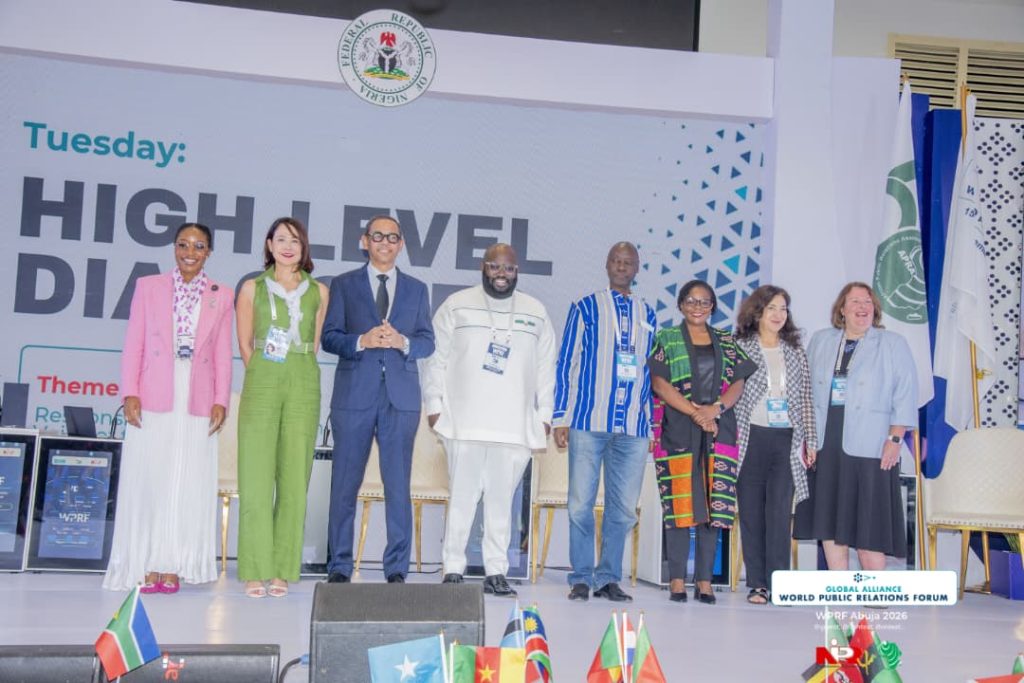
The Public Relations Professional Leadership Session at the 2026 World Public Relations Forum (WPRF) was a blend of practical wisdom, ethical challenge, and strategic insight, as seasoned practitioners from across the globe grappled with the question of how to translate the strategic influence of PR professionals into enduring national capability that strengthens governance and development.
The session, held yesterday at the Transcorp Hilton Event Centre, featured perspectives from Mr. Jaffri Amin Osman of Malaysia, Managing Consultant of World Communications Network Resources and Chair of the Global Alliance Asia-Pacific Regional Council, and Ms. Irene Lungu Chipili of Zambia, Chair of the Africa Regional Council of the Global Alliance, among others. The session was characterized by moments of humour, audience engagement, and profound reflection on the state of the profession.
Your Network Is Your Net Worth
Mr. Jaffri Amin Osman, who has served as President of the Institute of Public Relations Malaysia, Vice President of the ASEAN PR Network, and Chair of the Global Alliance Asia Pacific, spoke on the power of professional networks.

He emphasized that the relationships professionals build with their national associations, colleagues, and international bodiesare the foundation of their influence and career trajectory. “The only reason you are here is because of your networking with your national association, with your colleagues and friends in the public relations and strategic communication industry,” he told the audience.
But he added a crucial caveat: networks only retain their value if ethical standards are maintained. “Your network is your net worth if your ethics stay,” he said, introducing a framework he called “SQUARE” which means Strategic, Quick, Unique, Agile, Resourceful, and Engaging. Being engaging, he explained, requires understanding three essential E’s: empathy, especially in the post-COVID era; ESG, which had been discussed extensively at the Forum; and ethics. “Without ethics, it’s difficult for us to move forward,” he stated.
The Courage to Walk Away
Osman, who has run his own agency for 32 years and is now 61, offered a candid reflection on the ethical challenges facing PR practitioners. He described situations where he has had to tell clients that their statements to the media were inaccurate and needed to be rewritten. “Sometimes they insist on pushing out the media release. If the facts are not right, it cannot be shared,” he said. “I’d rather give a small statement to say we will give a better statement in 24 hours.”

He revealed that his agency has walked away from jobs when ethical boundaries were crossed. “We simply walk away from jobs because we don’t need the hassle, and life is too short, ladies and gentlemen,” he said. “Being in the public relations industry is not about money; it’s about communicating responsibly.” He praised Nigeria, Zambia, and other African countries for having regulated public relations industries, noting that this puts them in a good position to propagate ethical communication and explore better opportunities for responsible strategic communication.
Weaving PR into Governance Structures
Ms. Irene Lungu Chipili of Zambia, Chair of the Africa Regional Council of the Global Alliance, offered a perspective grounded in the realities of governance and development. She argued that for public relations to contribute to national capability, it must be woven into the main governance structures, not treated as an afterthought.

She shared a story from her work on an electrification project in Zambia, where the government was reviewing legislation involving over 19 political parties, civil society organizations, and numerous citizens. From a communication standpoint, her team stayed “one level up” during the reviews, ensuring they guided the technical team while keeping the broader political and social context in mind. “When we started these reviews, we ensured that we guided our little team. The little mind of the technician who wants to protect the technical parliament so that they do not lock us out,” she explained. But the communication team had a broader vision, understanding that legislation affects everyone and that the voices of all stakeholders must be considered.
She recounted how, during the drafting process, the communication team continued to play a role, pushing their colleagues to consider the real-world implications of the legislation. “What does this mean? What do you think a normal person is going to take out of this?” they asked. By the time workshops were completed, the team had succeeded in getting stakeholders to realize that politicians must practice what they preach and that communication must be guided by ethics. Her message was clear that public relations professionals must position themselves as strategic advisers from the outset, not as communicators brought in at the end to defend decisions already made.