

2026 Valentine’s Day Season: Evaluating Brands’ Focus, Engagements, And Impact


Valentine’s Day remains one of the most enduring celebrations across the world. Its origins trace back to 269 AD when Saint Valentine, a Roman priest, married lovers in secret at a time when such unions were forbidden by imperial decree. His courage became a symbol of love transcending boundaries and rules. Over centuries, February 14 grew into a global moment for romantic and social expression. Today, Valentine’s Day is observed as a day to express affection in multiple forms; romantic, familial, platonic, and communal. Activities leading to the exact day has created a season around this ageless celebration.
In Nigeria, Valentine’s Day has grown beyond couples and gifts. It has become a cultural and commercial season where brands, institutions, and communities engage creatively and strategically with consumers. In 2026, Valentine’s was marked not only with flowers, chocolates, and heart-shaped cakes but also with marketing campaigns, digital storytelling, social giving initiatives, and live activations, all aimed at capturing the attention of a youthful, connected, value-conscious audience.

The Changing Narrative of Valentine’s Day in Nigeria
Once centered primarily on romantic dinners and traditional tokens of love, Valentine’s Day in Nigeria has broadened in scope. Economic realities, digital connectivity, social media trends, and changing consumer expectations have reshaped the way love is expressed. While romantic gestures remain central, the 2026 celebrations brought attention to inclusivity, community, everyday care, and financial prudence.
Earlier in February, a public conversation emerged after reports indicated that the Central Bank of Nigeria is discouraging cash bouquets, a popular gifting practice involving folded naira notes paired with flowers. The warning sparked debate online, with Nigerians questioning whether such regulation aligned with cultural celebration or economic reality.
Despite this, Valentine’s continued to stimulate market activity across major cities, from Lagos to Abuja, Port Harcourt, and Ibadan. Markets and malls reported increased foot traffic as consumers purchased perfumes, cakes, chocolates, and other gifts, demonstrating how deeply Valentine’s consumer culture has integrated into daily life.
Retail: Expanding the Valentine Shopper
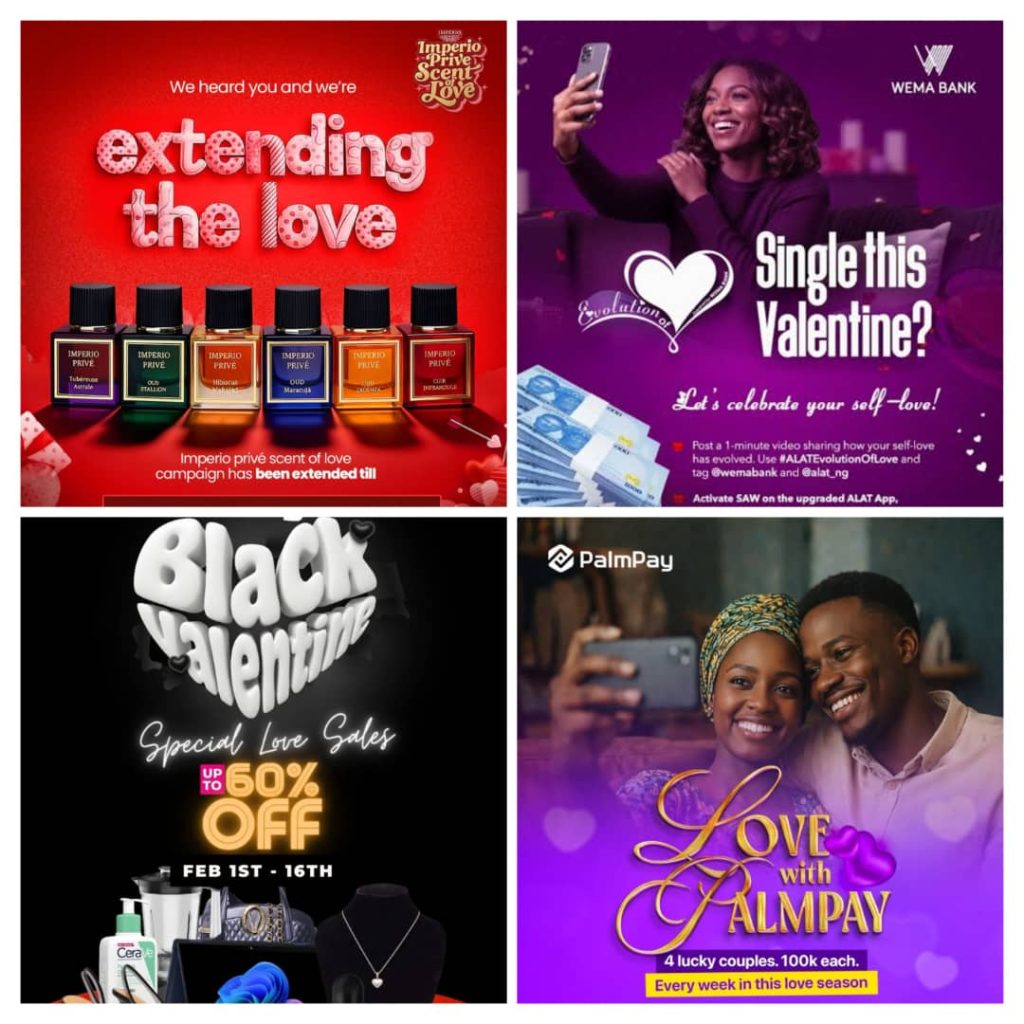
Retail brands this year targeted more than couples, including singles, self-care enthusiasts, and lifestyle shoppers. Konga’s “Black Valentine: Special Love Series” ran from February 1 to 16, offering discounts of up to 60 per cent across home appliances, electronics, computing, beauty, and personal care items. Same-day delivery options enhanced convenience, ensuring that even last-minute shoppers could participate.
Coscharis Motors Plc ran its “Ride with Pleasure this Valentine” campaign, featuring promotional financing on premium cars including BMW, Jaguar, Land Rover, Ford, Renault, and Geely. By positioning cars as both gifts and lifestyle investments, Coscharis linked emotional value to aspirational spending. Analysts note that expanding the Valentine’s audience beyond couples encourages brand loyalty and engagement from a broader demographic, reflecting the shift toward inclusive marketing.
Financial Services: Engagement with Measurable Impact
Financial services brands leveraged Valentine’s as a season for interactive campaigns. PalmPay ran the #LoveWithPalmPay initiative, inviting users to share stories of how the platform helped them support loved ones. Weekly prizes of ₦100,000 rewarded participation, generating over 500,000 engagements across Instagram, X, Facebook, and TikTok. The campaign highlighted everyday financial moments as expressions of care, bridging emotional storytelling with practical action.
Wema Bank’s Evolution of Love campaign, powered by its ALAT digital platform, celebrated love in multiple forms, including self-love, friendship, and family. Participants shared one-minute videos describing their love journeys for cash prizes, lifestyle vouchers, and vacation packages. A live wedding performance by award-winning artist Chike added a memorable touch, demonstrating how banks can combine engagement, visibility, and emotional resonance.
Luxury Lifestyle and Experiential Activations
Premium lifestyle brands also embraced Valentine’s day as a multi-sensory, interactive experience. Imperio Privé staged its “Scent of Love” activation in Lagos, inviting visitors to explore six fragrances representing different facets of love. Pop-up events included floral décor, curated music, creative workshops, and social media contests. Over 10,000 participants engaged with the activations, highlighting how brands can connect with consumers through immersive experiences that blend product promotion, lifestyle, and cultural relevance.
Social Giving and Community Engagement
Valentine’s 2026 also emphasized social generosity. Supacash, a Nigerian payments platform, launched the #100kSmilesChallenge, encouraging participants to gift ₦1,000 to at least five people through shareable digital links. The initiative redirected traditional Valentine spending toward community acts of kindness, reflecting a broader understanding of love that includes social impact and collective engagement.
Cultural Expressions Beyond Commerce
Beyond campaigns and activations, Valentine’s Day in Nigeria included cultural expression and public performance. Local artists in Lagos handed out roses, performed music, and engaged passersby, using the day to spread messages of love, joy, and compassion. Social groups organized friendship-focused gatherings and collective gift exchanges, illustrating how the holiday has evolved into a celebration of human connection as much as romantic expression.
Valentine’s Season As A Commercial Force
Globally, Valentine’s is the second largest card-sending and gifting holiday after Christmas. In Nigeria, 2026 reinforced that the celebration is both a cultural and commercial phenomenon. Retailers reported a 35 to 40 percent increase in transactions compared to 2025. Hotels and restaurants achieved up to 85 percent occupancy with Valentine-themed packages. Social media trends with hashtags like #LoveWithPalmPay, #ScentOfLove, #BlackValentine2026, and #ValentineLagos generated over 1.2 million mentions, reflecting both digital and physical engagement.
The 2026 Valentine’s narrative demonstrates that love is expressed in many forms; through gifts, experiences, social engagement, and everyday acts of care. Brands used the holiday to create inclusive campaigns, measure participation, and connect emotional messaging to tangible outcomes. Retail, fintech, banking, luxury activations, and social giving initiatives all contributed to a Valentine’s Day that is multi-dimensional, culturally resonant, and commercially significant.
Valentine’s 2026 in Nigeria was therefore not only about couples, romance, or consumption. It was a celebration of connection, creativity, community, and commerce. It showed that love, in its many forms, remains a powerful force capable of inspiring meaningful engagement across society.
