


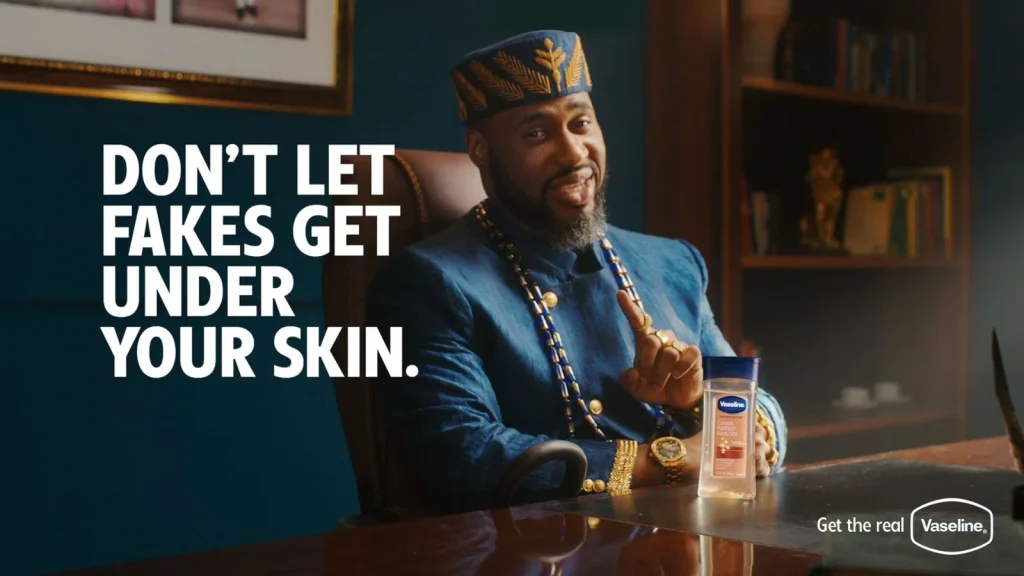

In a unique campaign that pairs a culturally resonant archetype with a real‑time, tech‑enabled verification system, Vaseline Nigeria has created a distinctive, story‑driven approach to brand protection that is both culturally sharp and functionally useful for shoppers.
The verification tool currently focuses on Vaseline Body Oils, which the brand identifies as the most frequently counterfeited category in the Nigerian skincare market.
At the heart of the initiative is the Vaseline Authenticator, a WhatsApp‑based tool that lets users confirm whether a Vaseline Body Oil is real or counterfeit in seconds. Consumers scan a QR code from campaign materials or click a WhatsApp link to open a chat, upload photos of the front and back of the bottle, and receive an instant verification from the “Prince’s assistant.”
Vaseline Nigeria’s new anti‑counterfeit campaign turns the “Nigerian Prince” scam trope into a consumer‑protection tool, using real royal figure Prince Chris Okagbue of the Onitsha Kingdom to help Nigerians verify genuine Vaseline Body Oils. The campaign, created by Leo Singapore as part of Publicis Groupe, positions the prince as a trusted authority figure who challenges fake products and reassures consumers that “fakes don’t get under your skin.”
The campaign’s key differentiator is the way it recasts the “Nigerian Prince” image, long associated with online scams, into a symbol of authenticity and consumer safety. In social‑video content, Prince Okagbue references the scam emails he is often impersonated in, then uses the same narrative to expose counterfeit body oils that may contain unregulated, harmful ingredients.
