

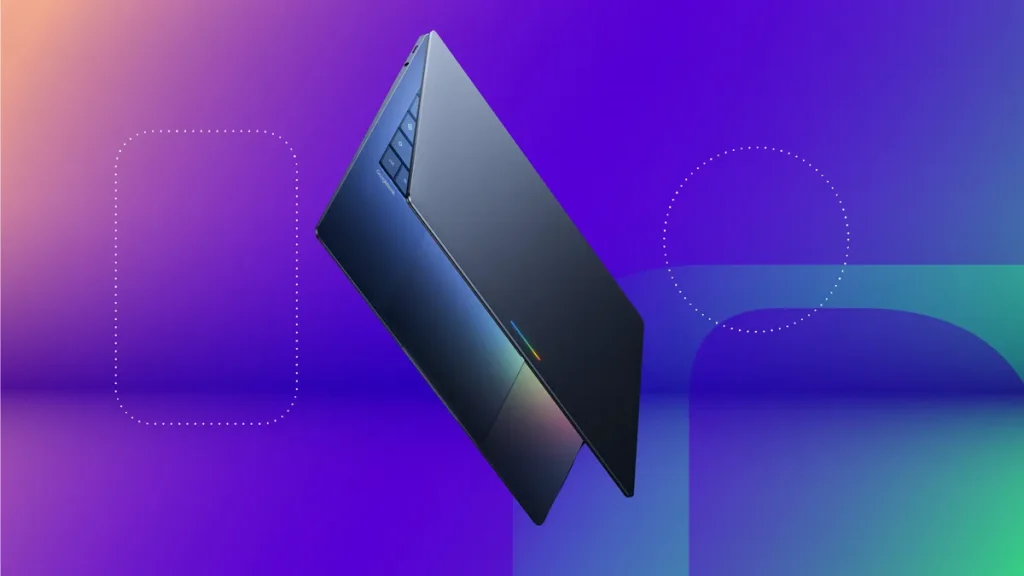
Google has unveiled a new range of laptops called Googlebook, centred on Gemini, the company’s leading family of models. The tech giant is partnering with Acer, Asus, Dell, HP, and Lenovo to produce the first Googlebooks in a range of shapes and sizes, with a launch scheduled later in the year.
The company describes Googlebook as the first laptop designed from the ground up around Gemini to offer personal and proactive assistance.
The laptops will ship with a feature called “Magic Pointer,” a new Gemini-enabled cursor that goes beyond standard pointing and clicking. Wiggling the cursor surfaces quick, context-aware suggestions based on what is currently on the user’s screen.
Hovering over a date in an email, for instance, can prompt a meeting setup, while selecting two images, such as a living room and a new couch, allows users to visualise them together.
Alexander Kutcher, Google’s senior director of Android tablets and laptop, said in a briefing with reporters,“We thought, we can take Gemini Intelligence and make the pointer truly smart and intelligent.”
He also noted that “As you wiggle and you move over the screen, it will tell you what it can interact with, and contextually offer you the actions that you can do. It really exemplifies how we think about AI features throughout Googlebooks. It’s built in, but not in your face.”
Googlebooks will also connect with Android phones, letting users run phone apps directly from their laptop. Someone who needs to complete a Duolingo lesson, for example, can access the app on their laptop without picking up their phone. Files stored on a phone will also be accessible through the Googlebook’s file browser for viewing, searching, or inserting into documents.
The company noted that a new “Create your Widget” feature lets users build custom widgets by prompting Gemini. The feature can pull information from the web and connect with Google services like Gmail and Calendar to build a single personalised dashboard. Someone planning a family reunion in Berlin, for instance, could have it gather flight and hotel details, surface restaurant reservations, and add a countdown.
The broader significance of the recent announcement lies in what Googlebook effectively replaces. The unveiling comes 15 years after Google introduced the Chromebook, the affordable, browser-based laptop that became a fixture in schools and workplaces around the world. While Google has stopped short of officially declaring the Chromebook’s retirement, the Googlebook is widely understood to be its successor.
A Google spokesperson told TechCrunch that the company plans to continue supporting current Chromebook users, with devices receiving updates through their existing support commitments. The company added that many Chromebooks will be eligible to transition to the new experience, though it did not share details on what that process would involve.
The move signals the beginning of a broader shift away from ChromeOS and toward a new Android-based operating system with Gemini built into its foundation. With major PC manufacturers already on board, the Googlebook represents both a hardware refresh and a platform strategy, one that puts Google in direct competition with other tech brands.
