

MarkHack 5.0: Industry Experts Urge Brands To Build For Africa’s Cultural Reality As AI Reshapes Marketing

Industry experts have charged brands and marketers operating in Africa to prioritise deep cultural intelligence over technological shortcuts, warning that artificial intelligence, however powerful, cannot replace the human understanding required to build lasting consumer connections on the continent.

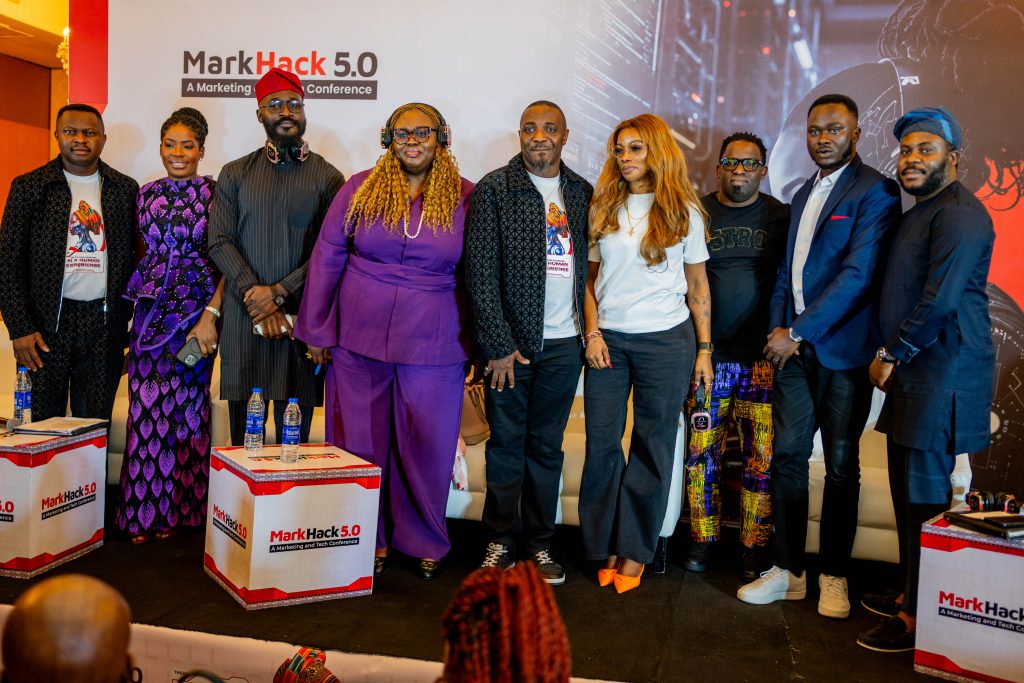
The charge came during the breakout session titled “Local By Design: Rethinking Brand Building in Africa” at MarkHack 5.0, held recently at the Oriental Hotel, Victoria Island, Lagos.
The session, moderated by Mobolaji Junaid, Chief Executive Officer of WhyFinit, formed part of the broader MarkHack 5.0 conference themed ‘The Culture Algorithm’. The event brought together innovators, creators, investors, and industry leaders to explore the future of media, marketing, and technology.

The panel brought together some of the sharpest marketing minds working across Nigeria and the continent today, including Fiyin Toyo, Marketing Director for Central, East & West Africa at Beiersdorf; Dr. Abiodun Ajiborode, Chief Executive Officer of Brand Management Academy and BLIM; David Mogaji, Chief Executive Officer of Candleweb AI; Tope Sule, Brand Manager at Indomie and Martha Kayode, Head of Marketing at PZ Cussons.
The panellists were unanimous in their discussions, stating that the fundamentals of marketing remain intact, but their application must be rooted in cultural specificity.
“Africa is multiple countries within one continent,” said Martha Kayode. “Even within a single country, you are dealing with vastly different consumers. Understand your different audiences, understand their culture, then apply your communication in a way that genuinely connects.”
She stressed that a brand’s survival depends on delivering on its promise and staying honest with the people it serves. “Marketing that is true to your consumer is the only marketing that lasts.”
Dr. Abiodun Ajiborode reinforced the point, noting that the four Ps of marketing have not changed; only their application has. “Don’t treat consumers using demographics alone. Understanding your consumer will help you create a story that truly aligns with them,” he said.
He urged marketers to resist the temptation to abandon structure in the rush to embrace novelty, stressing that rigour and relevance must coexist.
Tope Sule pushed the conversation further, arguing that the goal posts have shifted beyond brand love. “Great brands build beyond brand love to brand reference,” he said. “People may love you today and not tomorrow, but reference is built on respect and trust, and that is far harder to lose.” He urged marketers to focus on relevance at the precise moments that matter in their consumers’ lives, describing this as the new frontier of brand loyalty.
The sharpest exchanges of the session centred on artificial intelligence. The panel asserted that AI is an enabler, not a replacement for human thinking.
Fiyin Toyo was direct, “AI can find the trends and tell you something is happening, but it cannot tell you why. Don’t be lazy. AI is great at contextualising the past but not the future. Use it as a data resource, but respect your brain enough to do the actual work.”
David Mogaji added that the true value of AI lies in how well it is fed. “AI should be human-led and AI-powered. Do consumer immersion, understand their pain points, feed that knowledge into your AI, and let it learn your consumer alongside you. If you don’t understand your audience, no AI will save your brand.”
Toyo delivered what may have been the session’s most quotable line, “The real insight is always the human brain. AI can only point you in the right direction using the data you have gathered.”
Moderator Mobolaji Junaid closed the session with a final charge to the room, “Be collaborative with AI. Don’t suffer from brain rust. It is a tool don’t let it outsmart you.”


