
NIMN Conference Charts New Course For Marketing As Industry Leaders Champion Community, Culture & Connection


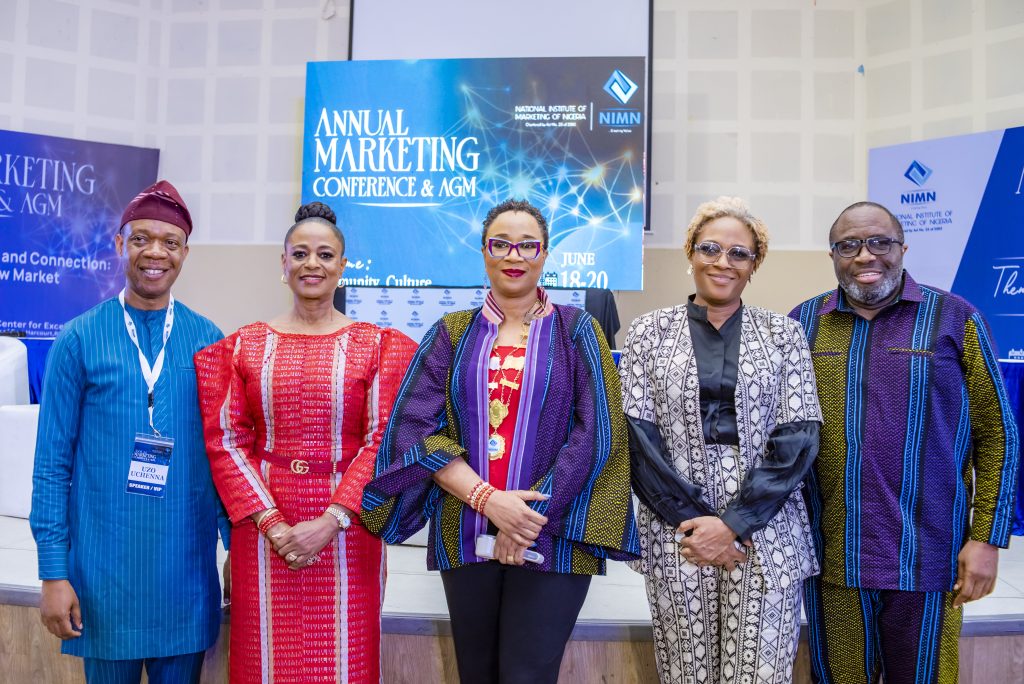
Marketing leaders, academics, policymakers and business executives have called for a fundamental shift in how brands engage consumers, urging organisations to move beyond traditional marketing approaches and embrace community, culture and authentic human connection as the new drivers of relevance, influence and sustainable growth.
The call formed the central theme of discussions at the 2026 Annual Marketing Conference (AMC) and Annual General Meeting (AGM) of the Nigerian Institute of Marketing of Nigeria (NIMN), held in Port Harcourt under the theme: “Community, Culture and Connection: Reimagining the New Market.”
The conference convened some of Nigeria’s leading thinkers from academia, industry, government and professional bodies to examine the evolving dynamics of consumer behaviour, trust, influence and brand engagement in an increasingly complex and digitally connected marketplace.
Delivering the keynote address, Deputy Vice-Chancellor (Academic) of Pan-Atlantic University, Lagos, Prof. Uchenna Uzo, challenged brands seeking long-term relevance and growth to prioritise consistency, transparency and consumer education in their engagement strategies.
According to him, trust remains the most valuable currency in today’s marketplace, particularly in fragmented markets where consumers increasingly rely on recommendations from peers and trusted communities when making purchasing decisions.
“Consistency is key, especially when you operate in a fragmented market. It must reflect in your investments, engagements and the offerings you provide to your target customers,” he stated.
A major highlight of the conference was the unveiling of a landmark consumer insight report jointly developed by Lagos Business School and NIMN titled, “Community, Culture and Connection: Reimagining the New Market.”

Presenting the report, Prof. Uzo revealed that despite inflationary pressures and economic uncertainty, Nigerian consumers remain remarkably optimistic and aspirational, recording an average aspiration score of 7.5 out of 10.
The report found that peer networks, community influencers and faith-based leaders now play an increasingly significant role in shaping consumer aspirations and purchasing decisions. It also identified peer trust as one of the strongest drivers of buying behaviour across the country.
According to the findings, consumers are placing greater confidence in recommendations from trusted networks than in conventional advertising messages, reinforcing the need for brands to build authentic relationships and communities founded on trust, transparency and shared value.
Speaking during a panel session, Commercial Director of UAC Foods Limited, Dr. Ayo Awosika, described communities as powerful platforms through which brands can build meaningful relationships with consumers by embracing their cultural realities, interests and aspirations.
He noted that successful brands are increasingly differentiated by their ability to demonstrate genuine interest in consumers’ lives rather than merely promoting products and services.
Dr. Awosika also called for stronger collaboration between academia and industry to generate deeper consumer insights and better understand the factors influencing purchasing behaviour.
Also speaking, Prof. Chinyere Stella Nwulu of Rivers State University stressed the importance of policies that promote stronger relationships between organisations and host communities.
While acknowledging that many policies are well designed, she observed that weak implementation and poor accountability often undermine their effectiveness. She therefore called for stronger mechanisms to ensure policy objectives translate into meaningful outcomes for consumers and communities.
From a public sector perspective, Director-General of the Delta State Capital Territory Development Agency, Chief Patrick Ukah, highlighted the critical role of community engagement in effective governance and development.
According to him, many initiatives fail not because of inadequate knowledge or resources but because organisations and governments fail to establish genuine connections with the people they seek to serve. “The missing link is not knowledge but connection,” he said.
Adding his voice to the conversation, President and Chairman of Council of the Nigerian Institute of Public Relations (NIPR), Dr. Ike Neliaku, described community, culture and connection as the defining pillars of business growth in the modern marketplace.
He noted that consumers are no longer simply purchasing products and services but are increasingly identifying with the values, purpose and stories represented by brands.
According to him, sustainable growth will be driven not by visibility alone but by trust, credibility and meaningful relationships that create lasting value for both businesses and society.


