


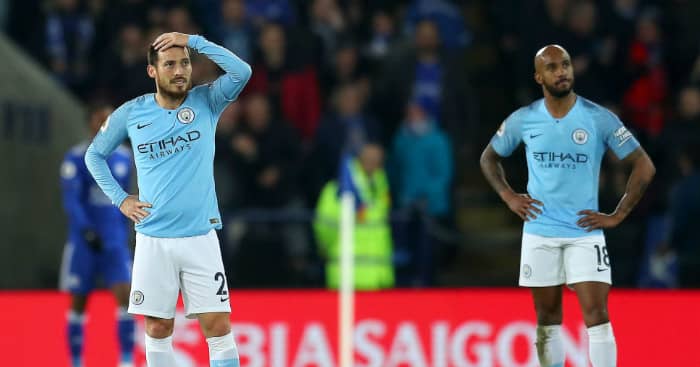
For almost three years, Manchester City’s financial case has been one of the lingering challenging issues in English football. What began with a Premier League investigation eventually became a landmark case involving more than 100 alleged financial breaches.

That situation moved to a new level on September 29, 2026, when an Independent Commission appointed under Section W of the Premier League Rules found Manchester City guilty of 115 charges relating to serious breaches of the Premier League’s financial rules covering the 2009/10 to 2017/18 seasons.
The challenges facing Man City would definitely have significant consequences beyond the EPL and the game of football. Manchester City is one of the world’s most commercially powerful football clubs, with a large international sponsorship portfolio. These findings are stirring vital questions on what could happen to dozens of brands associated with a club whose financial practices are publicly seen as very questionable.
The Findings
According to the Premier League, the Independent Commission found that Manchester City arranged what it described as “sham” contracts with a number of its commercial partners between 2009/10 and 2017/18.
The Commission also revealed that these arrangements formed part of a disguised funding scheme. Under the findings, some commercial partners paid only part of the sponsorship amounts recorded by Manchester City, while the remainder was funded by Abu Dhabi United Group Investment & Development Ltd (ADUG), owner of the club.
These investigations also revealed that the arrangements artificially increased the club’s reported revenues and reduced its reported costs by more than £900 million during the affected period. The Commission found that the club subsequently filed misstated accounts and concealed the true state of its finances from auditors and football regulators.
The Commission also discovered that, if the relevant agreements were accurately reported, Manchester City would have breached both Premier League and UEFA spending limits by a substantial amount.
The Commission concluded that, through its conduct, Manchester City “clearly intended to circumvent the EPL Rules.”
These findings are particularly important because they concern the period in which Manchester City developed from a wealthy but relatively less successful club into one of the dominant forces in European football.
The Commission’s findings, however, are being challenged. Manchester City has rejected the conclusions and has appealed the decision. The club says the Commission’s opinion contains material errors of law, principles, and facts, while maintaining that it is innocent of the accusations.
EPL’s Position
Richard Masters, Chief Executive of the Premier League, described the disciplinary case as “the most significant in Premier League history.”
“The core decision establishes the facts of what happened at Manchester City during this period. It details how the club systematically broke Premier League Rules for nearly a decade.”

Why Are Brands Involved?
The commercial side of the case is what makes the story particularly relevant to marketers and communications professionals. Manchester City is not simply a football team. It is a global commercial platform with partnerships across airlines, sportswear, financial services, technology, consumer goods, and other industries.
The club currently lists major companies and brands like Etihad Airways, PUMA, OKX, Asahi, e&, Revolut, BYD, EA Sports FC, Unilever, Jinko Solar, Socios.com as global partners.
It is vital to note that the existence of a current sponsorship relationship does not mean that the sponsor was found guilty of any illegal action.
Etihad: The Commercial Pressure Point
No sponsor illustrates the challenge more clearly than Etihad Airways. The Abu Dhabi-based airline has been Manchester City’s principal sponsor since 2009, and the club’s stadium carries the Etihad name. Manchester City’s own website describes the relationship as a partnership dating back to May 2009.
Following publication of the Commission’s findings, Etihad said it categorically rejects any finding or implication that it had been involved in or connected to any improper commercial arrangement. The airline also said it had not been contacted or consulted during the Commission process.
This creates a difficult situation for the airline.
Even if Etihad itself is not found to have committed a breach, its brand is inevitably mentioned whenever the Manchester City case is discussed because of the size and visibility of their partnership. For a global airline, reputation is a major commercial asset. Customers do not necessarily distinguish between a club’s actions and the actions of its sponsors. This means that association alone can create an image problem.
Puma And The Challenge Of Long-Term Partnerships
PUMA faces a similar type of exposure. The sportswear company has had a long-term relationship with Manchester City since the 2019/20 season and extended the partnership in 2025. The agreement covers kits, retail, and other commercial activities, while PUMA’s subsidiary STICHd operates Manchester City’s online store.
There is currently no basis to say that PUMA was found guilty of involvement in Manchester City’s historical financial breaches. The issue for PUMA is therefore mainly one of brand association and risk management.
Sports sponsorship is built around positive associations: winning, performance, innovation, loyalty, and global visibility. A major financial controversy introduces a negative association many sponsors would do everything to avoid.
For PUMA, the challenge is to balance the commercial value of Manchester City’s global audience against any reputational uncertainty created by the case before any action can be taken.

Newer Partnerships Face A Different Question
Manchester City’s newer commercial relationships also demonstrate how quickly the club’s business network has expanded. Revolut, for example, became Manchester City’s official back-of-shirt partner for the men’s and women’s teams in 2026, building on an earlier relationship with the women’s team. The financial technology company has positioned the partnership around fan engagement and its global growth strategy.
Again, there is nothing that reveals that Revolut was involved in the historical financial conduct.
For Revolut and other new partners, the decision to continue their association with Manchester City would be shaped by its commercial viability even as the club appeals the findings.
Reputation-The Central Issue
The biggest potential effect on Manchester City’s brands may not be an immediate cancellation of sponsorship deals. It may be the longer-term reputational cost. Sponsors invest in clubs because they want access to audiences, emotional connections, and international visibility. If a club becomes associated with fraud and financial violations, the sponsor would be compelled to consider whether that association still supports its goals and brand aspirations.
Manchester City remains one of the world’s most recognisable football brands, and its commercial portfolio shows that companies continue to see value in association with the club. Its 2024/25 annual report said 11 new partners joined the men’s portfolio during that season, showing continued commercial momentum before the Commission’s verdict.
What Happens Next?
The Independent Commission has submitted its findings, but the sanctions have not yet been determined. The Premier League says the issue of punishment will be addressed separately by an Independent Commission. Possible sanctions under the league’s rules include fines, points deductions, and other sporting sanctions, although no particular punishment has been confirmed at this stage.
Manchester City formally lodged its appeal on October 2, 2026. The proceedings will remain private and confidential until publication of the outcome is permitted.
For partnering brands, that uncertainty might look like eternity. A severe sporting sanction would strongly affect Manchester City’s competitive position, media exposure, and commercial attractiveness. A successful appeal, on the other hand, could substantially change the current picture.
A Test For Sports Marketing
Manchester City’s financial case has become more than a football disciplinary story. It is also a case study in the relationship between sport, money, reputation, and corporate partnerships.
It has equally placed renewed scrutiny on the way sponsorship income, ownership funding, and club finances interact.
For Manchester City, the challenge now extends beyond the pitch. The club must pursue its appeal, deal with whatever sanction that may eventually follow, and manage the trust of supporters, commercial partners, and the wider football community.
The final impact on Manchester City’s commercial reputation will depend on what happens next. Until the appeal and sanctions process is completed, the financial case remains an evolving story- one in which the club, the Premier League, and the brands around it all have something significant at stake.
