

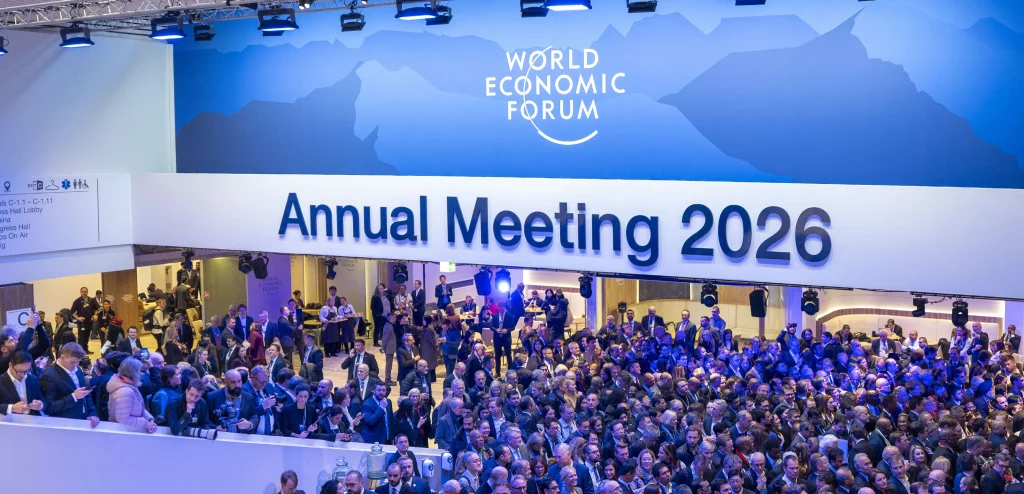
Every January, the small Swiss Alpine town of Davos undergoes a remarkable transformation. What is ordinarily a quiet resort community is becoming a global nerve centre, a stage where heads of state, chief executives, experts, activists, and innovators meet to shape conversations about the future of the global economy, technology, climate, and governance.
This annual transformation is the World Economic Forum (WEF), and what Davos represents is far more than a conference; it has become an enduring symbol of global conversation and elite interaction, a destination of influence and impact.
For Nigerian cities striving to compete for attention, investment, and relevance in a connected world, the “magic” of Davos is not about the snow-capped peaks or exclusive meetings. It is about the strategic alignment of purpose, place, and narrative that has elevated a modest mountain town into a global “destination of choice” for high-level dialogue. The experience of Davos offers vital lessons for Nigerian urban centres attempting to write their own stories in destination branding.
Davos- Steady & Consistent
Davos did not become a platform for global leaders overnight. The World Economic Forum began in 1971 as a European management symposium founded by economist Klaus Schwab, aimed at improving corporate competitiveness. The location, a secluded Alpine retreat, was selected deliberately not for convenience, but for its capacity to foster deep, uninterrupted dialogue among leaders.
Over time, the Forum expanded beyond corporate leadership to include heads of state, central bankers, academics, civil society leaders, and media. By the late 1980s, the event had adopted its now-familiar name, the World Economic Forum, signifying its broadened scope. Today’s Davos symbolizes global cooperation, economic foresight, and multistakeholder dialogue, a “magic meeting place” where ideas with global consequences are debated, shaped, and occasionally reshaped.
This evolution carries an important lesson for Nigerian cities: identity shapes destination value. Cities like Mumbai and Istanbul did not become destination hubs by accident; they developed reputations over time rooted in finance, culture, and technology. Nigerian cities must similarly find and own distinct narratives that go beyond demographics or administrative status to become compelling destinations.
Crafting a Narrative That Matters
One of the most striking insights from this year’s WEF branding discussions is the emphasis on purpose-driven leadership and messaging. The Davos 2025 branding insights highlighted a shift in global expectations of leadership from purely financial performance to empathy, societal progress, and ethical conduct. Leaders were expected to demonstrate that they genuinely care about employees, inspire positive change, and understand customer needs, all while maintaining trustworthiness.
This shift towards purpose over profit is a powerful reminder for Nigerian cities trying to build relevance in a competitive world. Too often, Nigerian urban development conversations focus on statistics, population, size, traffic congestion, and GDP contribution rather than social purpose, lived experience, and emotional meaning.
Destinations attract people because they represent aspirations. Davos has leaned into its identity as a place where voices that influence global outcomes can meet. Its brand lies in convening power, the promise of generative dialogue that might shape policy, finance, and international cooperation.
Nigerian cities should ask themselves similar questions: What narrative will define our city’s contribution to national and global conversations? How can infrastructure, governance, and culture support that identity? And what problems can we help solve for people beyond our borders?
Answers to these questions, grounded in purpose, helps transform a city into a destination not just a location.
Infrastructure as Signal of Readiness
It is easy to dismiss Davos as an elite enclave, but what makes it function as a destination during WEF is its infrastructure readiness. Roads, meeting spaces, logistics, security, and hospitality are aligned year-round so that when the WEF convenes, the physical environment supports its mission.

In Davos, infrastructure is not a luxury; it is a strategic signal that the place is ready for high-stakes engagement. Efficient transport, reliable technology for delegates, secure facilities for closed-door discussions, and spaces that can host thousands of participants all contribute to this signal.
Nigerian cities, by contrast, often struggle with basic urban infrastructure, inconsistent power, traffic gridlock, and unreliable public services, which complicates efforts to host events that attract sustained investment. For cities like Lagos, Abuja, Port Harcourt, Uyo, Enugu Kano, and emerging secondary cities, focusing on infrastructure should be both technical and narrative-driven. It should show that the city is not only functional but prepared for opportunities, whether in finance, innovation, culture, or education.
A destination that cannot reliably support the needs of its residents and investors cannot convincingly promise the same to outsiders.
Again, one of Davos’ most potent components is not any single panel or speech but the ecosystem of events- official sessions, private briefings, side meetings, workshops, and spontaneous discussions that multiply its impact. What started as a small symposium has grown into a week of thousands of interactions that form a larger narrative of global engagement.
For Nigerian cities to build destination momentum, they must invest in anchor events that align with their identity and aspirations. Each city can cultivate a flagship platform: Lagos might expand its commerce and tech ecosystem by hosting an annual global fintech forum. Abuja could lead on peace, governance, and policy dialogues, leveraging its seat as the capital. Port Harcourt can centre innovation in energy transition and blue economy conversations, while Calabar could deepen its identity as a cultural and tourism destination.
Importantly, anchor events should not be isolated moments. They must be ecosystem drivers platforms that attract industry gatherings, startup meetups, investment fora, and cultural showcases throughout the year.

Branding Beyond Logos
Davos is also instructive for nation and city branding. A panel discussion on nation branding at Davos 2025 emphasised that a country’s brand is not just about marketing campaigns and logos but about shaping perceptions through consistent, strategic narratives. Nation branding encompasses economic performance, cultural diplomacy, soft power, innovation, and entrepreneurship, and must be continuously refined to respond to global shifts.
The same logic applies to cities. Urban branding that relies on slogans or short-term campaigns will always fall short unless backed by tangible experience and authentic narrative expression.
For example, if a city claims to be a hub for innovation, this identity must be reflected in education systems that support innovation; startup ecosystems with local and global partners; event calendars that showcase thought leadership; and public spaces that encourage creativity
Human Experience & Community Ownership
Part of Davos’ enduring appeal lies in its emphasis on human-centred leadership. In 2025, CEO reputation research showed that people increasingly value leaders who care about employees, inspire change, and earn trust. This human focus extends to how Davos operates as a destination; it brings together diverse voices, including young leaders, academics, civil society, and rising global figures.
Nigerian cities, too, must expand the circle of ownership beyond elites. Destination branding should include: Local artists and cultural workers; Small and medium businesses; Academic and research institutions; as well as Youth and innovation communities.
When residents feel that their city’s identity reflects their lived experience and aspirations, they become ambassadors of that destination. This bottom-up ownership is a hallmark of truly magnetic cities.
For Nigerian cities, Davos teaches that destination magic is not accidental; it is designed and nurtured. A place becomes a destination when it offers: a clear narrative that resonates locally and globally; Infrastructure that signals readiness and reliability; Experiences that are distinctive and memorable; Inclusive engagement that expands ownership, as well as Strategic events that anchor ecosystems
Davos’ transformation from a quiet mountain resort to a global destination of influence offers Nigerian cities a powerful blueprint. While Nigeria’s urban centres differ in history, context, and resources, the fundamental principles of purpose, narrative, and experience apply universally. By embracing strategic storytelling, investing in infrastructure and people, and aligning governance with identity, Nigerian cities can harness their own “destination magic.”