
Insights From MarkHack CMOs’ Circle 2: Marketing Has A Talent Crisis That Was Built By The Industry Itself

In accordance with the Chatham House Rule, the discussions at the inaugural MarkHack CMO Circle are reported here without attribution to individual speakers or the organisations they represent. Participants spoke freely on that understanding, and their identities will not be disclosed.
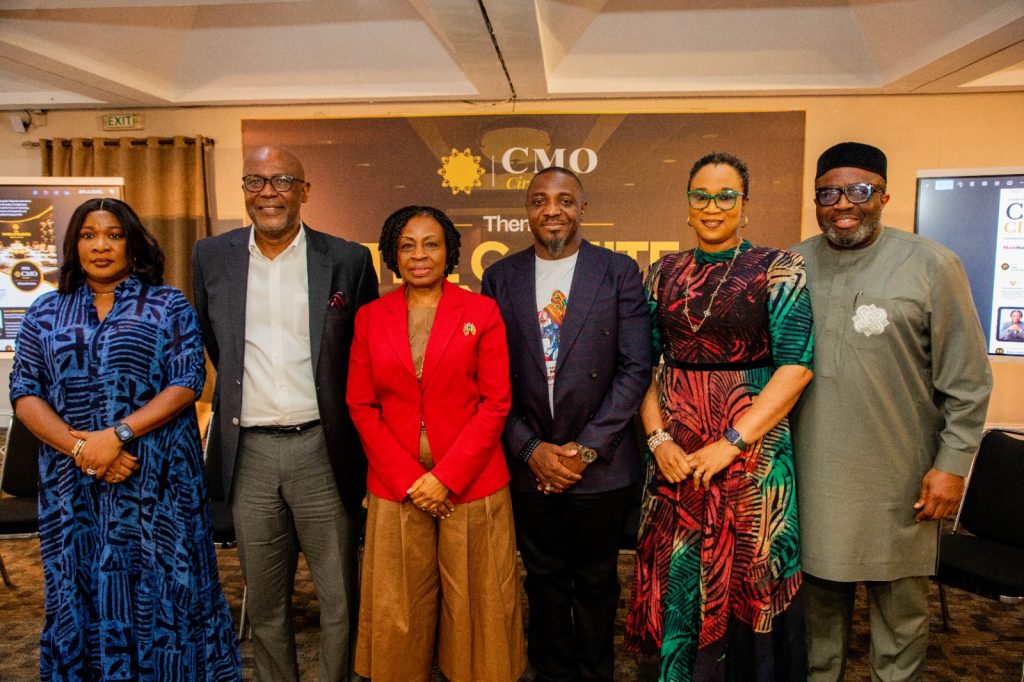
If the first conversation at the MarkHack CMOs’ Circle was about the evolution of the CMO’s role, the second was about the people being groomed, or more accurately put, not being groomed to fill it. What happened in the room at the Wheatbaker Hotel, Ikoyi, Lagos, was a candid and at times uncomfortable examination of a talent crisis that participants agreed is structural, self-inflicted, and urgent. The marketing industry, they concluded, is producing the wrong kind of practitioners at scale, and senior leaders bear a good share of the responsibility for allowing it to happen.

The MarkHack CMOs’ Circle brought together some of Nigeria’s most senior marketing executives for a 90-minute roundtable under Chatham House Rule. Co-chaired by Iquo Ukoh, CEO of Entod Marketing, and Lolu Akinwunmi, Group CEO of Prima Garnet Africa, one of the sessions was on the question of talent.
Self-Investment As A Leadership Obligation

The talent conversation at the CMOs’ Circle opened with a provocation that framed everything that followed. Before any discussion of how to identify, attract, or develop the next generation of marketing leaders, participants were challenged to confront a prior question: are the current generation of senior marketers investing sufficiently in themselves?
The answer was frequently no. Marketing, participants observed, has long cultivated a culture of professional arrogance and a tendency among senior practitioners to conflate seniority with competence, and accumulated experience with current relevance. This disposition, they argued, has had a corrosive effect on the profession. When leaders stop learning, the entire talent architecture beneath them is distorted, because the behaviours modelled at the top become the behaviours replicated throughout the organisation.
The consequences are visible and measurable. Senior marketing executives who have not invested in understanding financial modelling, supply chain dynamics, or data analytics are poorly equipped to develop these competencies in their teams. They cannot mentor what they do not understand. They cannot build curriculum for skills they do not possess. And when junior marketers look up the organisational ladder for direction on what professional excellence looks like, they see a partial picture that may be strong on brand craft and creative judgment but weak on the commercial and analytical dimensions that modern marketing leadership increasingly demands.
The Commercial Acumen Gap
One of the most extensively discussed dimensions of the talent challenge at the CMO Circle was the persistent deficit in commercial acumen among marketing practitioners at every level of the pipeline and the systemic reasons it has been allowed to develop. Participants reflected on the structural reality that most marketing careers are built within functional silos. A brand manager learns brand management. A digital strategist learns digital strategy. A media planner learns media planning. Each of these is a legitimate and valuable specialism. None of them, in isolation, produces the enterprise-wide commercial literacy that the modern marketing leader needs.
The implications become particularly acute when marketing executives encounter conversations in their organisations that extend beyond their functional domain. When a chief financial officer begins discussing input cost pressures and their implications for pricing architecture, the marketing leader who cannot engage with that conversation analytically, who can only think in terms of the impact on brand positioning is effectively marginalised. When a supply chain director raises concerns about demand planning accuracy and its effect on product availability during a campaign flight, the CMO who has no working knowledge of sales and operations planning processes cannot contribute meaningfully to the solution.
Several participants at the CMO Circle had made deliberate career decisions to address this gap in themselves, voluntarily moving into sales roles, seeking exposure to S&OP meetings, studying finance independently, and pushing into general management positions rather than progressing solely through the marketing track. These experiences, they reported, effectively chaanged their effectiveness as marketing leaders precisely because they expanded the vocabulary with which they could participate in enterprise-wide decision-making.
The lesson being drawn for the broader industry was pointed is that the talent development frameworks operating in most Nigerian organisations do not systematically build commercial acumen in their marketing pipelines. There is no structured rotation into finance, no mandatory exposure to supply chain, no requirement to demonstrate competence in unit economics before ascending to marketing leadership. The result is a generation of senior marketers who are technically proficient within their functional domain but commercially underpowered or proved at the enterprise level, and who, when they reach CMO level, discover that their influence is constrained by exactly the gaps they were never required to close.
One participant described a curriculum he had designed for a business school commercial academy where he deliberately repositioned from a narrow “sales academy” to a broader commercial leadership programme that brought together marketing, sales, supply chain, and finance professionals around a shared framework of business acumen. The intent was to build practitioners who understood how commercial value is created across the entire business system, not just within their own functional lane.