

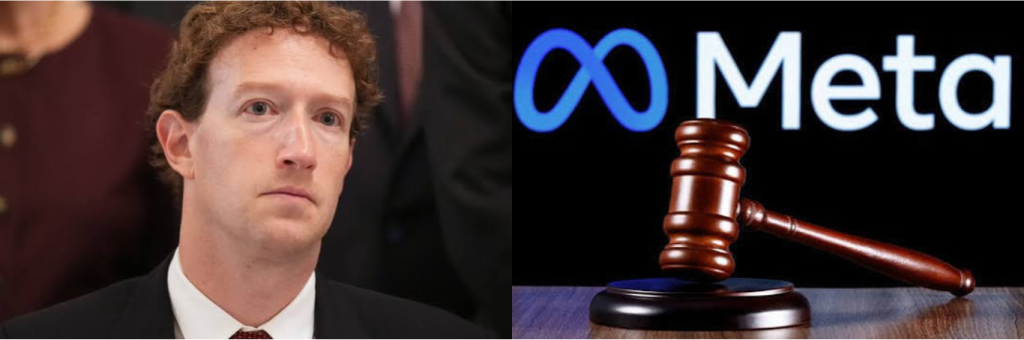
A judge in New Mexico has ordered Meta to pay a whopping $25 billion for misleading the public about how it handled the personal data of Facebook users.

Judge Francis Mathew of the First Judicial District Court in Santa Fe delivered the order on Wednesday, October 21. It follows a September jury verdict that found Meta committed 43.9 million violations of the state’s Unfair Practices Act, a law that protects consumers from false and deceptive business practices, by making misleading statements.
The judge found that Meta made the false statements deliberately, and that the misleading claims stretched from 2010 to 2021.

At the legal maximum of $5,000 per violation, the penalty would have come to about $219 billion. The judge however reduced it to $25 billion. The state had asked for $35 billion to $40 billion, while Meta argued for no more than about $3.4 billion. Reports of the order say the $25 billion will also gain 15 per cent interest each year until it is paid.
The case grew out of the Cambridge Analytica scandal, in which data from millions of Facebook users was used by a political consulting firm. New Mexico argued that Meta, which also owns Instagram and WhatsApp, misled the public and its users about how it handled and shared their data, including through statements by senior executives.
Meta has said it will appeal the ruling. Its chief legal officer, C.J. Mahoney, said the ruling makes it nearly impossible for the company to do business in New Mexico.
Attorney General Raúl Torrez called the ruling a historic day for New Mexico and for consumers across the country, and said the money will go into a fund for the state’s education system.
New Mexico was the only state to take its Cambridge Analytica claims to trial. Forty-eight other states settled in August for $18 billion. Earlier this year, a New Mexico jury also ruled against Meta in a separate child safety case and ordered it to pay $375 million.
The $25 billion fine could be subject to change if Meta’s appeal falls through, because reducing the number of violations would lower the penalty.
