
YouTube Ad Revenue Surpasses $40bn As Growth Slows Amid Competition From TikTok, Netflix, Study Shows

YouTube generated more than US$40 billion in advertising revenue in 2025, reinforcing its position as one of the world’s largest digital advertising platforms. However, new research shows that the platform’s ad revenue growth is beginning to slow as competition intensifies from rivals such as TikTok and Netflix.
The findings are contained in WARC Media’s latest Platform Insights: YouTube report, which examines the platform’s advertising investment, audience consumption and campaign performance.
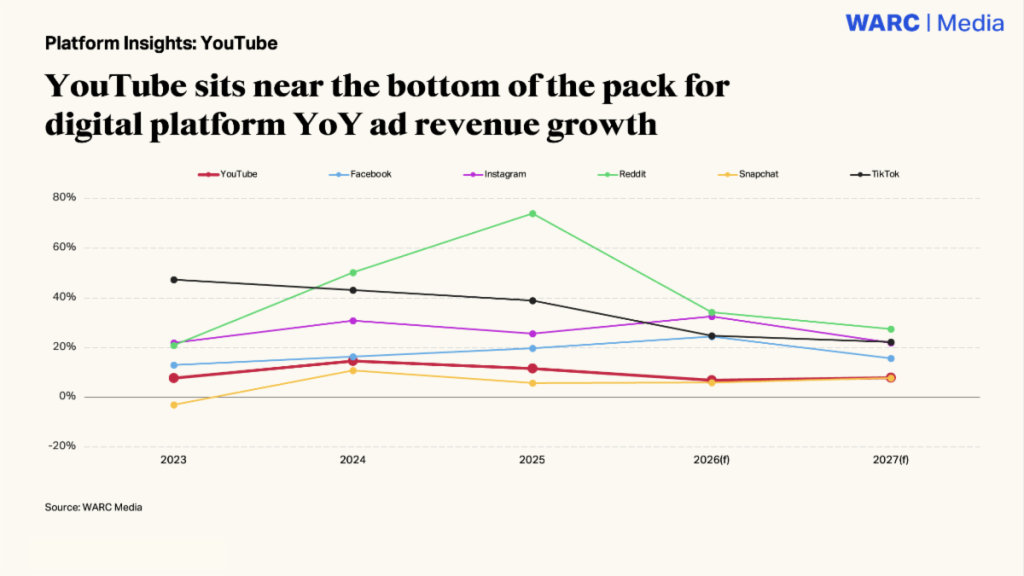
According to the report, YouTube’s global advertising revenue grew 11.7 per cent year-on-year to US$40.4 billion in 2025, while its total revenue, including YouTube Premium subscriptions, exceeded US$60 billion for the first time.
Despite the milestone, the report notes that YouTube’s advertising business is entering a slower growth phase. Ad revenue growth declined from 14.7 per cent in 2024 to 11.7 per cent in 2025 and is projected to fall further to seven per cent in 2026 before recovering slightly to 7.9 per cent by 2027.
WARC attributes the slowdown partly to the platform’s maturity but also to increasing competition for advertising budgets, particularly from TikTok, which continues to strengthen its position in social commerce and performance marketing. At current growth rates, TikTok’s advertising revenue could surpass YouTube’s before the end of the decade.
Netflix is also emerging as a stronger competitor following the expansion of its advertising-supported subscription service, which is expected to attract increased advertiser investment over the next 18 months.
Commenting on the findings, Alex Brownsell, Head of Content at WARC Media and lead editor of the report, said YouTube’s growing audience engagement has not translated into comparable advertising growth.
“Rising consumption of video content on YouTube, and in particular on TV screens, has not yet translated into the kind of year-on-year ad revenue growth we see elsewhere in the digital ad market,” he said.
According to Brownsell, YouTube has been less successful than competitors such as TikTok in convincing marketers of its effectiveness in driving lower-funnel outcomes, prompting the platform to focus more aggressively on attracting television advertising budgets.
The report shows that YouTube continues to enjoy strong global reach, attracting nearly 2.6 billion monthly users who spend an average of 58 minutes daily on the platform, compared with 48 minutes in 2024.
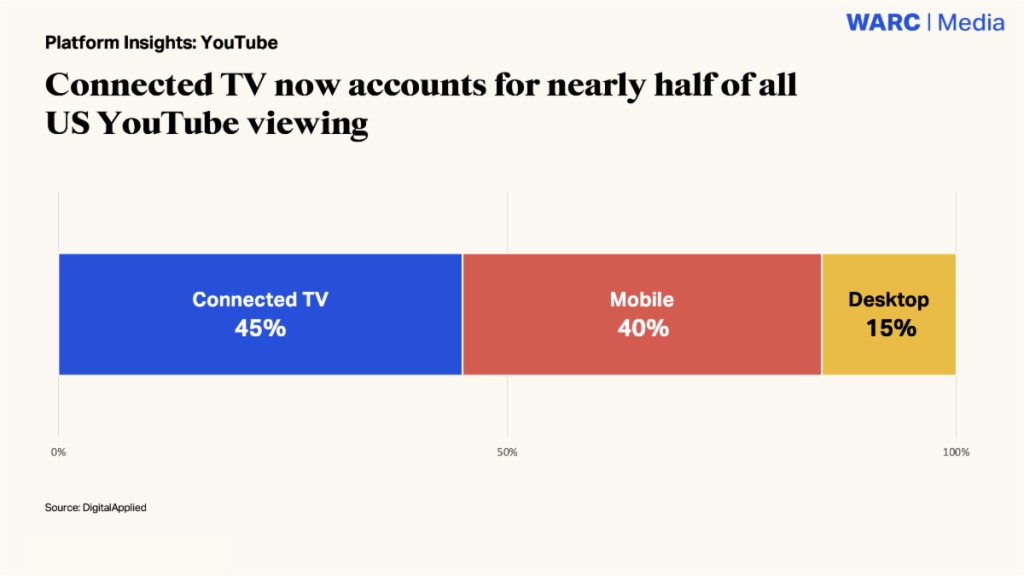
One of the report’s key findings is the rapid shift in viewing habits from mobile devices to connected television screens. In the United States, connected TVs now account for 45 per cent of total YouTube watch time, with average viewing sessions exceeding 45 minutes and completion rates above 95 per cent.
YouTube Shorts also continues to reshape audience behaviour, recording more than 200 billion daily views globally. WARC notes that the short-form video format is becoming an increasingly important source of revenue, with revenue generated per watch hour already exceeding that of traditional in-stream advertising formats in several major markets.
For advertisers, the report identifies Generation Z as YouTube’s most commercially active audience. According to the findings, 51 per cent of Gen Z males and 43 per cent of Gen Z females made a purchase after watching an advertisement on YouTube Shorts, reinforcing the platform’s growing influence on consumer purchasing decisions.
The report also found that YouTube remains the most trusted advertising platform among marketers globally. For the third consecutive year, it ranked as the most preferred and most trusted media brand in Kantar’s global survey, while also placing second behind Netflix for brand safety.
Beyond advertising, YouTube continues to strengthen its position in the podcast market. Viewers watched more than 700 million hours of podcasts on YouTube through television screens within a month, representing a 70 per cent increase year-on-year and enabling the platform to overtake Spotify as the leading destination for podcast viewing.
For advertisers in Nigeria and across Africa, the report points to changing patterns in digital media consumption that could influence future marketing strategies. As consumers increasingly engage with creator-led content, connected TV and short-form video, brands may need to rethink how they allocate media budgets and develop creative campaigns that deliver both brand awareness and measurable business results.
While YouTube remains one of the world’s most influential advertising platforms, WARC’s latest findings suggest that maintaining its leadership will increasingly depend on its ability to compete for performance marketing budgets in an evolving digital advertising landscape.
