
Enough Of The Daniel Bwalas: Why Nigeria Must Stop Appointing Unqualified Voices To Sensitive Communication Roles

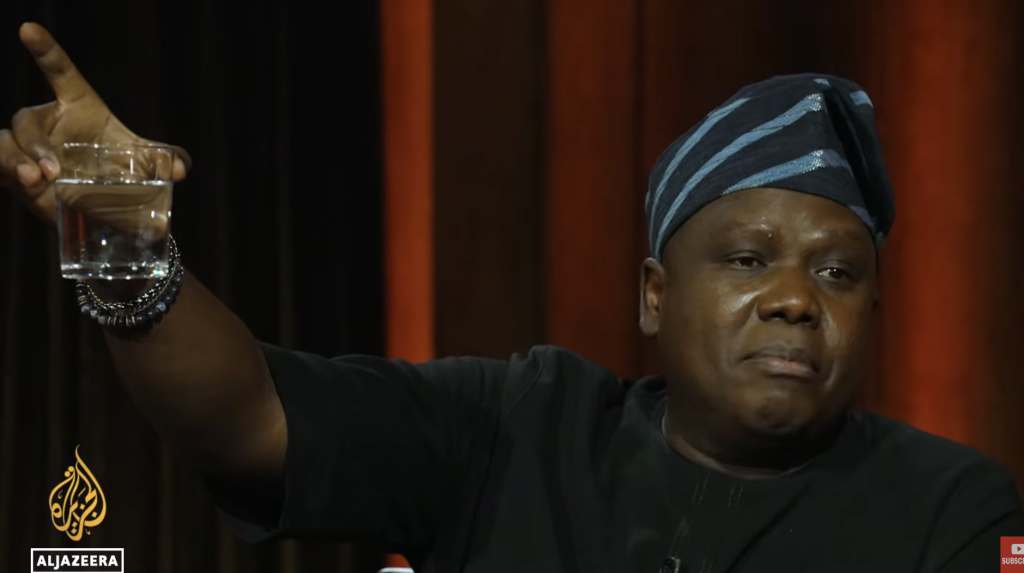
One disastrous interview too many has reiterated the scale of the battle the Nigerian Institute of Public Relations has been losing, one Nigeria has been paying the unfortunate price for, for decades.
Daniel Bwala’s now-infamous appearance on Al Jazeera’s Head to Head with Mehdi Hasan on March 6, 2026 should be a compulsory viewing for any government or organization that wishes to take its communications very seriously. Hasan who was armed with documented reports from Amnesty International and Nigeria’s own National Human Rights Commission, presented what you can call a straightforward statistic that more Nigerians died from banditry and insurgency in the first half of 2025 than in the corresponding period of the previous year was met with Bwala’s response: “Context matters.” Pressed on what that context is, he replies: “The context is not getting worse.” Hasan pauses, visibly incredulous. “The context is not getting worse?” he repeats. Bwala answers: “Yes.”
That national embarrassment is what I would like to describe as consequential. Because Daniel Bwala was not speaking for himself. He was speaking before an international audience of millions as the Presidential Spokesman of Africa’s most populous nation. And in that moment, the communication failure was not just one man’s. It was the failure of a system that continues, stubbornly, to place loyalty above competence, familiarity above professionalism, and political reward above the technical demands of one of the most specialized crafts in public life.
Bwala is a lawyer. He is intelligent, articulate in familiar terrain, and clearly capable of holding his own in domestic political theatre. But a courtroom lawyer and a crisis communications strategist are not interchangeable. Nigeria has spent decades confusing them. The consequences of that confusion has continue to play out consistently, repeatedly, and embarrassingly on the world stage.
Why The NIPR Voice Matters Now More Than Ever
The Nigerian Institute of Public Relations (NIPR), established in 1963 and elevated to chartered status by Decree No. 16 of 1990, now an Act of the National Assembly, has been sounding this alarm for longer than most of Nigeria’s current presidential spokespersons have been in professional life. Beyond creating a professional body, the act establishes that the practice of public relations in Nigeria, under any title, is illegal without NIPR certification. It is a law that is honoured almost entirely in the breach when it comes to government appointments.
NIPR’s mandate is unambiguous. It is to register practitioners, set qualification benchmarks, regulate professional conduct, and enforce a Code of Ethics governing how communication professionals engage with the public. The Institute has repeatedly called for the appointment of trained communication professionals to sensitive government and institutional roles… people who understand not just what to say, but how audiences receive information, how crises escalate, how media systems work, and how reputation is built and destroyed in real time.
Public relations, as defined by its global practitioners, is the deliberate, planned, and sustained effort to establish and maintain mutual understanding between an organisation and its publics. That is not a task for someone whose primary training is in legal argumentation, political mobilization, or media commentary. It is a distinct discipline with its own body of knowledge, its own ethical frameworks, and its own technical demands, all demands that become brutally apparent the moment a government spokesman walks into a studio with Mehdi Hasan.
One Embarrassment Too Many
To treat Daniel Bwala’s Al Jazeera performance as an isolated incident would be to misread Nigerian history. It is the latest expression of a structural problem that stretches across successive administrations and a parade of spokesmen, each miscast in their own distinct way.

Doyin Okupe and Femi Fani-Kayode, who served as presidential spokespersons under Olusegun Obasanjo, were notorious for pugilistic and juvenile engagement with critics. These are behaviours that any trained communications professional would recognize as generating reactance rather than persuasion. Reuben Abati, appointed as spokesman for the Goodluck Jonathan administration, coined the phrase “collective children of anger” to describe government critics…a dismissive slur that succeeded only in hardening opposition and reducing the administration’s credibility with thoughtful Nigerians.
Indeed, no serious organisation, no multinational operating in Nigeria, no responsible publicly listed firm would place its Director of Communications role in the hands of a lawyer whose primary qualification for the role is political loyalty. The corporate world long ago recognized that reputation is an asset class requiring specialist management. A communications crisis mishandled costs not just headlines but valuations. It costs market share, talent attraction, regulatory goodwill, and customer trust. The Chief Communications Officer of any well-governed institution is not a generalist but a specialist trained in media relations, stakeholder engagement, crisis communication protocols, message architecture, and the science of narrative management under pressure, among many others.
Why, then, do we accept a demonstrably lower standard for the institutions that govern 220 million people and represent Nigeria’s face to the world? The Bwala episode is, at its core, a governance and risk management failure.
The NIPR, to its credit, has not remained passive. In recent years it has launched the National Spokespersons Summit to gather communicators, media professionals, and government officials to share best practices in crisis communication and reputation management. It has instituted the National Spokespersons Awards, a platform designed to recognize individuals who have demonstrated excellence, transparency, and impactful communication. It is preparing, later this year, to host the World Public Relations Forum 2026, which NIPR President Dr. Ike Neliaku has described as the World Cup of Public Relations, expected to draw delegates from 126 countries under the umbrella of the International Public Relations Association.
These are not trivial achievements for a professional body. But they are rendered less impactful when the government the Institute is empowered to regulate continues to appoint communication officials based on political geography rather than professional qualification. In the age of global, real-time media scrutiny, that gap is no longer merely a professional annoyance. It is a strategic liability.

Media critic Professor Farooq Kperogi made an observation about Bwala’s Al Jazeera appearance that cuts to the heart of this discussion. Writing in the Saturday Tribune, Kperogi noted that the problem was not that Bwala appeared lazy or obviously unprepared. In fact, he looked prepared, even thoroughly rehearsed. He had the posture, the confidence, and the choreographed mannerisms of a man who believed he had done his homework. But his carefully planned performance collapsed when it collided with Hasan’s hard, cold, indisputable facts.
This is the crucial distinction. Preparation, in the hands of someone without professional communications training, tends toward the rehearsal of talking points and the memorization of approved lines rather than the mastery of subject matter. A trained communications professional understands that preparation for a hostile interview is not about arming yourself with a script. It is about internalizing data, anticipating the hardest possible questions, developing authentic and verifiable responses, and critically knowing when a position is defensible and when it is not. The ability to recognize the indefensible and pivot toward honesty is not an instinct that political loyalists typically develop. It is a learned discipline.
Hasan confronted Bwala with Nigeria’s own National Human Rights Commission data, showing at least 2,266 people killed by bandits or insurgents in just the first half of 2025. He cited Amnesty International. He played back Bwala’s own prior statements from the period when Bwala publicly accused the Tinubu camp of creating a militia and alleged that bullion vans at Bourdillon were for vote-buying, statements carried by multiple Nigerian media outlets at the time. Bwala denied them. The result was not merely embarrassing. It was a live demonstration of what happens when someone without communications training attempts to navigate a fact-based, adversarial media environment: they dispute arithmetic, disown their own words, and leave the studio having done more damage to the government’s reputation than any critic could have managed alone.

Nigeria has no shortage of trained, experienced, NIPR-certified communications professionals capable of representing any government or institution with intelligence, integrity, and strategic precision. The question has never been whether such professionals exist. The question is whether the people doing the appointing will ever decide that competence matters more than convenience, and that the national reputation which is also the national interest, deserves the same professional stewardship that any well-run organisation would extend to its balance sheet.
Daniel Bwala went to Doha well-dressed, well-rehearsed, and apparently confident. He came back having shown, in real time and before a global audience, precisely why communication is not a hobbyist’s art.
Indeed, Mehdi Hasan did not bring him down. The absence of professional communication expertise did.