
Childrens’day 2026: Yeye Adesola Calls For Inclusion Of Left-Handed, Neurodivergent Children

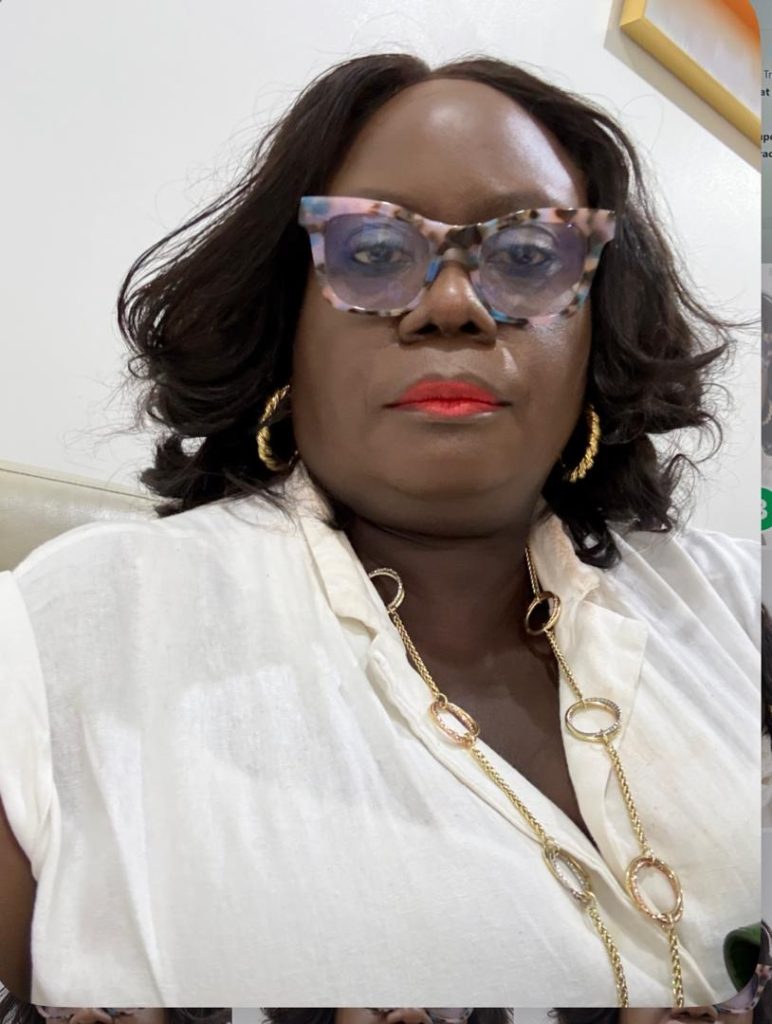
In a passionate address delivered to mark Children’s Day 2026, Yeye Adesola Oyinloye-Ndu, Nigeria’s anti-bullying advocate and Convener of the Lefties and Ambidextrous Care Initiative Nigeria issued a call to action for every stakeholder in Nigeria’s child development landscape to stop forcing children to conform, and start building spaces where every child is allowed to flourish as they naturally are.
Speaking under the national theme “Future Now: Promoting Inclusion for Every Nigerian Child,” Oyinloye-Ndu centred her address on a segment of the child population that, she argued, remains systematically overlooked in mainstream inclusion conversations… the millions of Nigerian children who are left-handed, ambidextrous, or neurodivergent.

Oyinloye-Ndu painted a vivid picture of the quiet, daily obstacles that left-handed children go through from the earliest years of their lives. From classroom desks and scissors designed exclusively for right-handed use, to writing patterns, musical instruments, kitchen tools, and sporting techniques — the built environment, she argued, sends a persistent and damaging message to left-handed children: you do not belong here as you are.
“Many left-handed children are still told ‘Use your right hand,’ ‘Stop that,’ ‘It is improper,’ or ‘You must change,'” she noted. “Some children are pressured so much that they begin to lose confidence in themselves.” This compelled correction, she warned, is not a minor inconvenience — it is a form of exclusion that quietly erodes a child’s sense of identity and self-worth.

According to global estimates, approximately 10 to 12 percent of the human population is left-handed, meaning that Nigeria — with over 220 million people — is home to tens of millions of naturally left-handed individuals, a significant proportion of whom are school-age children currently navigating educational systems largely unprepared to accommodate them.
Beyond handedness, Oyinloye-Ndu broadened her message to address neurodiversity and the understanding that human brains are not uniformly wired, and that a wide range of cognitive and learning profiles exist naturally within any population. She called on educators and parents to move away from a one-size-fits-all model of child development, and instead invest in understanding how each child learns, processes, and communicates.
“Some children learn differently. Some process information differently. Some communicate differently. Some are highly creative, visual, analytical, intuitive, artistic, or deeply innovative,” she said. “Our responsibility as adults is not to force every child into one mold. Our responsibility is to create environments where every child can succeed safely and confidently.”
“When children constantly hear that something about them is ‘wrong,’ they may begin to shrink emotionally. Their confidence drops. Their creativity becomes hidden. Their voice becomes silent.” This silent suffering, the advocate stressed, is a public issue. Children who are mocked for writing differently, punished for struggling differently, or labelled instead of supported do not simply “grow out of it.” The emotional damage, left unaddressed, can trail them through adolescence and into adulthood, suppressing talents and contributions that society desperately needs.
Drawing on history to strengthen her argument, Oyinloye-Ndu reminded her audience that many of the world’s most celebrated innovators, artists, athletes, inventors, and leaders were left-handed or neurodivergent thinkers.
To parents, she issued a clear charge: “Protect your child’s confidence.” To teachers whose influence on young minds is unparalleled, she offered both a caution and a challenge: “Your words can either build a child or break a child.” And to institutions, a reminder grounded in evidence: “Children flourish best where they feel accepted.”
She was equally direct in challenging a comfortable but ultimately hollow conception of inclusion. Inclusion, she insisted, is not about tolerating differences at the margins but about genuinely valuing them at the centre. “A truly inclusive society does not merely tolerate differences. It values them,” she said. “Inclusion is not charity. Inclusion is justice.”
Founded and convened by Yeye Adesola Oyinloye-Ndu, the Lefties and Ambidextrous Care Initiative Nigeria is dedicated to raising awareness about the lived experiences of left-handed and ambidextrous individuals in Nigeria, with a particular focus on the welfare of children in homes and schools.