


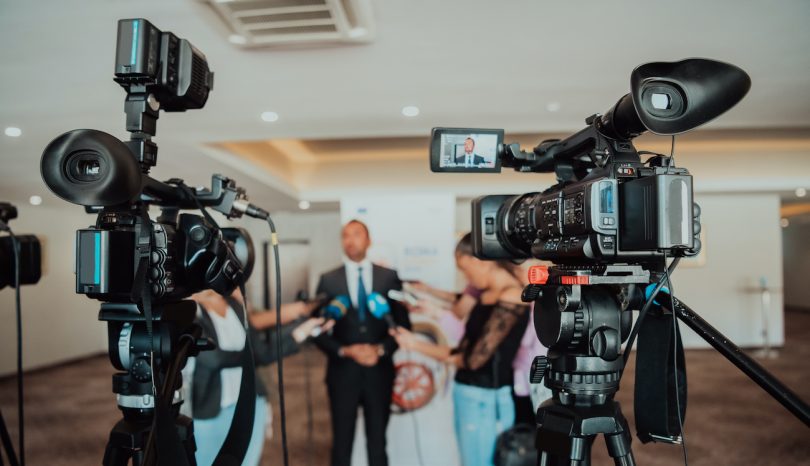
The communications industry’s relationship with the media is one that has long fluctuated between fluid and touchy. In this opinion piece, Edward Israel-Ayide, CEO of Carpe Diem Solutions, reveals what a major survey of working journalists across Nigeria’s top newsrooms is telling the PR world about this relationship, and it’s not flattering…

There is an uncomfortable truth at the centre of the communications industry in Nigeria, and it applies with varying degrees of honesty across much of Africa. We have built an entire professional discipline around our relationship with the media, and yet most of us have not stopped to ask whether that relationship is actually working for the people on the other side.
For World Press Freedom Day 2026, my agency published a practitioner intelligence report titled The Future of Media & PR Collaboration in Nigeria. We surveyed working journalists across 17 media organisations, from legacy newsrooms such as The Guardian Nigeria, PUNCH, and BusinessDay to digital-first platforms such as Technext, The Cable, and Peoples Gazette. We asked them what they think about the state of their profession, the tools reshaping it, and the communications industry they interact with daily. The responses were more candid than we expected, and more damning than most of us in the industry would find comfortable.

The finding that matters most for our industry is not about AI, social media, or press freedom rankings. It is this: journalists experience the media-PR relationship as fundamentally transactional, and they are tired of it. What they described, consistently and across different types of newsrooms, was a pattern of engagement that begins when a brand needs coverage and ends the moment that coverage is secured. Pitches arrive without any evidence that the sender has read a single piece the journalist has written. Sponsored content arrangements are opaque. Relationships are built on the currency of what can be extracted rather than what can be contributed.
That is not a media relations problem. It is a credibility problem, and it belongs entirely to us.
The communications industry talks a great deal about trust. We produce campaigns about it. We counsel our clients on how to build it. We measure it in brand trackers and reputation audits. But the trust deficit that should concern us most is the one between our own industry and the journalists whose work we depend on. If they do not trust us, and the evidence in this report suggests that trust is thin, then every pitch, every press release, every carefully managed media engagement rests on a foundation weaker than we pretend.
The broader context makes this more urgent, not less. Nigeria’s media ecosystem is under structural pressure that is familiar to anyone paying attention to global trends, but is experienced here with particular intensity. The Reporters Without Borders (RSF) 2026 World Press Freedom Index ranks Nigeria 112th out of 180 countries. Financial fragility is not a background condition in Nigerian journalism; it is the primary operating reality.
Journalists spoke to us about editorial compromise and the quiet weight of self-censorship, pressures that are difficult to separate from the economic conditions under which they work. Globally, 160 out of 180 countries are contending with financially unstable media outlets. This is not a uniquely Nigerian problem, but Nigeria is one of the places where it is felt most acutely by the people doing the work.
And then there is AI. The majority of journalists we spoke with use AI tools in their daily work for research, editing, transcription, and writing. Their concerns were not about the technology itself but about the absence of any framework governing its use. Originality is being eroded while disinformation is accelerating, and newsrooms that are already under-resourced are adopting tools that better-funded organization elsewhere approach with far more caution.
Only 12% of global audiences are comfortable with news produced entirely by AI. That number should give every communications professional pause, because the credibility of our work is downstream of the credibility of the media environment in which it appears.
For those of us who work in strategic communications, the temptation is to file all of this under categories that feel comfortably distant: press freedom as a policy concern, newsroom economics as a business model question, AI ethics as a technology debate. But the reality is that every one of these forces shapes the quality, independence, and reliability of the media we pitch to, partner with, and ask to carry our clients’ stories. We cannot outsource our concern for the health of the ecosystem in which we operate and then wonder why outcomes are getting worse.
What the journalists in our report are asking for is not radical. They want communications professionals who engage earlier in the story process, who demonstrate genuine knowledge of the beats they are pitching, who are transparent about the commercial relationships behind the content, and who build relationships that exist independently of any single campaign. These are not unreasonable expectations. They are professional standards that our industry should have met long ago.
The question for agencies, in-house communications teams, and the brands that fund all this activity is whether we are willing to do the work of rebuilding a relationship we have allowed to become shallow. The answer will determine not just the effectiveness of our campaigns but the integrity of the information environment in which our clients operate, and our audiences make decisions.
We believe the communications industry owes the media ecosystem more than it has been willing to give. The evidence is in the data and in the voices of the journalists who shared it. Whether we act on what they have told us will say more about the maturity of this industry than any campaign we produce.
