

The Nigerian Communications Satellite (NIGCOMSAT) Limited has assured Nigerians that they will not need to purchase new or specialised set-top boxes to benefit from the country’s Digital Switchover (DSO) programme and access more than 100 television channels.

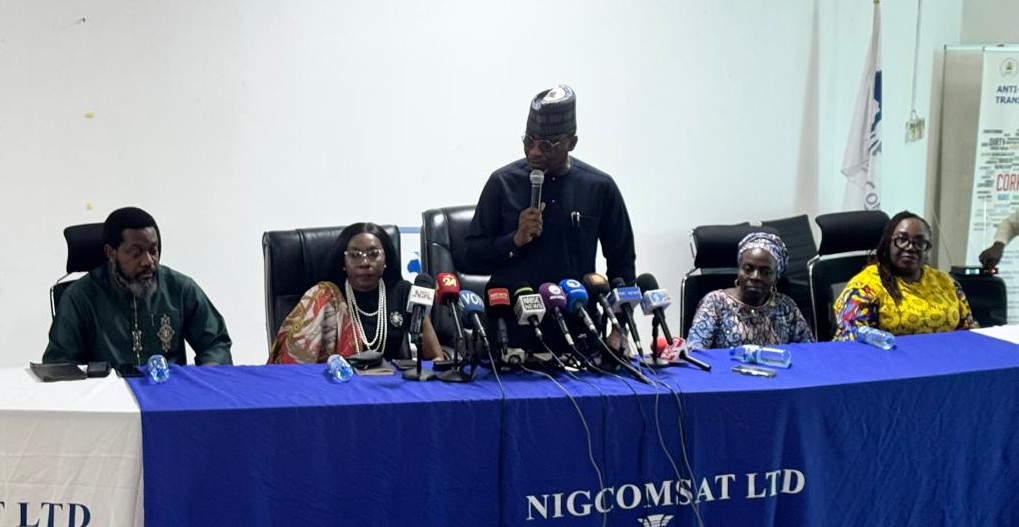
This was revealed in a joint press conference in Abuja recently, where the Managing Director of NIGCOMSAT, Jane Egerton-Idehen, said that the existing DVB-compatible set-top boxes already in circulation across the country would work seamlessly with the new system.
Her words, “The solution we are deploying does not require any special boxes. There are already about 10 million DVB-2S set-top boxes in the market. Users can simply connect.”

Egerton-Idehen explained that subscribers would not need additional software installations or technical modifications at home. According to her, reception would only depend on properly aligning devices to the NigComSat-1R satellite.
She noted that the NigComSat-1R satellite currently provides coverage across the ECOWAS sub-region, with the exception of parts of North Africa, allowing users within the coverage area to connect from virtually any location.
The NIGCOMSAT boss also disclosed that plans are already underway to replace the satellite before the end of its operational lifespan in 2028. She said the procurement process had been completed after a rigorous two-year selection exercise involving two international vendors, Thales Alenia Space and Ariane.
“We have two vendors supplying the replacement. We went through a meticulous two-year process to select them,” she stated.
According to her, the replacement satellite will operate from the same orbital slot as the current satellite, eliminating the need for users to re-align antennas or replace existing equipment.
“Users won’t need to re-point their antennas because we are using the same orbital slot. We want the transition to happen seamlessly without requiring users to do anything,” she added.
Egerton-Idehen further revealed that planning for the replacement project began in November 2024, following technical assessments and contingency evaluations.
She said NIGCOMSAT also has backup arrangements with alternative satellite providers should there be delays in meeting the 2028 deployment timeline.
Also speaking at the briefing, the Director-General of the Nigerian Broadcasting Commission (NBC), Charles Ebuebu, said the Commission had adopted a hybrid Digital Switchover model to overcome sustainability issues that affected the earlier rollout of digital terrestrial television.
Ebuebu recalled that Nigeria’s DSO programme, which was launched in 2006 with an initial completion target of 2015, struggled largely due to the high cost of maintaining transmission infrastructure nationwide.
“Even if we are able to fund all those towers nationwide, it is not sustainable. We would eventually run into the same challenges again,” he said.
He explained that the new approach would combine digital terrestrial television with satellite and internet-based broadcasting platforms to widen access and improve long-term sustainability.
According to him, the initiative has already begun attracting interest from both state-owned and private broadcasters.
Ebuebu also announced plans to introduce audience measurement systems that would provide more reliable viewership data for advertisers and media stakeholders.
He added that the NBC call centre would be upgraded to support multiple Nigerian languages, while six geo-political production studios would be established across the country to encourage content creation beyond major urban centres and better reflect Nigeria’s linguistic and cultural diversity.