

Let’s start with the hard truth most pitch rooms avoid: the Nigerian consumer is tired of brands pretending to be local.

For a decade now, localisation in brand activation has been treated as a makeover — print the season’s slang on a banner, book the influencer everyone is booking, roll a branded truck through the area playing the top five Afrobeats records, then call it a cultural campaign.
Observation is not fluency
There is a costly difference between watching a culture and understanding it. Observation notices what people are doing; fluency knows why they are doing it. Fluency is knowing the unspoken rules of a room — who gets deferred to, what gets laughed at, what would be rude — and knowing how a brand can enter without behaving like an intruder.
The market has got smarter faster than most briefs have. Fluency is no longer a nice line in a creative deck. It is the variable that decides whether an activation becomes a brand asset people still reference next year, or a costly afternoon nobody remembers by Monday.
When a brand behaves like a tourist, the pattern is predictable. It arrives inside a cultural moment, takes the footage it came for, and leaves the week the budget dries up. The brand then has to buy the buzz that fluency would have earned for free, pouring media spend into manufacturing conversation that should have started on its own. We call this the tourist tax, and it is the single most avoidable line item in Nigerian marketing. It never appears on a budget as the cost of poor cultural work, but that is exactly what it is.
Fluency, then, is not a soft consideration. It is a media-efficiency argument. The better you understand the room, the less you pay to be heard in it.
Lagos is not Ibadan. Ibadan is not Port Harcourt.
If our event strategy for Lagos is our strategy for Ibadan with a different MC, we don’t have a strategy — we have a template, and templates do not build loyalty.
Real strategic fluency means doing the unglamorous work: understanding the daily realities, the regional differences, the specific pressures and social codes of the community being addressed. What makes someone leave their house on a Saturday in Port Harcourt is not what makes someone leave theirs in Ibadan. The commute is different, the money is different, and the reason for going is different. Anyone selling you one plan for all three is selling you a discount, not a strategy.
Take Desperados’ “Latin Vibe” in Awka. On paper it was an imported theme — exactly the kind of brief that usually arrives as a tourist. We couldn’t import the room, so we built it out of Awka: barrel drums and wheelbarrows as fixtures, a headline slot given to a local artist instead of a Lagos name flown in for the photos, a body-paint and headset corner that people queued for because it produced something worth posting.
Over 1,000 people came. Free stock ran out entirely. Then the bar kept selling — 70% of the Desperados can stock, 57% of bottles, half the total inventory cleared on a night when the drinks had already been free.
When the strategy genuinely connects, something valuable happens: the community starts doing part of the work. They defend the brand in the comments. They share the message without being paid. They buy.
Beautiful is not the same as meaningful
Fluency doesn’t survive a handoff. It requires strategy and creative to be built together.
If the strategy is sound but the creative misses, the brand feels fake. If the design is beautiful but carries no cultural meaning, the brand feels useless. The creative job is to convert real cultural habits into physical and digital experiences without making them feel staged. We are not building a stage. We are building a space that means something to the people standing in it.
Internet culture is not a separate country
The memes, the inside jokes, the references, the way a group chat talks when no brand is watching, none of it stops at the door. How people behave at a physical event is continuous with how they behave online.
So the references have to already be in the room before the first guest arrives. That shapes the look, the flow of the space, the interactive moments, what gets photographed and why. The aim is not for the brand to shout louder. It is for the brand’s presence to add something the culture didn’t have that morning.
At the Closeup Creators Playground, the sharpest thing in the room wasn’t a product. It was a puzzle not a metaphor, but an actual wall-sized word search, floor to ceiling, with a clue list running down the side: Antibacterial. Clean Breath. Peppermint. Confidence. Dazzling. Above it, a countdown clock burned red until it flipped to TIME UP.
The format didn’t come from a brand book. It came from a scroll: the timed find-it puzzles that live on Stories and TikTok, the ones people race against, screenshot, and post with how fast did you get it? stamped across the top.
We took that habit thumb, timer, dopamine and built it into a wall. Same clock. Same clue list. Same competitiveness that makes people race against strangers for no reason at all, except that the reason is enough.
What started as a phone-sized reflex became a room-sized event. The game stayed the same. Only the screen changed.
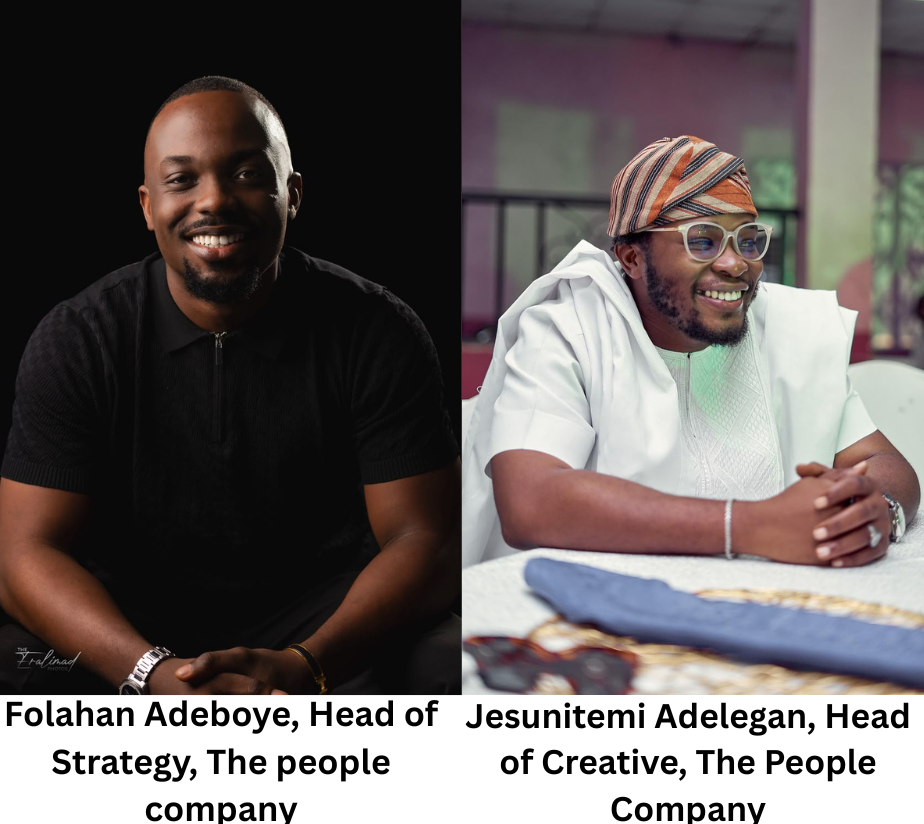
Jesunitemi Adelegan, Head of Creative
Three questions we ask before anything ships
Every idea that leaves our building has to survive these:
Would this still make sense with the logo removed? If not, we are interrupting, not contributing.
Can someone from the community explain why we’re here, in their own words? If they can’t, we haven’t earned the room.
Would we run this identically in another city? If yes, we haven’t done the work.
The agencies and brands that win the next decade are the ones that listen to the streets, then build from what they actually heard — and protect it through review.
That second part matters more than people admit. Most culturally fluent ideas don’t die in the market. They die in a boardroom, softened one round at a time until nothing sharp is left.
At The People Company, strategy and creative don’t work in separate rooms and meet at the end. We build one plan, and it starts with understanding the culture rather than decorating it.
We don’t drop your brand into a crowd. We make sure it speaks the language, respects the rules, and belongs in the room.
Folahan Adeboye is Head of Strategy and Jesunitemi Adelegan is Head of Creative at The People Company, which builds culturally fluent brand activations across Nigeria.
