
Ambrose-Medebem Calls for Mentorship, Tech Leadership, Systemic Inclusion At Maiden Leadhers In Marketing Conference


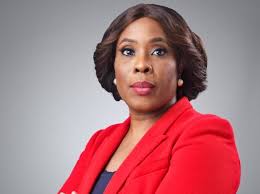
The Honourable Commissioner for Commerce, Cooperatives, Trade and Investment in Lagos State, Mrs. Folashade Ambrose-Medebem, speaking as Special Guest of Honour at the maiden LeadHers in Marketing Conference has revealed that the story of women in marketing is no longer about breaking glass ceilings, but designing entirely new skylines of leadership.
Speaking earlier today in a speech that moved between economic argument, policy declaration, and pointed call to action where she told an audience of senior female marketing professionals that the story of their profession had fundamentally changed, she cited global research indicating that women are responsible for between 70 and 80 percent of consumer purchasing decisions worldwide, a figure she used to reframe the conventional narrative around women’s participation in commerce.
The conference, organised by the National Institute of Marketing of Nigeria (NIMN) under the presidency of Dr. Bolajoko Bayo-Ajayi, was held at the Civic Centre in Victoria Island, Lagos. The event brought together some of Nigeria’s most senior women in marketing and communications under the theme: “Redefining Influence: Women Shaping the Future of Marketing.”
On the domestic front, she drew on National Bureau of Statistics data to note that women own approximately 40 percent of Micro, Small and Medium Enterprises in Nigeria, enterprises that collectively account for more than 96 percent of all companies and roughly 86 percent of employment across the country. The implication she drew was pointed: female economic agency in Nigeria is not marginal. It is structural.
Yet she was equally direct about the gap between that economic reality and representation at leadership level. “For many years, women within the marketing and communications industry played critical strategic roles while visibility in top leadership positions remained limited,” she acknowledged, before adding that a shift is now visible, with some organisations in Nigeria’s ICT sector reporting female leadership representation exceeding 40 percent.
The Commissioner used the speech to issue three specific directives to women in the marketing profession. The first was a call to build deliberate mentorship pipelines: “Every accomplished female marketing leader should intentionally mentor the next generation of professionals.”
The second was a call to lead in technology. Describing artificial intelligence, analytics, and digital platforms as the terrain on which the future of marketing will be contested, she urged female professionals not merely to participate in this evolution but to drive it. “Women must not only participate in this future but actively lead its development and application within the marketing profession,” she said.
The third charge was on visibility and representation. “When young women see leaders who look like them shaping industries and influencing global conversations, they begin to imagine themselves occupying those same spaces,” she said, framing representation not as an aspiration but as a deliberate outcome to be engineered.
The Commissioner also pointed to the Babajide Sanwo-Olu administration’s record on gender inclusion within government as evidence that the inclusive leadership she was advocating was already in practice. She cited women’s appointments across the State Executive Council, the Body of Permanent Secretaries, and the heads of departments and agencies, describing these appointments as consistent with Lagos’s T.H.E.M.E.S+ Development Agenda.
Ambrose-Medebem also placed the conference within a broader commercial context, describing Lagos as “the commercial nerve centre of Nigeria and one of Africa’s most dynamic markets for brands, technology, and creative industries.” She noted that from fintech to entertainment, from retail to digital services, marketing professionals are shaping how Lagos engages with the world, and that women are increasingly at the forefront of that work.
The argument she made was fundamentally economic. “When women lead, organisations become more innovative, markets become more responsive, and economies become more resilient,” she said, adding that empowering women in professional leadership is, for government, “a strategic economic imperative”, not merely a social objective.
She closed by commending NIMN for the initiative, urging those gathered to continue building what she described as a marketing ecosystem where talent thrives and “influence is defined not by gender but by impact.”
