
Stop Racing the Algorithm, Monetize Meaning, Not the Transaction Babaeko Urges Media Practitioners At MIPAN AGM

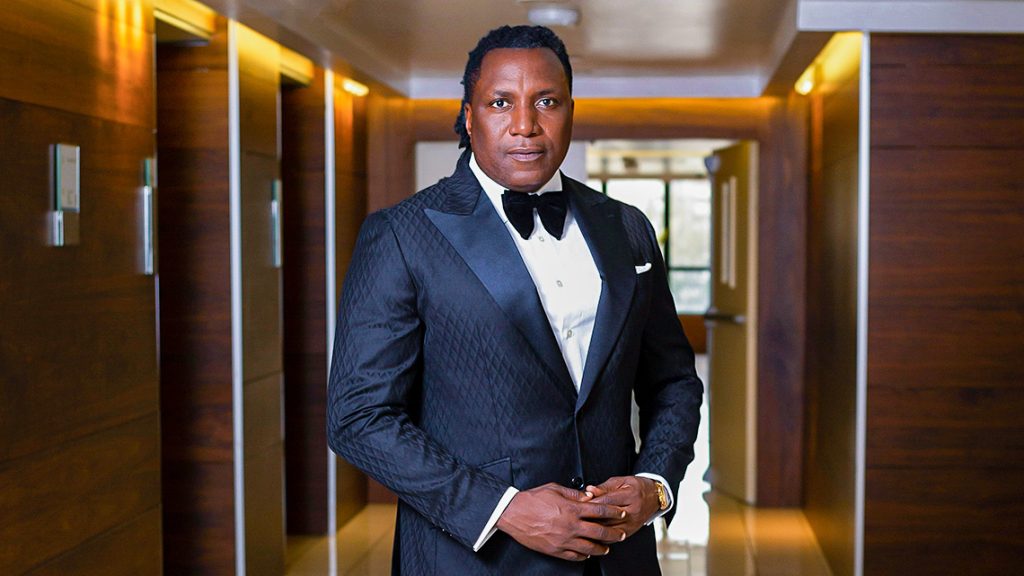
Steve Babaeko, President of the International Advertising Association (IAA), Nigeria and Group CEO/Chief Creative Officer of X3M Ideas, used his keynote address at the 2026 Annual General Meeting of the Media Independent Practitioners Association of Nigeria (MIPAN) to warn that the media buy, the transactional core on which much of the industry’s business has historically rested, is being automated to the point of disappearing, and to call on practitioners to build their future value instead around a deep, culturally grounded understanding of the Nigerian consumer that no global platform can replicate.
Delivering his address under the title “Whose Tomorrow Are We Monetizing?”, a direct engagement with the AGM’s theme, “Monetizing Tomorrow: Outpacing Disruption, Capturing Growth in the Next Era of Media,” Babaeko told delegates that programmatic advertising, self-serve platforms and, increasingly, AI agents capable of planning, targeting and optimizing campaigns without human input were steadily eliminating the margin media businesses have traditionally earned from executing the buy. He argued that no agency could out-compete that automation on speed or cost, and cautioned that framing the industry’s challenge as a race to “outpace disruption” risked misreading the moment entirely, since, in his words, the goal could not be to run faster on a treadmill controlled by platforms that would always be fitter than any human operator.

Babaeko’s central argument was that Nigerian and African media practitioners hold an asset no global platform owns or fully understands, and that is the fluency in the everyday cultural, linguistic and informal-economy realities of the Nigerian consumer, from market-radio listenership to word-of-mouth networks, which he said remain largely invisible to global measurement dashboards built for other markets. He cited estimates that more than half of Nigeria’s GDP and over ninety percent of its jobs sit within the informal economy, alongside projections that digital advertising will account for eighty-four percent of ad spend in the country by 2029, even though global platforms can richly profile only a fraction of the roughly 180 million active mobile lines in Nigeria. That gap between the “map” platforms sell advertisers and the actual territory of Nigerian consumer behaviour, he said, represents the industry’s greatest untapped commercial opportunity.
Framing MIPAN’s founding in 1999 as the industry’s “first independence,” won when media planning broke away from full-service agencies to become a data-driven discipline in its own right, Babaeko called on the association to now pursue a “second independence”: independence of thought from imported metrics, borrowed definitions of premium inventory, and dashboards designed for consumers outside Nigeria. He urged the association to build and own its own audience intelligence and measurement systems rather than relying on platform-provided data, and encouraged member agencies to reposition their commercial value around interpretation and judgement rather than ad placement, arguing that pricing should reflect insight the machine cannot replicate rather than execution the machine will always undercut.

He offered five concrete recommendations to the AGM. They are, that MIPAN build a shared, Nigerian-owned data and audience-intelligence layer instead of depending on platform dashboards; that agencies shift their fee structures from insertion to interpretation; that practitioners treat AI tools as a capable “junior” handling optimization and routine tasks while freeing human talent for strategic judgement; that the industry price local media, including radio, honestly rather than accepting platform-defined hierarchies of premium inventory; and that member agencies pursue these shifts collectively, since, he said, unity across the association was itself a competitive asset against platforms with no rival smaller than a nation.
Babaeko drew on his own history to illustrate the argument, recalling his decision in 2012 to decline a buyout offer for X3M Ideas shortly after founding the agency, which he described as a bet that the value the business would go on to build was worth more than the certainty on offer at the time. He closed by telling delegates that the next era of media would belong to whoever owns meaning in a marketplace increasingly dominated by automated transactions, asserting that no international platform understood the Nigerian or African consumer better than the practitioners in the room, and urging the association to build that future on its own terms.
