

Unilever’s 300,000 Influencers: Influencers And The Future Of Advertising – Evolution, Not Extinction

Recently, Unilever made headlines by announcing a bold pivot away from traditional media advertising and conventional marketing channels, embracing influencer-led strategies instead. In this opinion article, Lolu Akinwunmi, Group CEO of Prima Garnet Africa, dissects the profound implications of this seismic shift for the global advertising industry…

Before we engage the growing conversation around influencer-led marketing, it is important to first clarify what influencers are, and what they do for brands. Incidentally I developed a chapter in my forthcoming book on Influencers and so I am taking a lot of materials from the chapter write up.
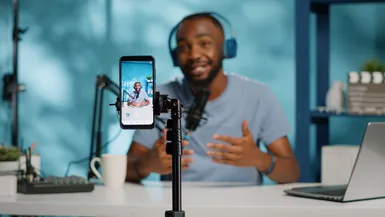
Influencers are individuals who have built credibility, trust, and engaged audiences within specific communities, primarily on social media, and who can shape opinions, behaviours, and purchase decisions.
They range from celebrities with massive reach to micro-creators with smaller but highly engaged audiences. Their power lies not just in visibility, but in perceived authenticity and relatability.
In Nigeria, this is already a growing force.
Across beauty, fashion, entertainment, food, and increasingly financial services, influencers are effectively used to:
1• Drive awareness and visibility
2• Demonstrate products in real-life contexts
3• Create cultural relevance and conversation
4• Accelerate trial, especially among younger audiences
When properly integrated into a strong marketing communication strategy, influencers can significantly enhance brand performance.
And by the way the concept of influencing is not new. It started with the use of stars and prominent characters in commercials. The one major difference is that unlike how we used start characters, influencers are mostly independent and don’t even need to be commissioned by the brands.
THE STRATEGIC VALUE OF INFLUENCERS
Within a well-structured MarCom framework, influencers deliver three critical advantages:
- Trust Amplification
Consumers are more likely to believe recommendations from people they follow than from corporate messaging. Influencers humanise brands.
- Cultural Relevance
They embed brands within conversations, trends, and everyday life, something traditional advertising often struggles to achieve.
3. Speed and Scale
Content can be produced and distributed rapidly across multiple touchpoints, creating momentum and sustained visibility.
However, these benefits are only realised when influencers are guided by a clear strategy and aligned to a defined brand narrative.
Without this, activity increases, but effectiveness declines.
It is within this broader context that recent reports of global companies such as Unilever building vast influencer ecosystems must be properly understood.
For many practitioners, the immediate question has been:
Is this the end of formal advertising?
Let me state this clearly:
This is not the end of advertising. It is the end of advertising as we have traditionally practised it. And this is not new. The advertising inner and practisingd in LINTAS in 1982 isn’t the same advertising today. It has evolved.
UNDERSTANDING THE SHIFT
We are witnessing a transition:
- From brand monologue to community conversation
- From campaign bursts to always-on engagement
- From controlled messaging to distributed influence.
But this evolution must not be misunderstood.
Influencers do not replace advertising. They are a powerful channel through which advertising is now expressed.
THE NIGERIAN REALITY: OPPORTUNITY AND RISK
While the opportunities are significant, the Nigerian market presents a unique and critical challenge:
Influencers are not always controllable, and can be susceptible to conflicting interests.
In practice, this means:
1• An influencer promoting multiple competing brands within short periods
2• Paid endorsements lacking authenticity or consistency
3• Exposure to inducements that may compromise brand loyalty
4• Weak contractual discipline and limited regulatory oversight.
For example there is nothing in the books of ARCON to manage and regulate influencers!!
This creates a real risk:
- Brand dilution
- message inconsistency, and
- reputational vulnerability
In a fragmented, multi-voice environment, the absence of control can quickly erode the very trust that makes influencer marketing effective. This will simply become disastrous.
THE ROLE OF AGENCIES AND CLIENTS
This is where professional discipline becomes critical.
To extract value and manage risk, agencies and clients must adopt a more structured approach:
1• Strategic Alignment First
Influencers must be selected based on brand fit, audience relevance, and values alignment, not just follower count.
2• Clear Engagement Frameworks
Well-defined contracts, exclusivity clauses (where necessary), and content guidelines must be established.
3• Curated Creator Ecosystems
Rather than one-off engagements, brands should build managed communities of trusted creators over time.
4• Strong Content Direction
Influencers should express the brand in their voice, but within a clearly defined strategic and narrative framework.
5• Measurement and Accountability
Performance must move beyond likes and views to engagement quality, conversion, and business impact.
6• Ongoing Monitoring and Governance
Active oversight is required to ensure compliance, consistency, and protection of brand equity. ARCON has a lot of work to do here.
THE NEW MANDATE FOR AGENCIES
The implication for agencies is not decline; it is transformation.
We must evolve from:
1• Campaign creators to
Architects of influence ecosystems
2• From Media buying to
Strategic orchestration of content, creators, and platforms
3• From Periodic storytelling to
Continuous brand engagement.
Our role is no longer just to create messages. It is to design and manage how those messages live, move, and multiply across voices and platforms.
FINAL WORD: AGENCIES AND CLIENTS MUST EVOLVE.
This is not the first transformation our industry has faced. From print to radio, radio to television, and television to digital, each shift tested us. Each time, we adapted.
This moment is no different. The tools have changed. The voices have multiplied. The environment has become more complex.
But the need for strategy, clarity, and powerful ideas remains unchanged. I assure us all that Advertising is not ending.
It is evolving.
And for those prepared to lead this evolution, the future is not uncertain; it is full of opportunity.
